The Pallas’s Cat: The Ghost of the High Mountains
In the remote, windswept steppes and rugged highlands of Central Asia lives one of the world’s most enigmatic felines—the Pallas’s cat, also known as the manul. Rarely seen and even more rarely studied, this small wild cat has captivated scientists and wildlife enthusiasts alike with its unusual appearance, extreme adaptations, and elusive behavior. Though roughly the size of a domestic house cat, the Pallas’s cat is anything but ordinary.
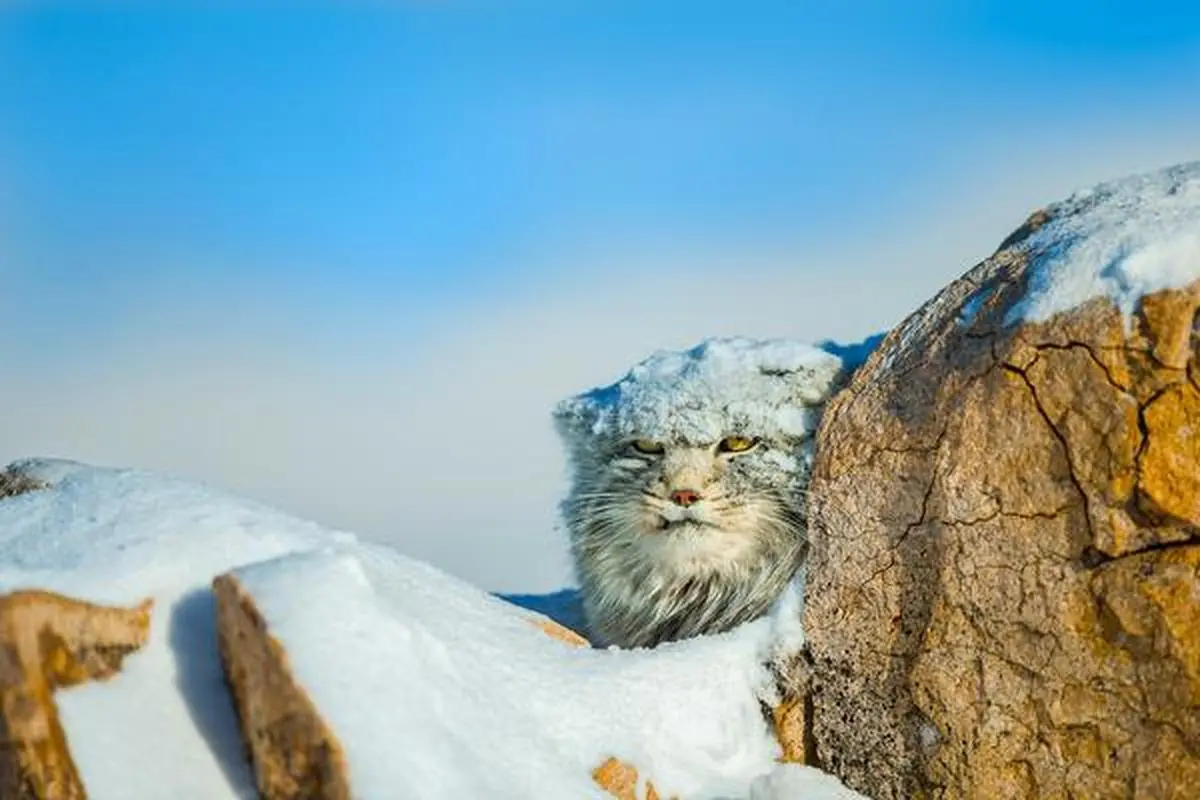
One of its most remarkable features is its fur. Possessing the densest coat of any feline species, the Pallas’s cat is uniquely equipped to survive some of the harshest environments on Earth. Its thick, long, silvery-gray fur provides insulation against temperatures that can plunge to as low as minus 50 degrees Celsius. In addition to warmth, this luxurious coat acts as near-perfect camouflage. Blending seamlessly into rocky outcrops and snow-dusted terrain, the animal can disappear almost instantly—earning it the nickname “the ghost in a fur coat.”
The mystery surrounding the Pallas’s cat is deepened by its solitary and secretive nature. Unlike many other small cats, it does not rely on speed or agility in open terrain. Instead, it prefers to live in abandoned marmot burrows, rocky crevices, or shallow caves that offer shelter from predators and extreme weather. The manul is primarily crepuscular, emerging at dawn and dusk to hunt its prey. Its diet consists mainly of small mammals such as pikas, voles, and gerbils—species that share its high-altitude habitat.
Physically, the Pallas’s cat is strikingly different from most felines. Its face is unusually flat, giving it a perpetually stern or “grumpy” expression that has made it an unexpected star on social media. Unlike the vertical slit pupils typical of small cats, the manul has round pupils, a trait more commonly associated with larger felines. Its ears are short and set low on the sides of its head, an adaptation that allows it to peer over rocks while keeping most of its body concealed—an essential survival strategy in open, predator-rich landscapes.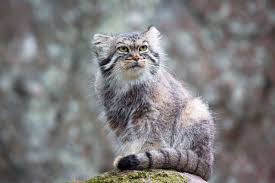
Despite being known to science for more than two centuries, much of the Pallas’s cat’s life remains a mystery. This was underscored by a landmark discovery in September 2025, when researchers captured the first-ever photographic evidence of a Pallas’s cat in Arunachal Pradesh, India, at an elevation of nearly 5,000 meters. This finding significantly extended the species’ known range and highlighted how little is still understood about its distribution and ecological flexibility.
The discovery also emphasized the challenges of studying the species. Living in some of the most inaccessible regions on the planet, the Pallas’s cat largely avoids human contact. Its populations are thought to be fragmented, and while it is not currently classified as critically endangered, it faces growing threats from habitat degradation, climate change, and declining prey populations.
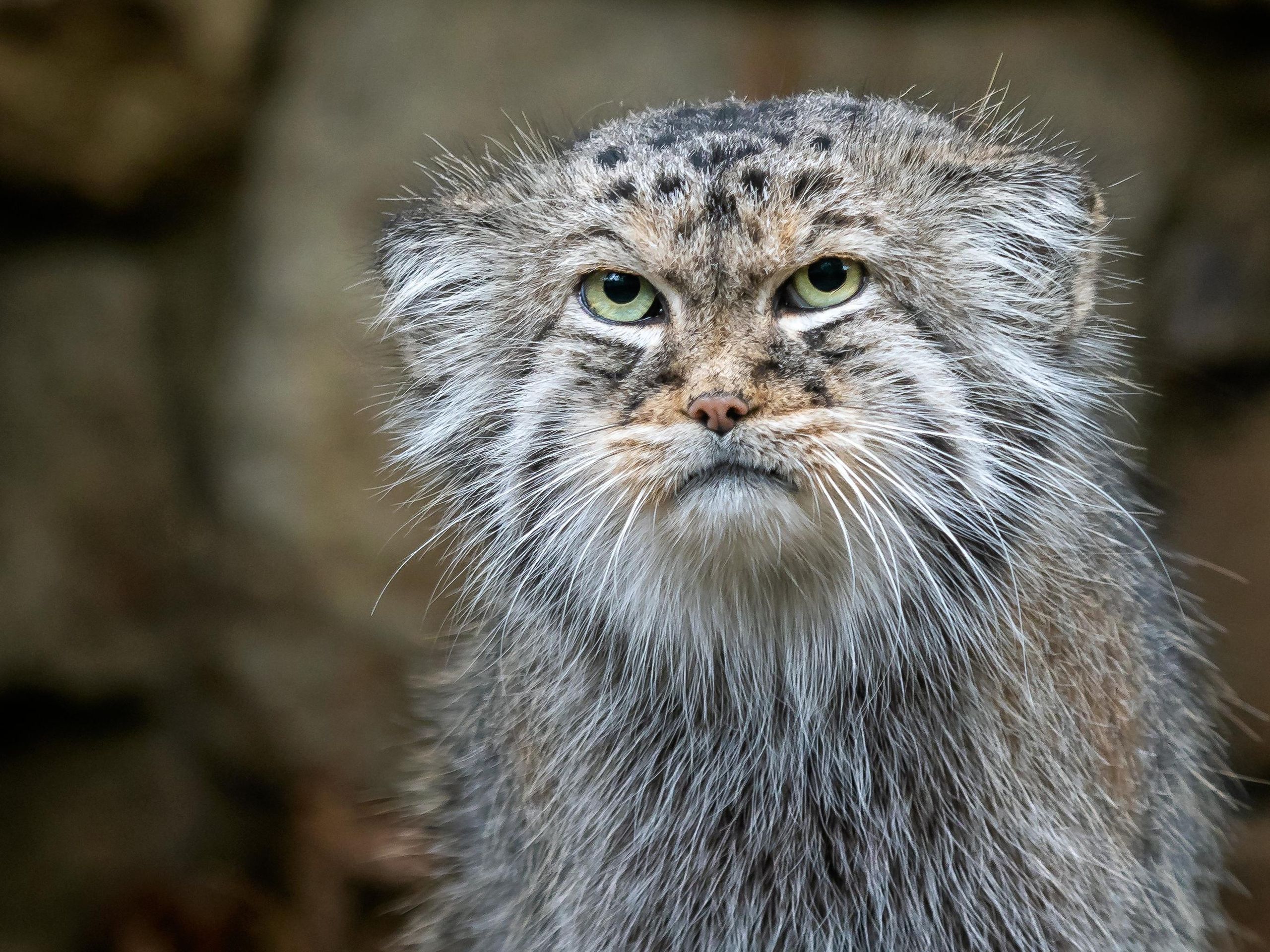
Ironically, while the Pallas’s cat has gained global attention in recent years due to viral images and videos showcasing its distinctive expressions, this online fame has not translated into comprehensive scientific understanding. Behind the memes and photographs lies an animal that remains profoundly wild, shaped by isolation, cold, and silence.
Quietly navigating landscapes that few humans will ever visit, the Pallas’s cat endures as a symbol of nature’s resilience and mystery. In an age of satellites, drones, and constant connectivity, the manul reminds us that some creatures still live beyond the reach of easy observation—guarding their secrets high in the mountains, wrapped in fur, and watched only by the wind.