5-Year-Old With Cerebral Palsy Barred From Sunder Nursery Swings, Incident Sparks Outrage
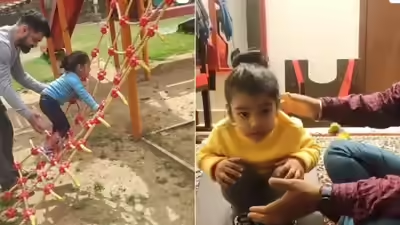
A five-year-old child with cerebral palsy was reportedly prevented from using swings at Delhi’s Sunder Nursery, triggering public concern and renewed discussion about accessibility and inclusion in public spaces.
According to accounts shared by the child’s family, a security guard at the park allegedly stopped the child from playing and made a remark questioning the child’s mental condition. The comment — reported as “Iska dimaag theek nahi hai” (translated as “The child’s mind is not fine”) — has drawn criticism on social media and among disability rights advocates.
What Happened
The incident occurred at Sunder Nursery, a popular heritage park and recreational space in the national capital. The child, who has cerebral palsy — a neurological condition that affects movement and muscle coordination — was accompanied by family members at the time.
The family says the child was attempting to use the playground swings when the guard intervened. The exchange has since circulated online, prompting calls for accountability and sensitivity training for staff.
Disability Rights and Public Access
Under India’s Rights of Persons with Disabilities Act, 2016, individuals with disabilities are entitled to equal access to public spaces and protection from discrimination. Advocacy groups note that beyond legal compliance, inclusive infrastructure and respectful conduct are essential to ensuring that children with disabilities can participate fully in community life.
Experts emphasize that cerebral palsy does not necessarily affect cognitive ability and that assumptions about mental capacity based on physical disability are both inaccurate and harmful.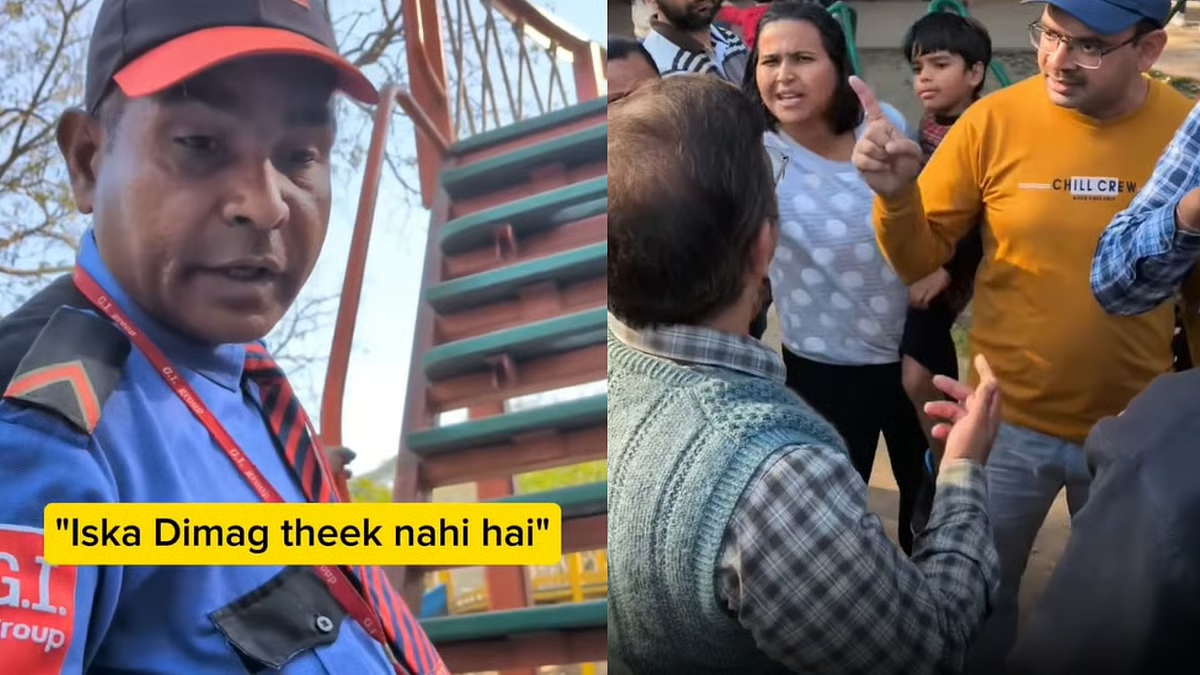
Response and Broader Debate
As of now, it remains unclear whether park authorities have taken formal action. The episode has, however, reignited debate about:
Accessibility standards in public parks
Training and awareness for frontline staff
The need for inclusive play equipment
Public attitudes toward disability
Parents and activists say the case highlights the importance of fostering empathy and understanding in public institutions, especially in spaces designed for children.
The incident has become a reminder that inclusion is not only about infrastructure — but also about mindset and respect.