Massive Star in Andromeda Appears to Have Collapsed Quietly Into a Black Hole
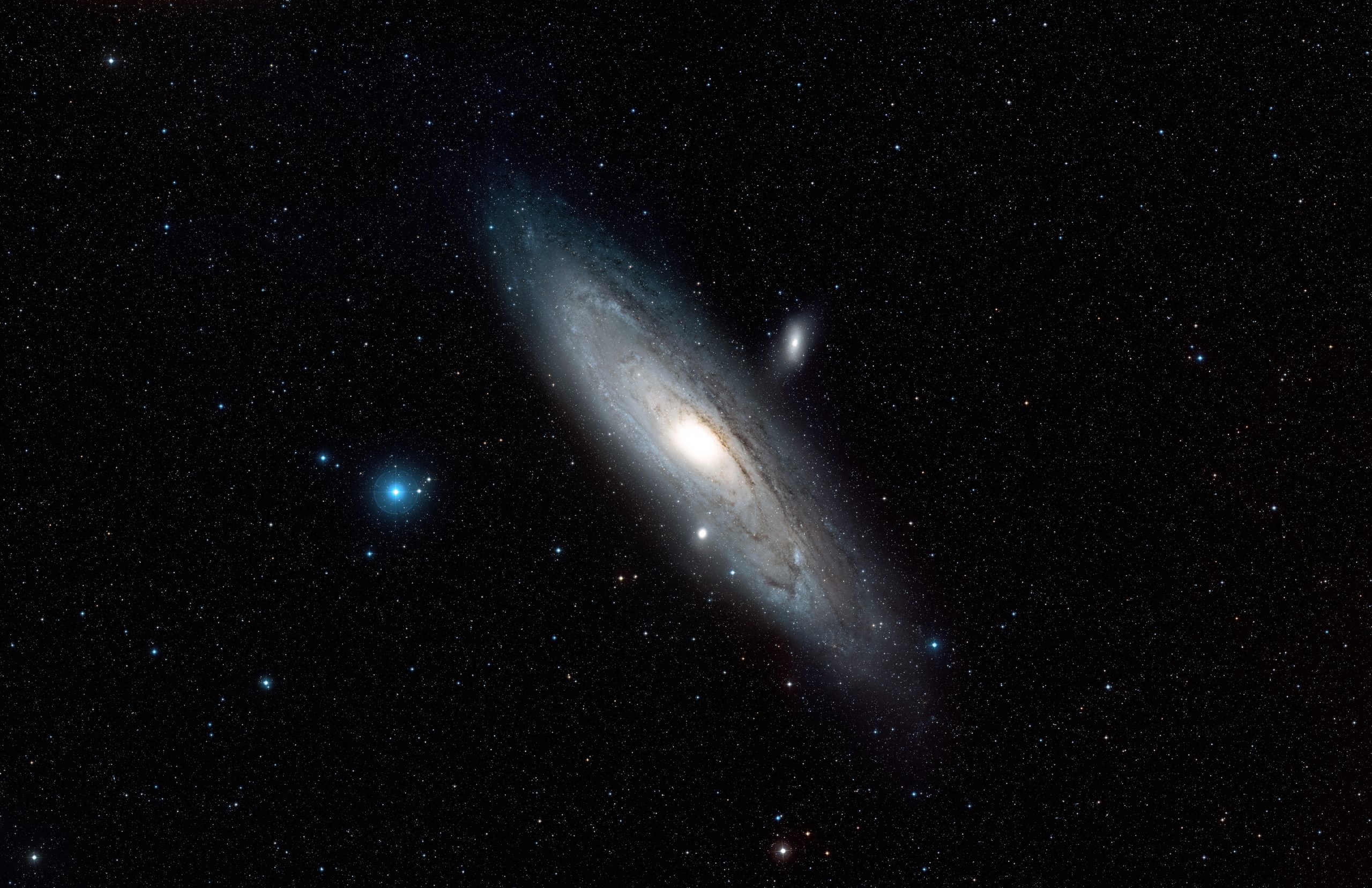
Astronomers report one of the clearest cases yet of a “failed supernova” in the Andromeda Galaxy, where a massive star known as M31-2014-DS1 appears to have collapsed directly into a black hole without producing a bright explosion.
What Observers Saw
According to the study cited (De et al., Science, 2026), the sequence unfolded over nearly a decade:
2014: The star brightened in infrared wavelengths — often a sign of dust formation or instability in a massive star’s outer layers.
2016: Its visible brightness declined sharply.
2023: The object had faded to a tiny fraction of its former optical luminosity, effectively disappearing in visible light.
However, astronomers continued detecting a faint mid-infrared glow — not from the star itself, but from surrounding dust. The material appears to have been expelled relatively gently rather than blasted outward in a violent supernova shockwave.
Researchers suggest the star’s core collapsed directly into a black hole, while only part of the outer envelope fell inward. The remaining gas and dust may now form a slow-feeding disk around the newly formed black hole.
What Is a “Failed Supernova”?
In the traditional picture, massive stars end their lives in dramatic supernova explosions. But theoretical models have long predicted that some extremely massive stars might instead collapse quietly if the explosion mechanism fails to expel the outer layers.
This event mirrors a previous candidate, NGC 6946-BH1, discovered in 2015. That object also faded without a bright explosion, strengthening evidence that failed supernovae may not be rare anomalies.
Why It Matters
If confirmed, events like M31-2014-DS1 could reshape estimates of:
How often black holes form
The chemical enrichment of galaxies
The true rate of visible supernovae
For decades, astronomers have suspected that some stellar deaths occur quietly. This case may be among the strongest observational confirmations yet.
A Different Kind of Stellar Death
Not all massive stars end with cosmic fireworks. Some appear to fade into darkness, leaving behind only dust — and a newly born black hole hidden within it.
If additional observations continue to support the findings, M31-2014-DS1 may stand as one of the clearest examples of a silent stellar collapse ever documented.