Scientists Create World’s Smallest Readable QR Code — Smaller Than Most Bacteria
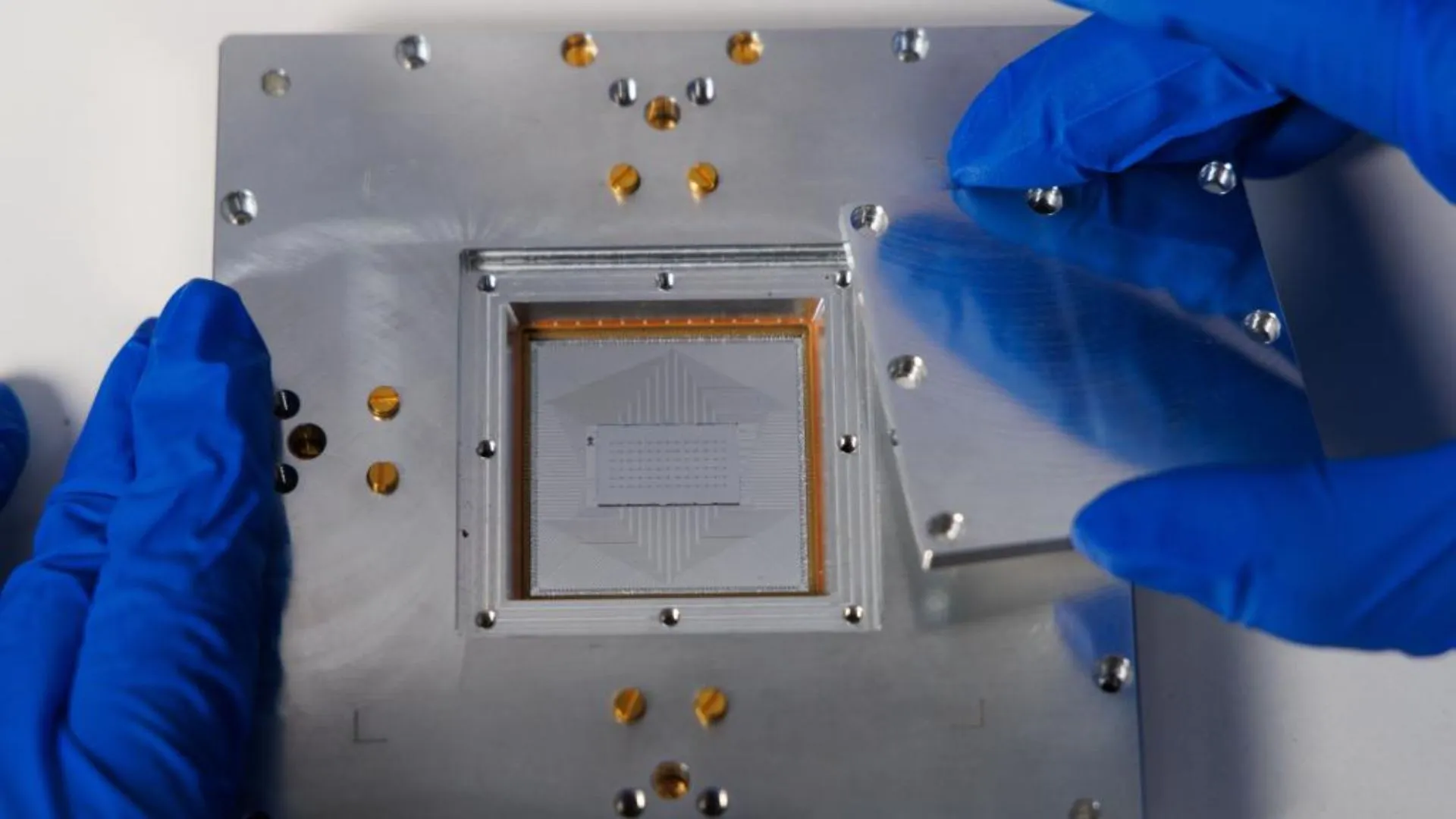
Researchers at TU Wien and Cerabyte have created what is now recognized as the world’s smallest readable QR code, measuring just 1.98 square micrometers — smaller than many bacteria.
The achievement has been officially verified by Guinness World Records, which confirmed it as the smallest QR code ever produced.
How It Was Made
The code was fabricated by milling a ceramic thin film using focused ion beam (FIB) technology. This ultra-precise nanofabrication process allowed scientists to carve features as small as 49 nanometers wide — thousands of times thinner than a human hair.
Despite its microscopic scale, the QR code remains machine-readable under magnification.
A Step Toward Ultra-Dense Data Storage
Beyond the record itself, researchers say the breakthrough demonstrates the potential of ceramic-based data storage.
Unlike traditional electronic storage media — which rely on magnetic, optical, or semiconductor systems — the ceramic structure is highly stable under extreme heat and pressure. It does not require electricity, cooling systems, or ongoing power to preserve stored information.
Long-Term Storage Without Energy
Scientists suggest the technology could pave the way for ultra-dense, long-lasting archival storage solutions. By eliminating the need for continuous energy input, such systems could significantly reduce the environmental footprint associated with large-scale data centers.
As global data generation continues to accelerate, innovations in durable, energy-efficient storage are becoming increasingly critical. This microscopic QR code may represent a small square — but a potentially massive leap in information preservation.