Mach 7 and Zero Emissions: The Australian Hydrogen Jet Rewriting the Rules of Flight
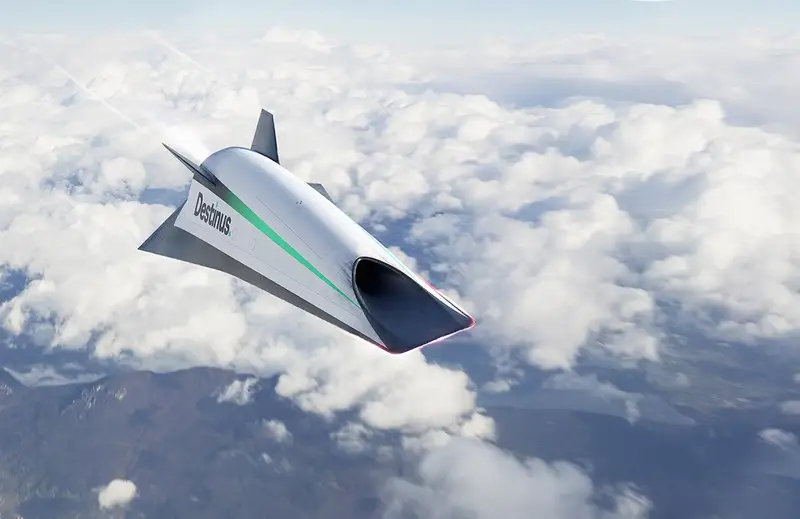
A New York to London flight in under an hour is moving from science fiction to reality as Hypersonix successfully tests its hydrogen-powered scramjet.
Breaking the Speed Barrier
Imagine an aircraft so fast that the friction of the air against its hull generates enough heat to melt most metals. This is the “hypersonic” realm—anything above Mach 5—and a company from Australia is now leading the race to conquer it with clean energy.
The DART AE, developed by Hypersonix Launch Systems, has just cleared a major hurdle. Engineers have successfully completed ground testing of its hydrogen fuel system, proving that the world’s most abundant element can power a vehicle at a staggering Mach 7 (over 5,300 mph).
The Scramjet: An Engine with No Moving Parts
Traditional jet engines use rotating fans to compress air. At Mach 7, those fans would disintegrate. The DART AE utilizes a scramjet engine, a marvel of fluid dynamics that has no moving parts. Instead, it relies on its own incredible forward speed to “ram” incoming air into a high-pressure combustion chamber.
What sets Hypersonix apart is the choice of fuel. While most hypersonic tests use solid rockets, the DART AE burns green hydrogen. The result? A flight that is not only faster than a bullet but produces zero carbon emissions—leaving behind nothing but a trail of pure water vapor.Survivability in the Heat of the Moment
Flying at seven times the speed of sound creates an environment of extreme thermal stress. To survive, the DART AE is constructed using high-temperature ceramic matrix composites (CMCs) and 3D-printed specialized alloys.
The recent successful ground test confirmed that the complex hydrogen delivery and ignition systems remain stable under the simulated pressures of hypersonic flight. This paves the way for the highly anticipated flight tests, where the DART AE will be launched via a rocket booster before igniting its scramjet to scream through the atmosphere.
A New Era of Global Connectivity
The implications of this technology reach far beyond record-breaking speed. Hypersonic hydrogen flight could:
Revolutionize Logistics: Global delivery of critical medical supplies in minutes rather than days.
Transform Space Launch: Acting as a “first stage” for satellites, making space access cheaper and more sustainable.
Redefine Travel: Making “anywhere in the world in two hours” the new standard for long-haul transport.
Ambition Powered by Water
As the world shifts away from fossil fuels, the DART AE proves that sustainability doesn’t have to mean slowing down. By combining the power of hydrogen with the physics of scramjets, Australia is building a bridge to a future where we can cross oceans in the time it takes to watch a movie—without leaving a scar on the planet.