Jet Power on the Tarmac: Russia’s Fire-Breathing Snow Destroyers
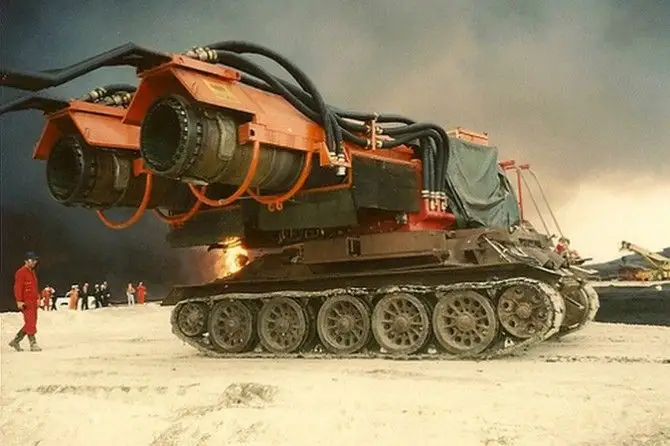
In the heart of the Siberian winter, when ordinary plows fail, Russian engineers unleash retired fighter jet engines to keep the wings of aviation moving.
A Second Life for Fighter Jets
At major Russian airports like Sheremetyevo or in the remote frozen hubs of the East, a strange sight often greets the morning mist: a heavy-duty truck mounted with what looks like a massive cannon. This is no weapon of war, but a retired jet engine—often a Klimov VK-1 from a legendary MiG-15—repurposed for a singular mission: total thermal victory over ice.
The Science of “Thermal Clearing”
Traditional snowplows and chemical de-icers have their limits. When ice becomes “compacted” and bonds with the runway surface, physical scraping can damage the asphalt.
The jet-powered solution is far more decisive. By firing up the engine, operators direct a blast of exhaust reaching temperatures near 1,000°C at the ground. The result is twofold:
Instant Melting: The ice turns to water in a fraction of a second.
Evaporation & Displacement: The sheer velocity of the jet blast (hundreds of miles per hour) screams across the surface, blowing the water away and drying the runway instantly. This prevents the “refreeze” effect that often plagues traditional clearing methods.
Rugged Innovation
This approach is a masterclass in resource-efficient engineering. By recycling engines that are no longer flight-worthy but still mechanically sound, the aviation industry saves millions in equipment costs. These machines are built to be as rugged as the environment they serve, capable of operating in temperatures where standard diesel engines often seize up.
“It sounds like a fighter jet is taking off from the middle of a truck,” says one airport ground technician. “It’s loud, it’s dramatic, but it’s the only thing that works when the mercury hits -40°C.”
Safety Amidst the Heat
Despite the raw power, the operation is highly controlled. Operators are trained to “sweep” the jet nozzle to prevent heat from warping the runway’s concrete slabs or melting the glue in the expansion joints. It is a delicate dance between extreme power and surgical precision.
A Global Legacy
While most famous in Russia, this “jet-plow” concept has inspired similar specialized equipment for clearing oil spills or drying racetracks (like the NASCAR “Air Titan”). However, nowhere is it as vital as in the Russian tundra, where these fire-breathing relics of the Cold War remain the unsung heroes of winter aviation.