THE GREAT UNMASKING: Why the Atlantic is Overheating and the French Research Complicating the Picture
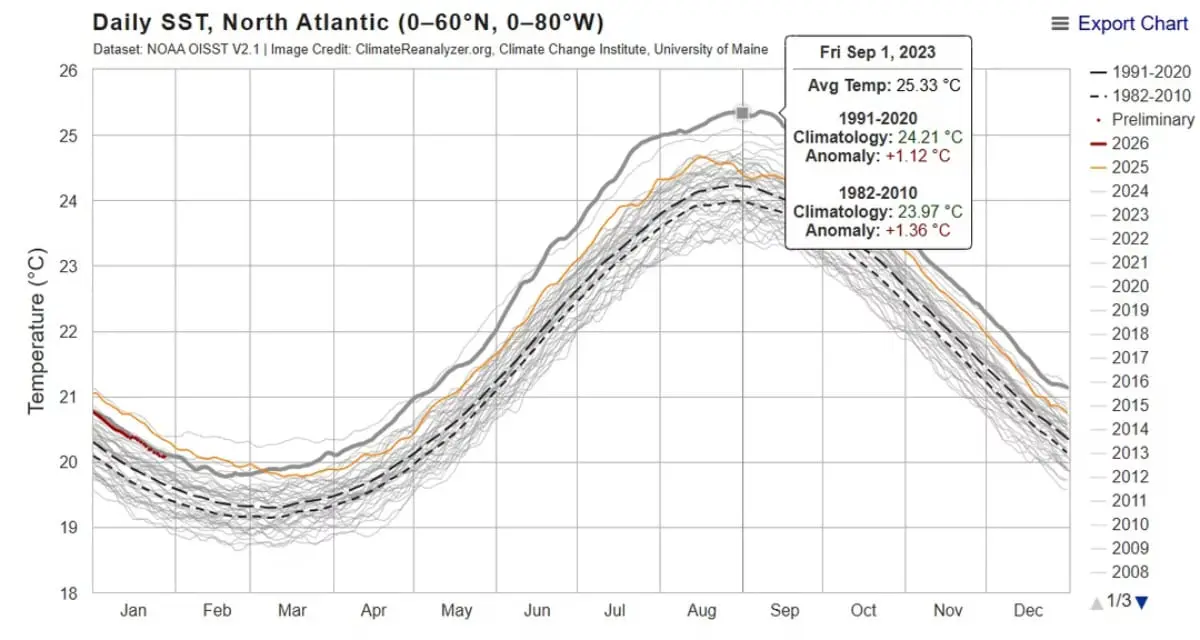
PARIS, FRANCE — As global temperatures climb, the Atlantic Ocean has been behaving like an outlier, shattering heat records at a pace that has left even the most seasoned climate scientists searching for answers. While greenhouse gases are the primary engine of global warming, researchers—led by teams in France—have identified a counterintuitive “complication” in the data: the very efforts we have taken to clean our air may be accelerating the heating of our oceans.
The Shipping Paradox
For decades, the global shipping industry inadvertently acted as a planetary cooling system. Burning high-sulfur bunker fuel released massive amounts of sulfur aerosols into the atmosphere. These tiny particles acted as an “invisible shield,” reflecting incoming sunlight back into space and cooling the water beneath busy shipping corridors.
However, in recent years, the International Maritime Organization (IMO) implemented strict regulations to slash sulfur emissions to combat acid rain and respiratory health issues. While these policies have been a monumental victory for public health, they have effectively “unmasked” the ocean.
The “Aerosol Veil” Explained
The research, bolstered by oceanographers and climate modelers in France (including teams from institutions like CNRS and Mercator Ocean International), highlights what is known as the aerosol indirect effect.
The Shield: Before the new regulations, shipping emissions caused clouds over the Atlantic to become brighter and more reflective. These clouds acted like a parasol, preventing solar radiation from hitting the ocean surface.
The Unmasking: As the shipping industry switched to cleaner, low-sulfur fuels, the concentration of these reflective particles plummeted.
The Result: With the “shield” removed, the Atlantic began absorbing significantly more solar energy. This “unmasking” phenomenon explains why the Atlantic has been warming faster than many climate models predicted—it is a regional amplification on top of the broader, global warming trend.
A Complicated Truth
This does not mean that the regulations were a mistake. They have prevented millions of cases of respiratory illness and saved countless lives. Instead, this research serves as a humbling reminder of the planet’s interconnected systems: small changes in local pollution can lead to outsized impacts on global thermal regulation.
The “complication” is that we now have to recalibrate our climate models to account for this rapid loss of aerosol cooling. It means the “cooling mask” provided by industrial pollution is vanishing, and the world is seeing the true, unvarnished warming effect of greenhouse gases hitting the ocean all at once.