THE COST OF TRAGEDY: Bentley’s Law and the Fight for Justice
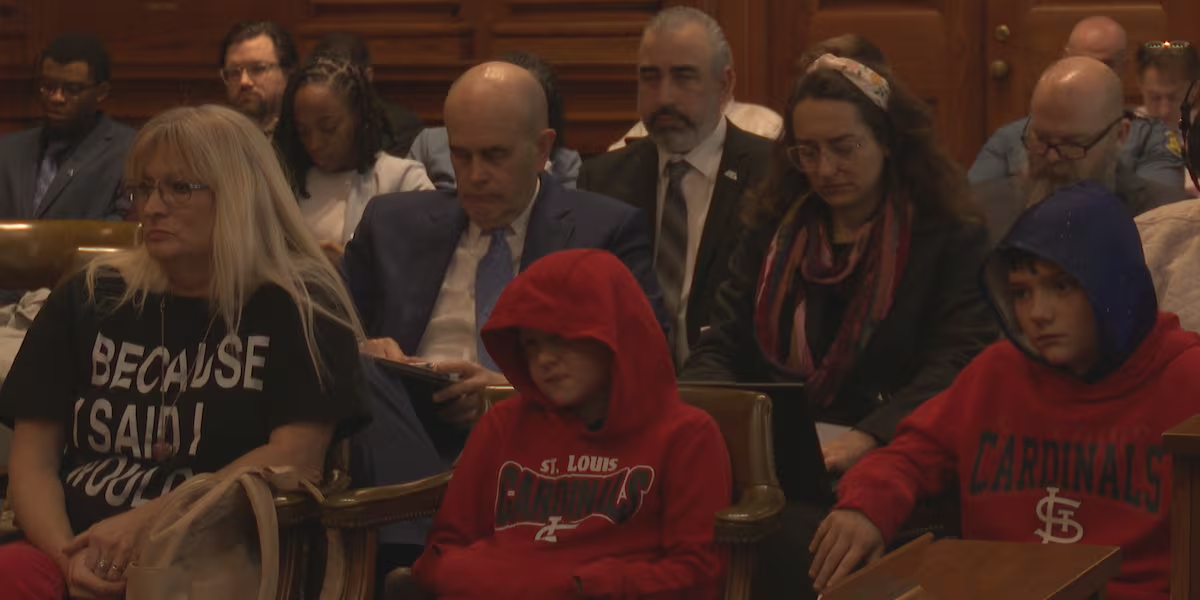
MISSOURI, U.S. — In the justice system, criminal sentencing is traditionally designed to punish the offender and protect the public. Rarely, however, does the system explicitly account for the “collateral victims”—the children left behind in the wake of a senseless crime. Bentley’s Law is changing that paradigm, transforming personal tragedy into a blueprint for legislative reform that forces drunk drivers to face the long-term financial reality of their actions.
Born from a Personal Tragedy
The movement began with Cecilia Williams, a grandmother from Missouri who lost both her son and daughter-in-law in a 2021 collision caused by a drunk driver. The tragedy left her two grandchildren, Bentley and Mason, orphaned.
Faced with a legal framework that offered little long-term financial security for the children, Williams didn’t just mourn—she mobilized. She pushed for a law that would mandate drunk drivers to pay child support to the families of their victims until those children reach adulthood.
The Mechanics of the Law
Bentley’s Law is distinct because it is not a civil wrongful death lawsuit, which requires separate, expensive legal battles. Instead, it embeds the financial obligation directly into the criminal sentence:
Mandatory Restitution: Payment for child support becomes a condition of the criminal sentence, making it harder for offenders to avoid or delay payment compared to civil litigation.
Securing the Future: By enforcing this obligation, the law aims to provide ongoing financial stability for children during their most critical developmental years.
Accountability: It shifts the financial burden of the crime from the victims’ families (or the state) to the person who committed the offense, forcing them to contribute to the future they helped destroy.
The Hurdle of Real-World Implementation
While the moral argument is compelling, legal experts and lawmakers warn of significant practical challenges that have surfaced as states attempt to implement this:
The Insolvency Problem: If an offender is serving a decades-long prison sentence, they lack the income to pay support. Even after release, low-income offenders may struggle to meet these payments.
Judicial Balancing: Judges must often balance these new support requirements against other forms of victim restitution or state fines, creating complex budgetary conflicts in the courtroom.
Constitutional Limits: Because laws generally cannot be retroactive, they often only apply to crimes committed after the law is passed, leaving families of past victims unable to seek this specific remedy.
A Moral Precedent
Regardless of the technical hurdles, Bentley’s Law has succeeded in setting a powerful moral precedent. It asserts that the damage caused by drunk driving extends far beyond the moment of impact. By requiring offenders to support the children of their victims, the law ensures that their accountability is not just a temporary prison sentence, but a lifelong recognition of the life they irrevocably altered.