SAN ANDREAS 2: AFTERSHOCK (2026): When the Earth Doesn’t Stop Moving, Survival Becomes a Second Chance

In SAN ANDREAS 2: AFTERSHOCK (2026), the ground may have settled—but the danger is far from over. Following the catastrophic earthquake that devastated California, the world believed the worst had passed. Cities began rebuilding, families tried to heal, and life slowly attempted to return to normal. But nature, as the film reminds us, doesn’t follow human timelines.
The story opens months after the initial disaster, with survivors still struggling to rebuild what was lost. Entire neighborhoods remain in ruins, and the emotional scars left behind are just as deep as the cracks in the earth. The sense of recovery is fragile—more hope than reality.
Ray Gaines, the rescue pilot who once risked everything to save his family, is still haunted by what he witnessed. Though he continues his work, every aftershock brings back memories of the chaos, the fear, and the lives that couldn’t be saved. For him, the disaster never truly ended.
Scientists monitoring seismic activity begin noticing something deeply unsettling. The fault lines beneath California are not stabilizing—they are shifting in new, unpredictable ways. The energy released in the original quake has triggered a chain reaction, threatening to unleash a series of even more destructive events.
At first, the warnings are dismissed. Governments and officials, eager to maintain public calm, hesitate to announce another potential catastrophe. But as tremors intensify and unusual seismic patterns emerge, it becomes clear that a second disaster is not only possible—it is imminent.
What makes Aftershock so gripping is its sense of inevitability. The characters are not facing a sudden surprise but a looming disaster they can see coming. Every second becomes a race against time as evacuation plans are rushed, rescue teams mobilize, and families are forced to make impossible decisions.
The film’s action sequences are massive in scale yet grounded in human experience. Buildings already weakened by the first quake collapse under renewed pressure. Highways fracture, bridges give way, and entire sections of land shift violently, reshaping the landscape in real time.
Visually, the film captures the terrifying power of nature with stunning realism. Dust clouds rise over collapsing cities, oceans surge unpredictably along the coast, and the ground itself becomes an unstable force that cannot be controlled or predicted.
Yet beneath the destruction lies an emotional story about resilience. Survivors who once thought they had endured the worst are forced to find strength again. Families that were reunited must now fight to stay together once more.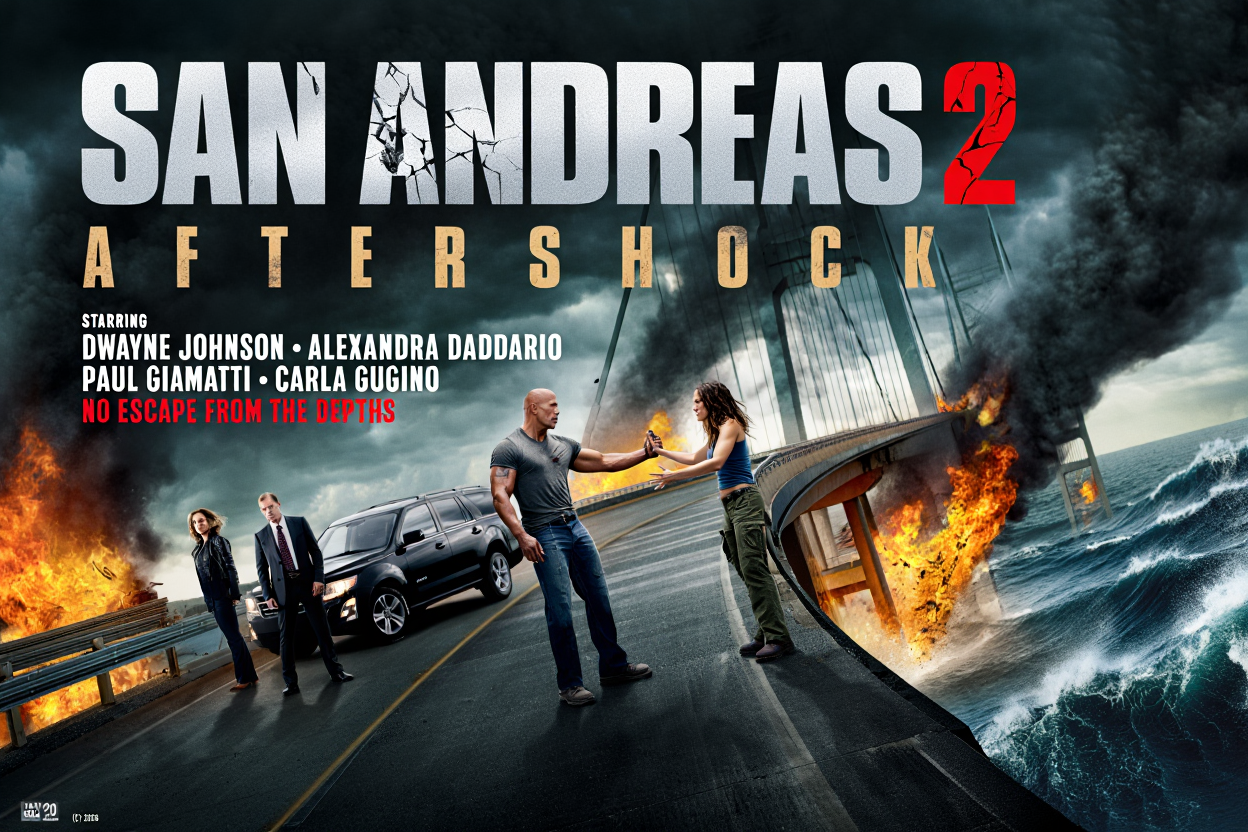
Ray’s journey becomes one of redemption and endurance. Having already faced unimaginable loss, he refuses to let fear control him. Instead, he channels his experience into leading rescue efforts, determined to save as many lives as possible before the next wave of destruction hits.
The tension builds toward a final, devastating series of quakes that push the characters to their limits. Escape routes vanish, communication systems fail, and survival depends on split-second decisions made under impossible conditions.
By the end of SAN ANDREAS 2: AFTERSHOCK (2026), the world is forever changed. The disaster leaves behind more than destruction—it leaves behind a reminder of how fragile life truly is. And yet, within that fragility, the film finds something powerful: the unbreakable human will to survive, rebuild, and keep moving forward… even when the ground beneath us refuses to stand still.
Related movie:
Related movie:
Related movie:
Related movie:
Related movie:
Related movie:
Related movie:
Related movie:
Related movie:
Related movie:
Related movie:
Related movie:
Related movie:
Related movie:
Related movie:
Related movie:
Related movie:
Related movie:
Related movie:
Related movie:
Related movie:
Related movie:
Related movie:
Related movie:
Related movie: