The Last Train to New York (2025): When the Journey Becomes the Only Hope Left

In The Last Train to New York (2025), survival is no longer about where you’re going—it’s about whether you can make it through the journey alive. Set against the backdrop of a rapidly collapsing city, the film transforms a simple train ride into a desperate race against time, fear, and something far more terrifying than anyone could have imagined.
The story begins as New York City descends into chaos. News reports speak of a mysterious outbreak spreading at an alarming speed, turning ordinary people into violent, uncontrollable threats. Panic floods the streets as authorities struggle to contain the situation, but the city’s dense population makes containment nearly impossible.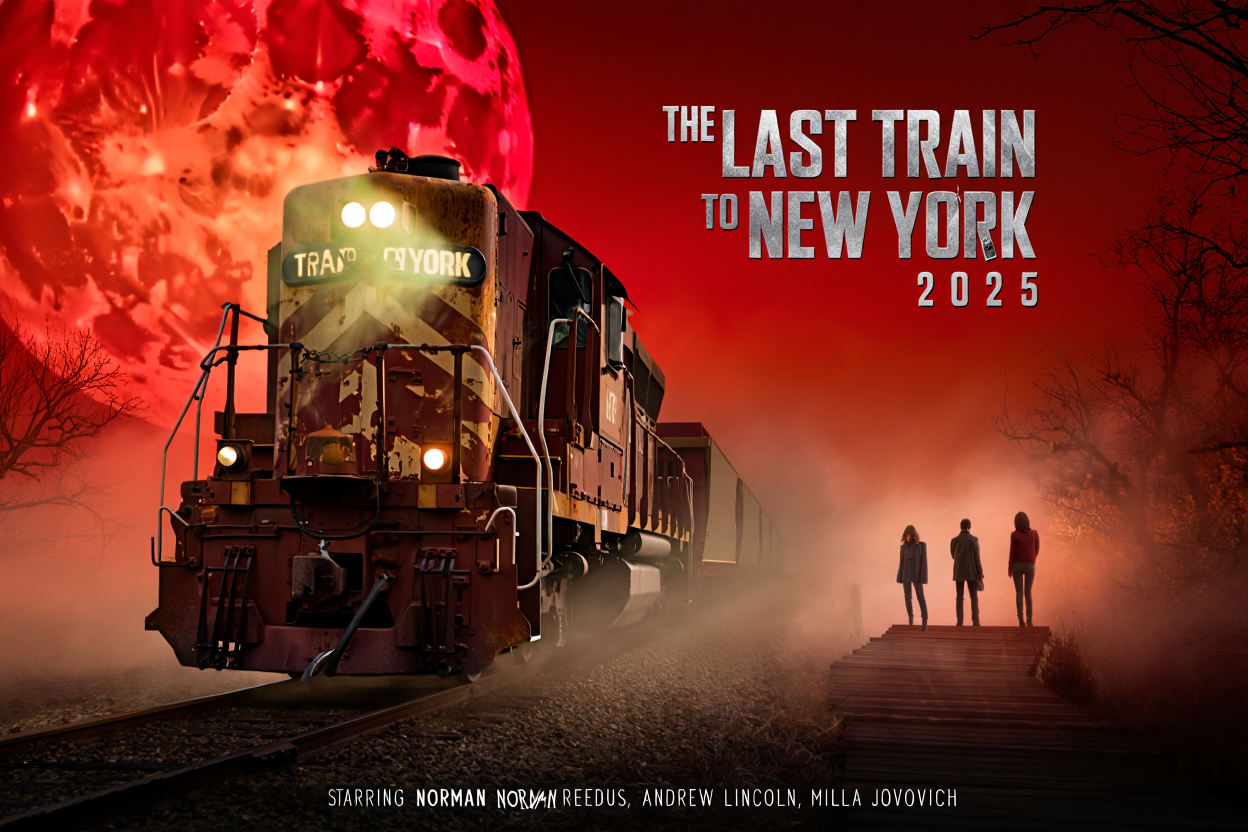
Amid the confusion, a small group of survivors manages to reach what may be their only chance of escape—a train scheduled to leave the city before the outbreak spreads beyond control. For them, the train represents more than transportation; it is a fragile lifeline out of a nightmare that is growing by the minute.
As the train departs, a brief sense of relief settles over the passengers. Doors close, the city begins to fade behind them, and for a moment, it feels like they might actually make it. But that hope quickly shatters when it becomes clear that the danger did not stay behind.
What unfolds is a claustrophobic nightmare inside the narrow corridors of the train. The confined space, once a symbol of escape, becomes a trap where fear spreads just as quickly as the outbreak itself. Every carriage holds uncertainty, and every passenger becomes a potential threat.
The film excels in building relentless tension through its setting. Tight spaces, dim lighting, and the constant motion of the train create an atmosphere where there is no safe place to hide. The characters are forced to move forward, carriage by carriage, as danger closes in behind them.
At the heart of the story are the human connections formed under pressure. Strangers must rely on one another despite fear and mistrust. Some rise to protect others, while some are driven by pure survival instinct, willing to sacrifice anything—or anyone—to stay alive.
Emotion plays a powerful role as characters face impossible choices. Protecting loved ones, deciding who to trust, and confronting the reality that not everyone will make it—these moments give the film weight beyond its horror elements.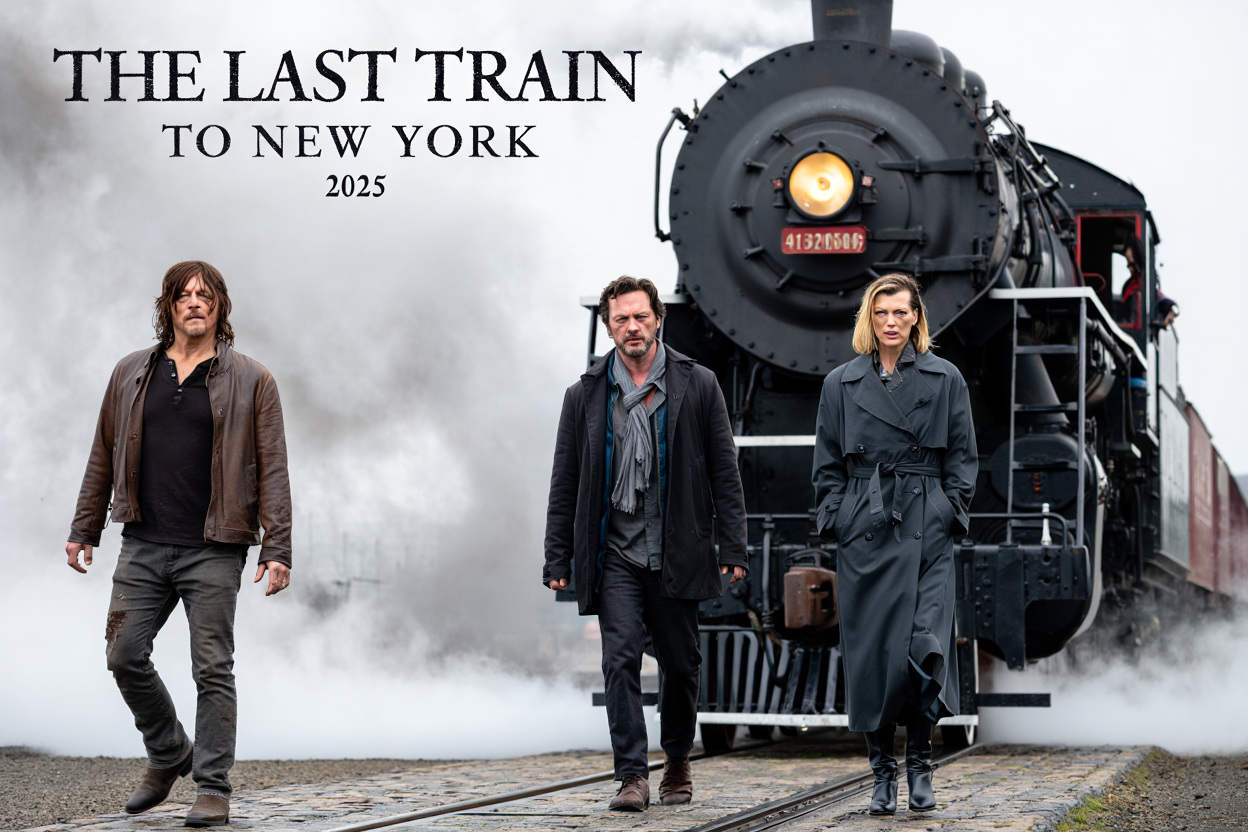
The pacing is relentless, rarely giving the audience a moment to breathe. Just as one danger is overcome, another emerges, pushing the characters closer to exhaustion and desperation. The train’s forward motion mirrors the story itself—unstoppable and unforgiving.
As the journey nears its end, hope and despair collide. The survivors must make a final stand, knowing that reaching New York—or escaping it—may not guarantee safety. The true challenge lies in enduring the nightmare long enough to see what awaits at the end of the line.
By the time The Last Train to New York (2025) reaches its conclusion, it leaves audiences with a haunting realization: sometimes survival is not about outrunning the danger, but about facing it head-on. And when the world collapses around you, the strongest force isn’t fear—it’s the will to keep moving forward, no matter what waits in the next carriage.
Related movie:
Related movie:
Related movie:
Related movie:
Related movie:
Related movie:
Related movie:
Related movie:
Related movie:
Related movie:
Related movie:
Related movie:
Related movie:
Related movie:
Related movie:
Related movie:
Related movie:
Related movie:
Related movie:
Related movie:
Related movie:
Related movie:
Related movie:
Related movie:
Related movie: