THE TARZAN LEGEND OF OPAR
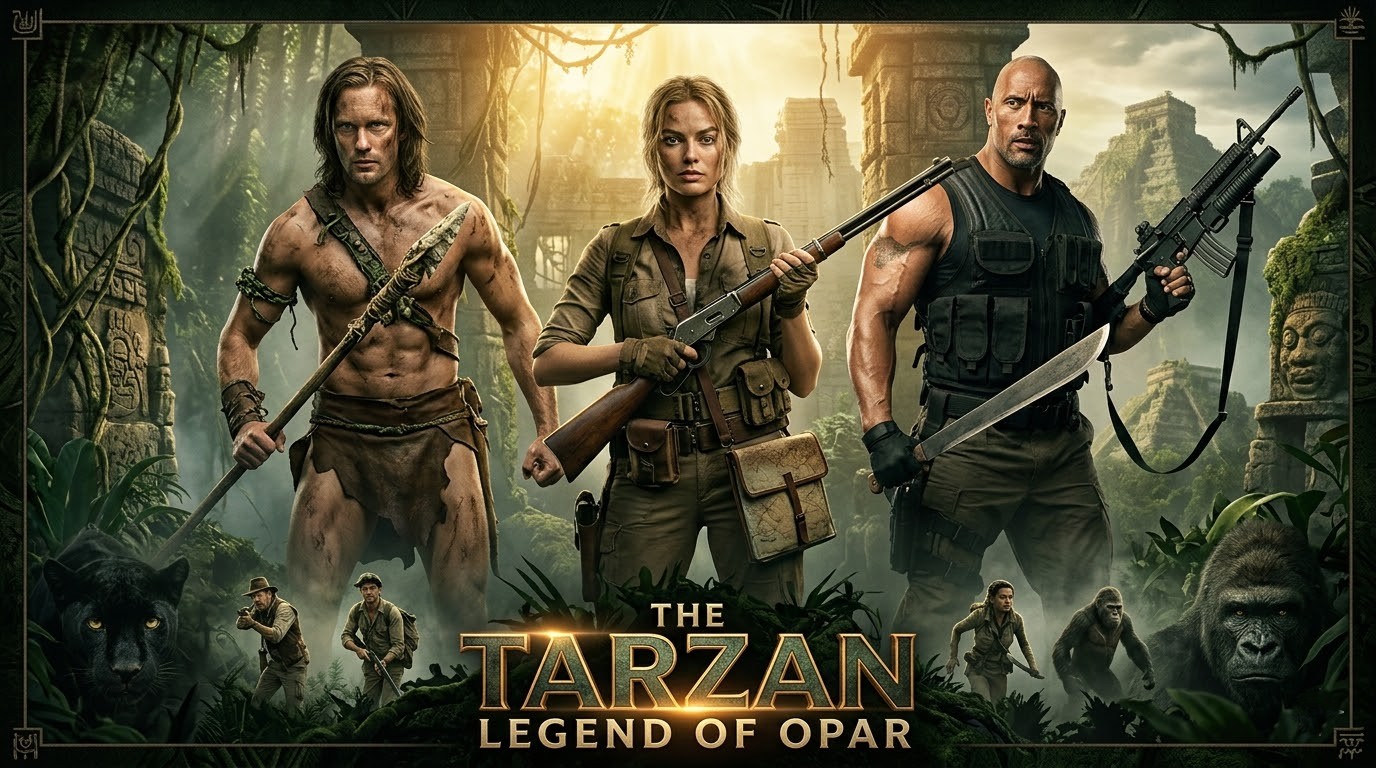
THE TARZAN LEGEND OF OPAR (2026) Alexander Skarsgård, Margot Robbie & Dwayne The Rock Johnson
In THE TARZAN LEGEND OF OPAR (2026), the jungle returns not as a backdrop, but as a living world with secrets older than civilization itself. Years after Tarzan (Alexander Skarsgård) has embraced both his human heritage and his life among the apes, a new mystery emerges from the deepest, most unexplored region of the African wilderness—an ancient lost city known only in myth as Opar.
When strange seismic disturbances begin shaking the jungle and reports surface of an unknown tribe guarding ruins filled with gold and forgotten relics, Tarzan is drawn back into the wild’s most dangerous territory. The balance he has fought to maintain between humanity and nature is threatened by outsiders seeking to exploit Opar’s power, believing its ancient wealth and artifacts could reshape the modern world.
Jane Porter (Margot Robbie), now a seasoned explorer and researcher, joins Tarzan on the journey. Driven not only by curiosity but by a deep respect for the cultures hidden within the jungle, she believes Opar is more than a lost city—it is a sacred remnant of a civilization that once lived in harmony with nature. Together, they must navigate treacherous terrain, uncover hidden pathways, and interpret clues left behind by a civilization that vanished without explanation.
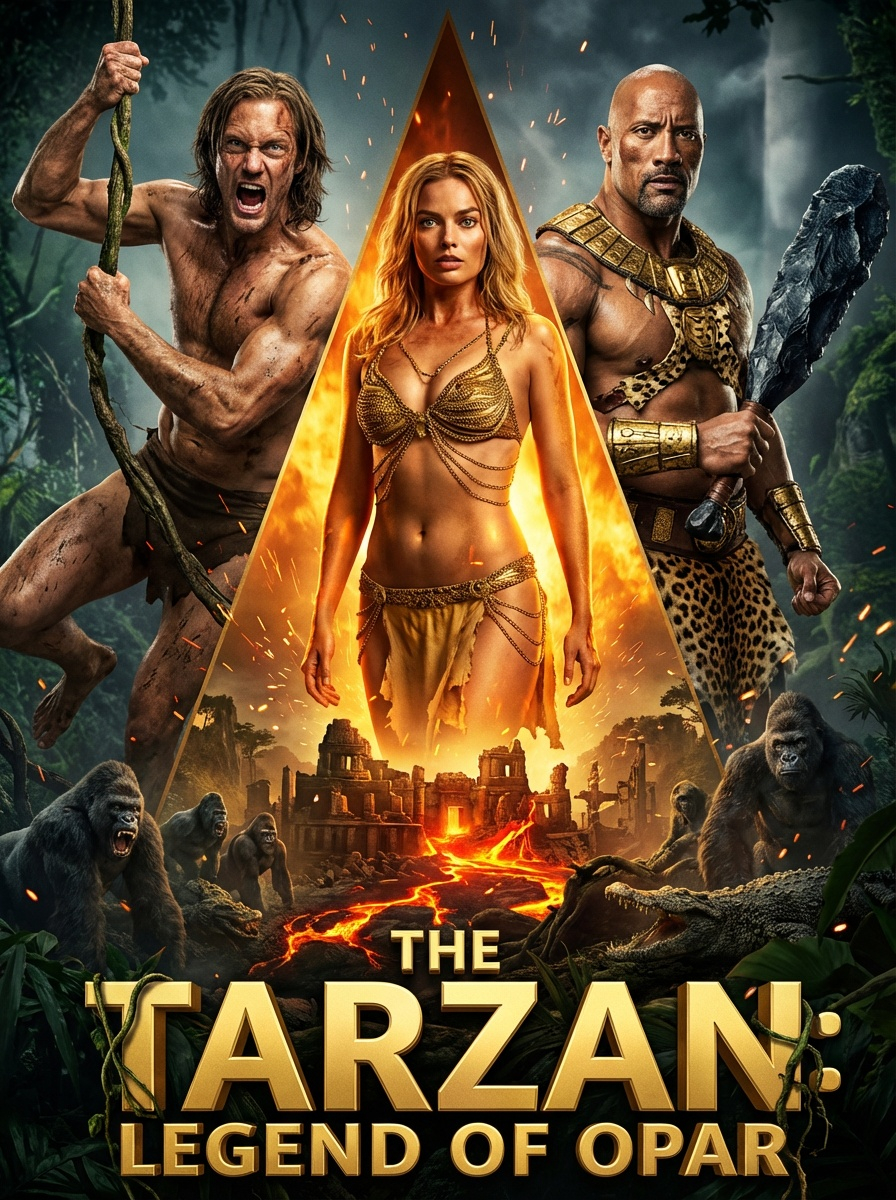
However, they are not alone in their search. A powerful and relentless mercenary leader (Dwayne Johnson) arrives with a private expedition force, determined to seize Opar’s secrets for profit and global influence. Unlike Tarzan, who understands the jungle as a living entity, this force sees it as something to be conquered and controlled. Their presence accelerates the danger, triggering ancient defenses and awakening forces long thought to be mere legend.
As Tarzan and Jane venture deeper into the heart of Opar, they discover that the city is protected by a complex system of natural traps, sacred guardians, and environmental mechanisms designed to deter intruders. The further they go, the clearer it becomes that Opar was never meant to be found by outsiders. It is a place where nature, spirituality, and survival are deeply intertwined.
Tarzan must once again rely on his primal instincts—swinging through dense canopies, communicating with wildlife, and reading the subtle signs of the jungle—to stay ahead of both human enemies and ancient dangers. Jane’s intelligence and compassion complement his raw strength, allowing them to uncover truths that challenge their understanding of history, humanity, and progress.
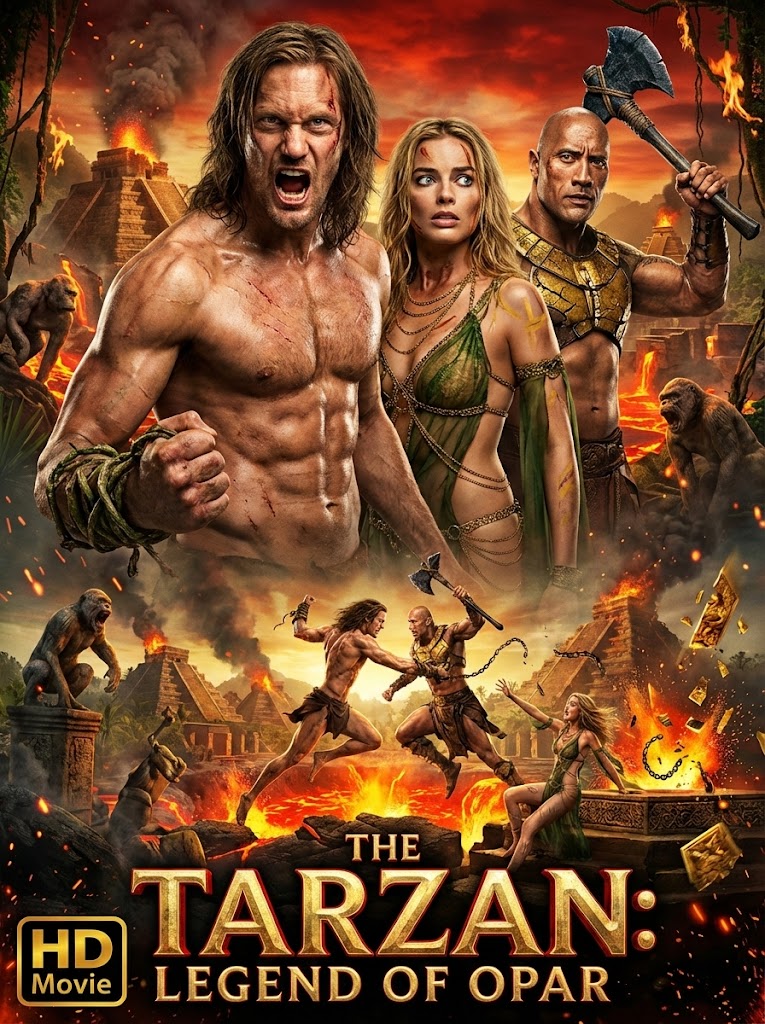
Meanwhile, the mercenary leader’s relentless pursuit leads to escalating conflict, forcing brutal confrontations across river rapids, cliffside ruins, and subterranean chambers hidden beneath Opar’s surface. Each encounter reveals that the jungle does not tolerate greed or imbalance, and those who seek to exploit it may awaken consequences far greater than they can control.
At its core, the story is not just an adventure—it is a reflection on coexistence. Tarzan stands at the intersection of two worlds, proving that strength is not measured by domination, but by understanding. The legend of Opar becomes a test of whether humanity can respect what it does not own, or whether history will repeat itself through destruction and loss.
The film builds toward a powerful final confrontation within the heart of Opar, where the fate of the lost city—and its secrets—must be decided. Tarzan, Jane, and their adversaries collide in a struggle that is as much about ideology as it is about survival. In the end, the jungle itself emerges as the true force of balance, reminding all who enter that it cannot be controlled—only respected.