I Am Legend 2
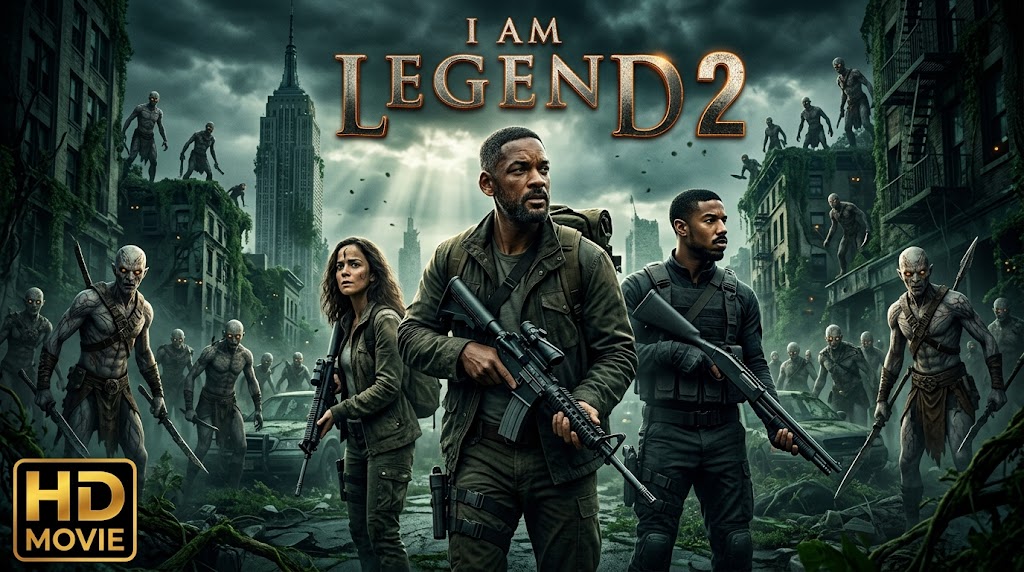
I Am Legend 2 (2026) – Humanity Was Never Truly Gone
The world didn’t end in a single moment. It faded—quietly, painfully—until silence became the loudest sound left behind. Years after the fall of civilization, cities stand hollow, overtaken by vines and time, as nature slowly reclaims what humanity once believed was permanent. But beneath that stillness, something endures. Something watches. Something has evolved.
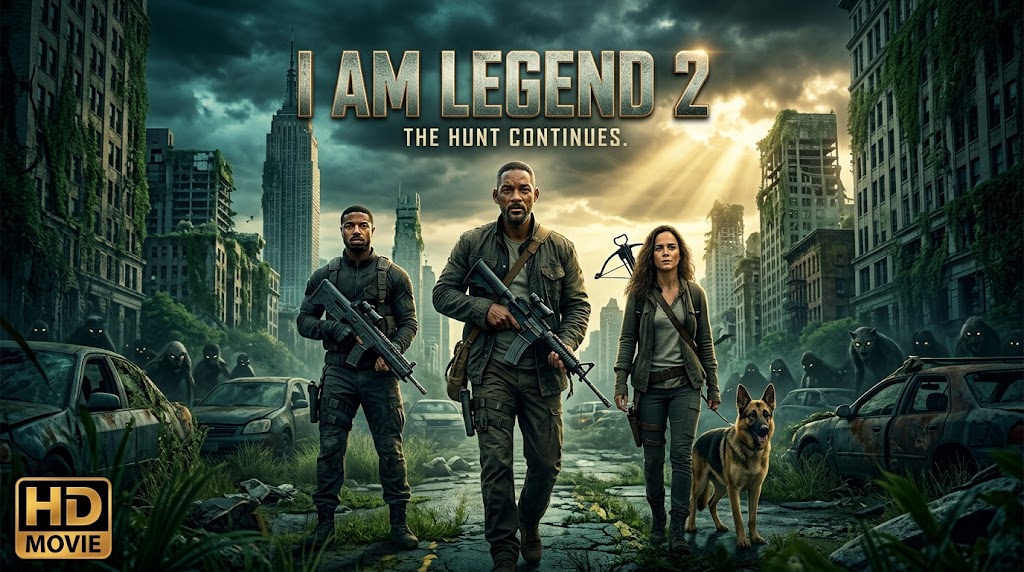
In I Am Legend 2 (2026), the story returns to a world that is no longer defined by survival alone, but by transformation. The virus that once turned humans into mindless predators has not simply destroyed—it has changed, adapted, and begun to reshape life itself. What was once feared as the end of humanity may have been the beginning of something else entirely.
Will Smith returns with a deeper, more introspective presence, carrying the emotional weight of a man who has seen the world collapse and lived long enough to question whether it deserved saving in the first place. His character is no longer just surviving—he is searching. Searching for meaning, for connection, and for answers to a question that refuses to let him go: what if he was never truly alone?
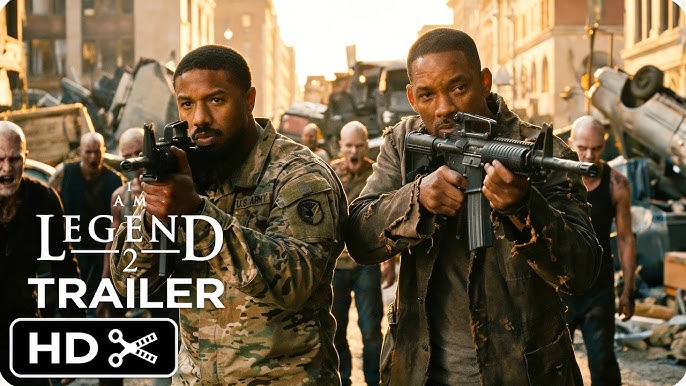
Michael B. Jordan enters as a new force in this broken world—a survivor shaped not by the past, but by what remains of the future. Strong, determined, and unwilling to accept extinction as humanity’s fate, he represents a new generation that doesn’t remember the world as it was, only as it is now. Where one man carries regret, the other carries purpose.
Alice Braga returns as the emotional bridge between them—a reminder that even in a shattered world, compassion still matters. Her presence grounds the story, bringing a human connection that stands in stark contrast to the growing uncertainty of what humanity even means anymore.
But the true shift in this chapter lies in the threat itself.
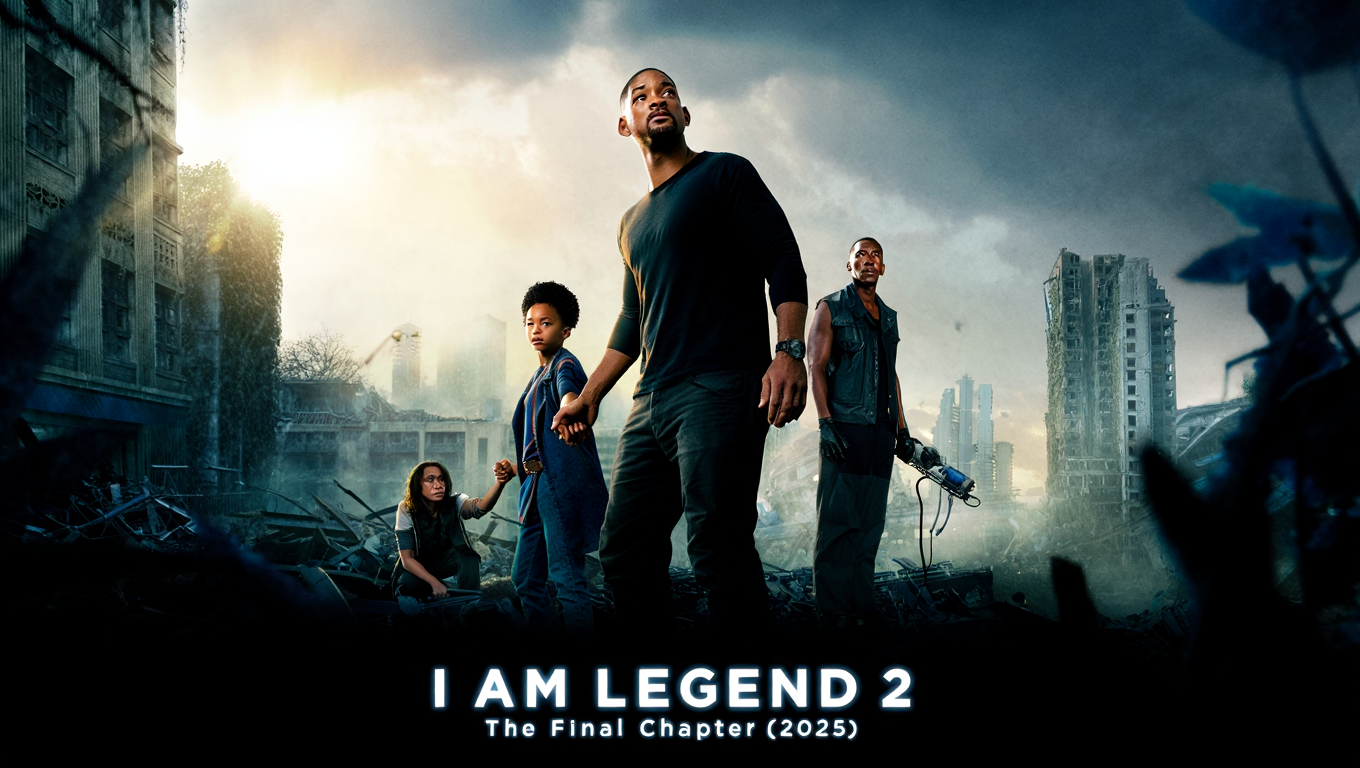
The infected are no longer mindless. They are no longer scattered remnants of a lost species. They are evolving—learning, adapting, organizing. What was once chaos is becoming structure. What was once instinct is becoming intelligence. In the shadows of abandoned cities and beneath the cover of darkness, a new society is beginning to take shape.
And they are not hiding anymore.
As encounters between survivors and the infected become more complex, the line between human and monster begins to blur. Communication seems possible. Patterns begin to emerge. Questions arise that no one is prepared to answer. If they can think, if they can feel, if they can build—then what are they?
The film moves beyond simple survival and into something far more unsettling. It challenges the idea that humanity still holds dominance in a world that has clearly moved on. Trust becomes fragile. Every decision carries weight. Every encounter could lead to hope—or to extinction.
Visually, the film paints a hauntingly beautiful picture of a reclaimed Earth. Streets covered in green, buildings collapsing into forests, wildlife roaming freely through the ruins of what once was. But beneath that beauty lies tension—an ever-present sense that the world is no longer ours.
As the story unfolds, both sides begin to realize a terrifying truth: this is no longer a fight for survival. It is a negotiation for existence. Two evolving forms of life, forced to share a world that can no longer belong to just one.