The Skeleton Key 2
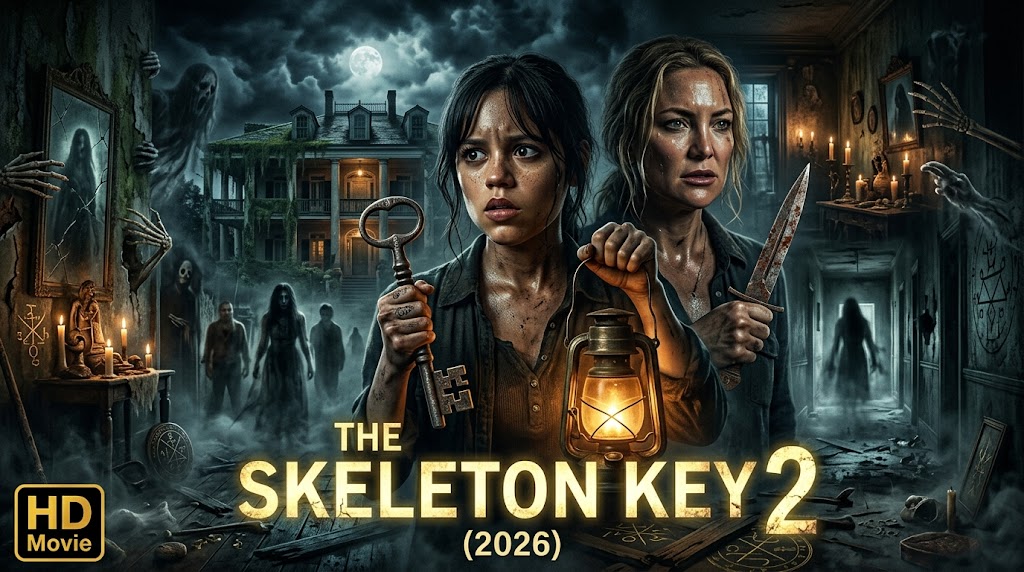
The Skeleton Key 2 (2026) – Jenna Ortega, Kate Hudson
Years after the terrifying events that once exposed the dark secrets hidden inside an old Louisiana plantation house, the legend of the skeleton key has faded into whispers, dismissed by many as nothing more than folklore wrapped in grief and fear. The mansion where belief itself became a weapon now stands abandoned, slowly being reclaimed by swamp water, vines, and silence. Yet in the humid heart of Louisiana, some doors are never truly closed. Some rituals never fully end. And evil, when invited in through faith, learns how to wait.
In The Skeleton Key 2, a new generation is drawn toward the same shadowed legacy—this time not by curiosity alone, but by bloodlines, buried trauma, and the desperate human need to understand what haunts us. Jenna Ortega stars as Eliza Marris, a graduate student researching spiritual folklore in the American South. Intelligent, skeptical, and emotionally guarded, Eliza has spent most of her life rejecting anything that cannot be explained. Her work focuses on how belief shapes fear, how superstition survives across generations, and why certain communities continue to protect rituals outsiders dismiss as myth.
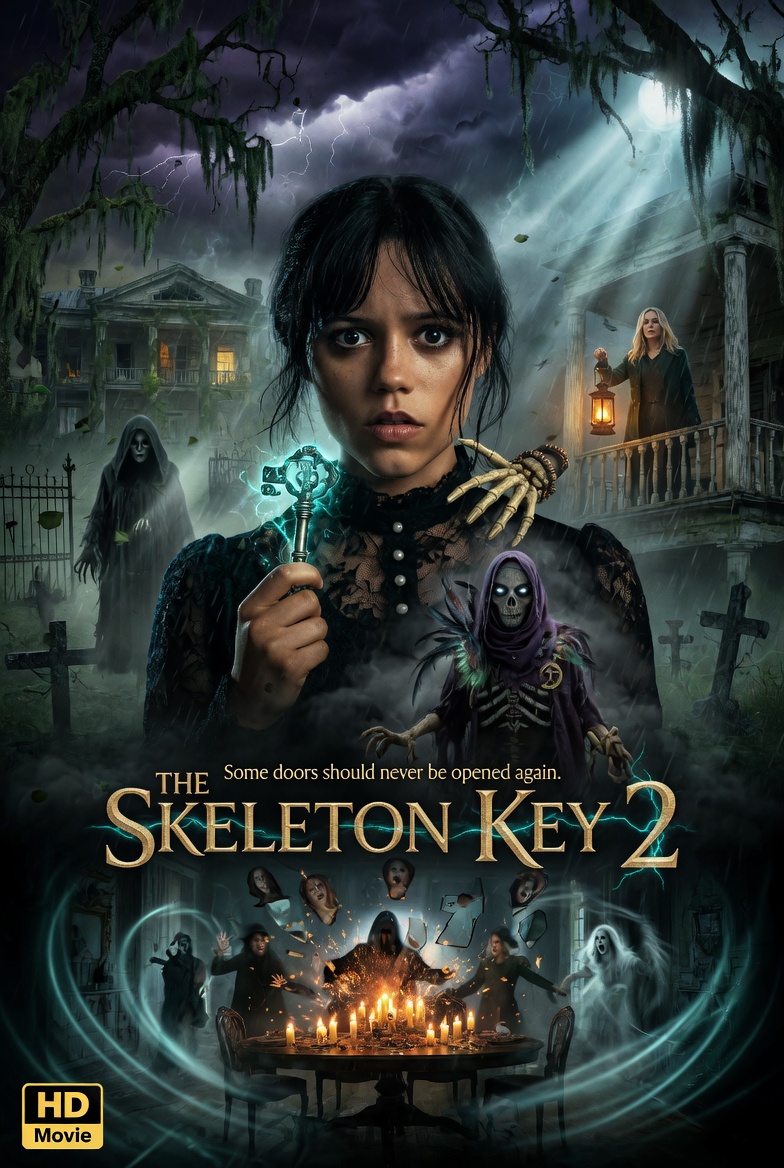
When Eliza receives a letter informing her that a distant relative has died and left behind personal belongings connected to the Devereaux estate, she reluctantly returns to Louisiana. Among the inherited items is an old brass skeleton key, tarnished with age yet disturbingly familiar despite Eliza never having seen it before. The moment she touches it, fragments of dreams begin invading her sleep—visions of locked rooms, whispered prayers in unfamiliar voices, mirrors covered in cloth, and someone calling her name from behind a sealed door.
Kate Hudson plays Caroline Ellis, now older and deeply changed by what she survived years ago. For decades Caroline has lived under a self-imposed silence, carrying the unbearable knowledge that evil did not die in that house—it merely changed form. Haunted by guilt and by the memories of what belief allowed to happen, she has spent years tracking stories of unexplained possessions, ritual circles, and disappearances linked to Hoodoo practices corrupted for darker purposes. When she learns that Eliza has returned and that the skeleton key has resurfaced, Caroline realizes the cycle she feared is beginning again.
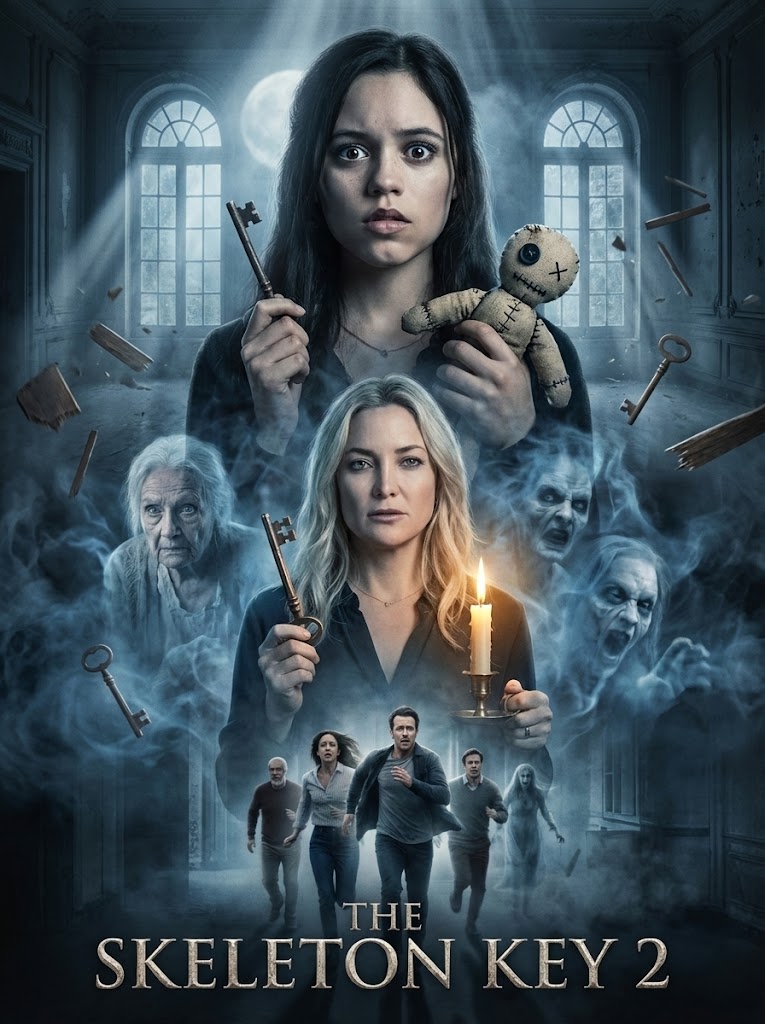
As the two women are brought together, the film slowly reveals a chilling truth: the original house was never the source of the evil. It was only one vessel. The real power has always lived in those willing to surrender their will—to believe strongly enough for darkness to enter. The skeleton key itself is not cursed because it opens doors made of wood or iron. Its true purpose is symbolic. It unlocks permission. It grants access where fear and faith overlap.
Eliza’s skepticism begins to fracture as impossible things start happening around her. Voices echo inside empty rooms. Reflections move seconds too late. Family photographs change overnight. People she speaks to insist conversations never happened. Worst of all, Eliza begins losing time. She wakes in unfamiliar places with dirt under her nails and prayers in her mouth she does not remember learning.
What makes The Skeleton Key 2 especially haunting is that its horror is not built on jump scares alone, but on psychological erosion. The terror comes from watching certainty slowly dissolve. From questioning memory. From realizing the mind can become a doorway just as easily as any locked room. Jenna Ortega brings extraordinary emotional depth to Eliza’s unraveling, portraying not only fear but the pain of losing trust in one’s own identity.
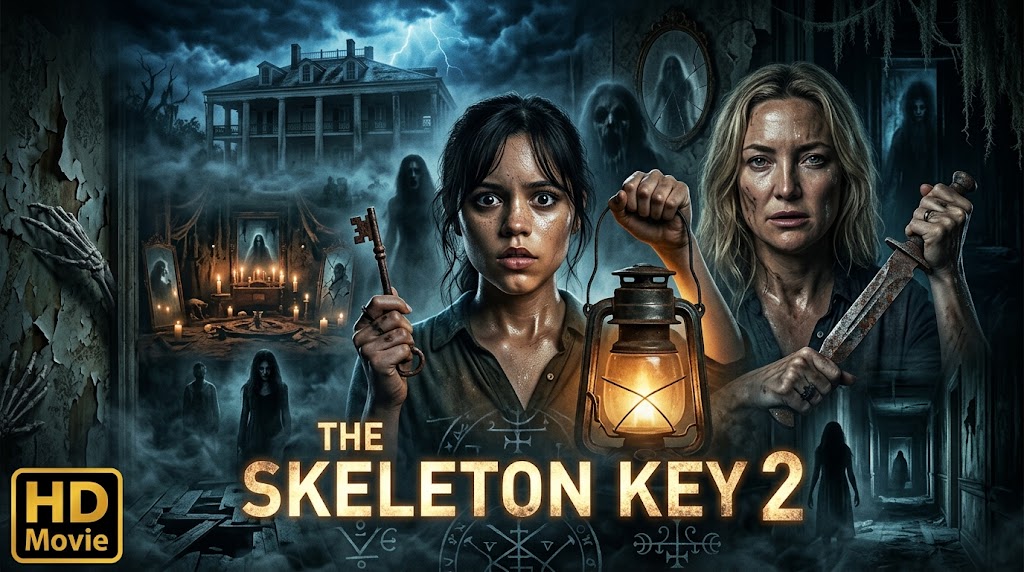
The Louisiana setting once again becomes a living character within the story. Decaying plantation halls breathe with old sorrow. Swamps shimmer beneath moonlight like hiding places for forgotten sins. Churches, graveyards, and abandoned healing rooms blur the line between sacred ritual and spiritual violation. The cinematography leans into mirrors, shadows, candlelight, and reflections to create a world where everything feels slightly displaced, as though reality itself has slipped off center.
As Caroline and Eliza dig deeper, they uncover a hidden lineage connecting Eliza’s family to unfinished rituals from decades earlier. The horrifying possibility emerges that Eliza was never randomly called back to Louisiana. She was chosen long ago. Her return is not coincidence—it is completion.
The climax unfolds inside a ruined prayer house swallowed by swamp land, where candles burn in impossible places and the boundary between present and past collapses completely. There, Eliza must confront the most frightening question of all: if belief gives evil its power, what happens when the only way to survive is to stop believing in yourself?
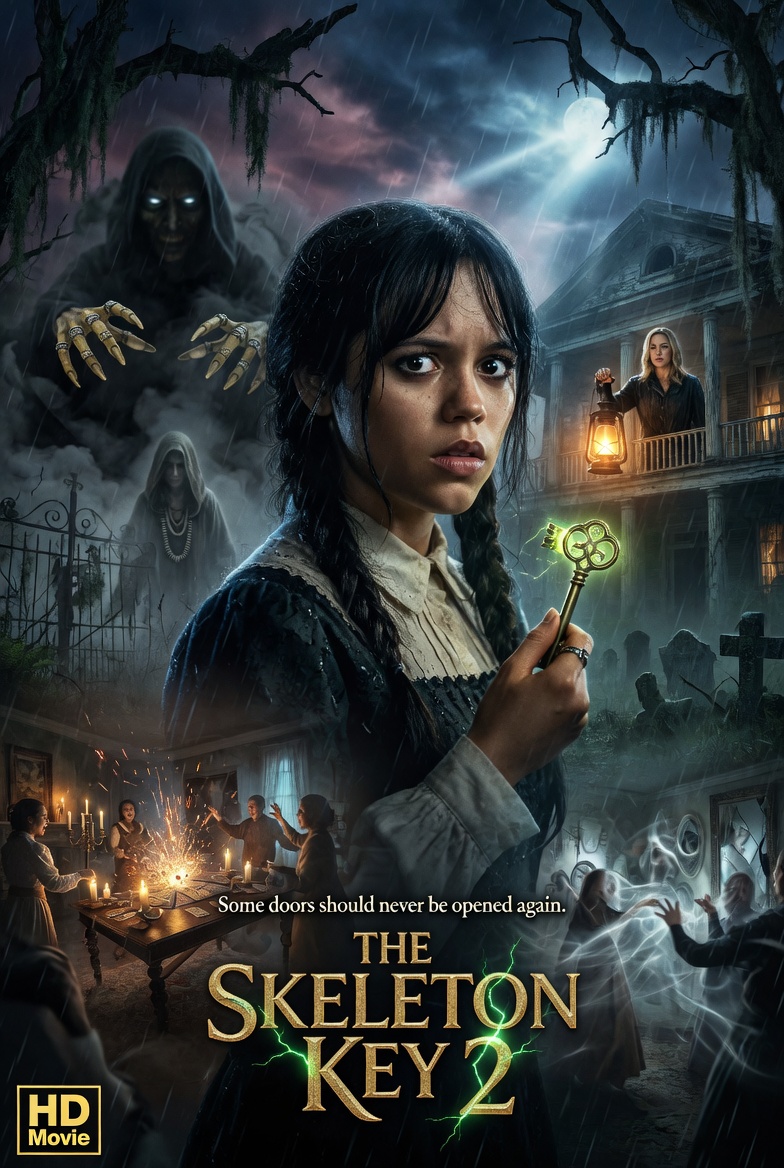
The Skeleton Key 2 (2026) becomes more than a supernatural thriller. It is a chilling meditation on inheritance—of trauma, of memory, of family secrets passed so quietly they begin to feel like fate. It explores how the past survives inside us, how unresolved pain can become ritual, and how the deepest horror is not what waits behind locked doors, but what enters when we finally open them.
“Some doors are locked for a reason.”
Rating: 4.7/5 – A beautifully unsettling psychological horror sequel that transforms Southern gothic folklore into a deeply personal nightmare about memory, identity, and the terrifying power of belief.