Jurassic World Rebirth
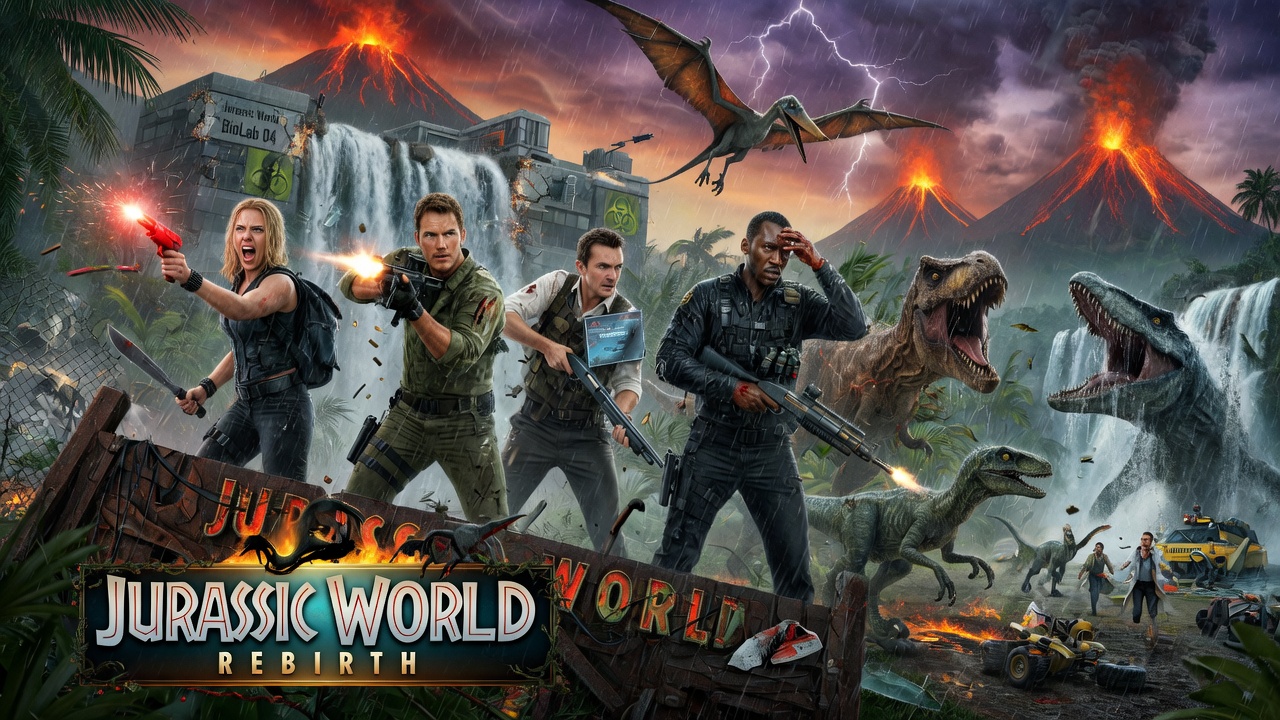
Jurassic World Rebirth | Scarlett Johansson, Chris Pratt, Rupert Friend, Mahershala Ali
Years after the collapse of dinosaur parks and the global chaos unleashed when prehistoric creatures spread across the planet, humanity now lives in a fragile new reality. Dinosaurs are no longer isolated attractions hidden behind electric fences—they have become part of Earth’s living ecosystem. Across abandoned cities, dense forests, frozen tundras, and remote coastlines, ancient predators and herbivores roam freely, forcing mankind to confront a truth it spent too long ignoring: nature was never meant to be controlled.
In Jurassic World Rebirth, the world stands at a crossroads. Governments, corporations, and scientists are divided over what must happen next. Some believe dinosaurs should be exterminated before they permanently destabilize modern civilization. Others argue that these creatures, brought back through human ambition and scientific arrogance, now deserve a place in the world humanity changed forever. Between survival and responsibility lies a moral question no one can escape—when humans create life, do they also inherit the duty to protect it?
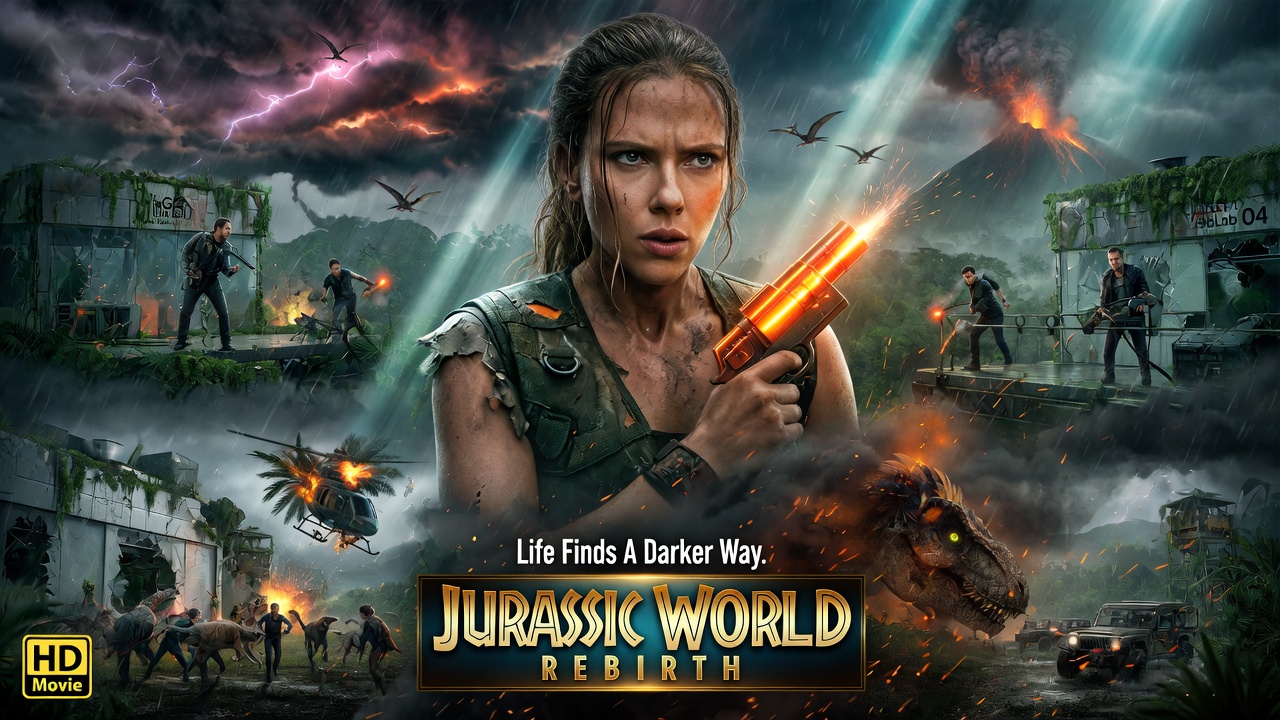
Chris Pratt returns as Owen Grady, the former dinosaur behavior specialist whose bond with these prehistoric animals has always separated him from everyone else trying to dominate them. Owen has spent years living far from collapsing cities, protecting isolated dinosaur populations from poachers, black-market traffickers, and military contractors eager to weaponize living giants. He understands better than most that dinosaurs are not monsters. They are animals—dangerous, powerful, unpredictable animals—but creatures acting according to instinct rather than cruelty.
Scarlett Johansson joins the franchise as Dr. Elena Voss, a brilliant evolutionary biologist recruited for a mission unlike anything attempted before. Hidden deep within an unexplored equatorial region lies a sanctuary where dinosaur species have begun evolving without human interference. This untouched ecosystem may hold the key to understanding whether coexistence between humanity and prehistoric life is possible. But Elena’s research reveals something even more extraordinary: a new generation of dinosaurs is emerging, born not from laboratory engineering but through natural adaptation. Life, once artificially resurrected, is now finding its own path forward.
When satellite surveillance suddenly loses contact with the sanctuary zone, disturbing evidence begins to surface. Entire research teams vanish. Migration patterns collapse. Apex predators once balanced within the ecosystem are fleeing from something even they fear. Owen and Elena are assembled into a high-risk expedition to uncover what has changed inside the sanctuary before whatever is happening spreads beyond containment.
What they discover transforms the mission entirely.
At the heart of the sanctuary, evolution has accelerated in terrifying ways. Generations of survival in an untouched environment have produced stronger, smarter, and more socially adaptive predators. Among them rises a creature unlike anything seen before—a massive hybrid apex species not created in a laboratory, but shaped by nature itself through relentless competition and survival. This new alpha predator does not simply hunt with strength. It learns, strategizes, and alters the behavior of everything around it. For the first time since dinosaurs returned, humanity is not facing the past recreated—it is confronting an entirely new future of prehistoric evolution.
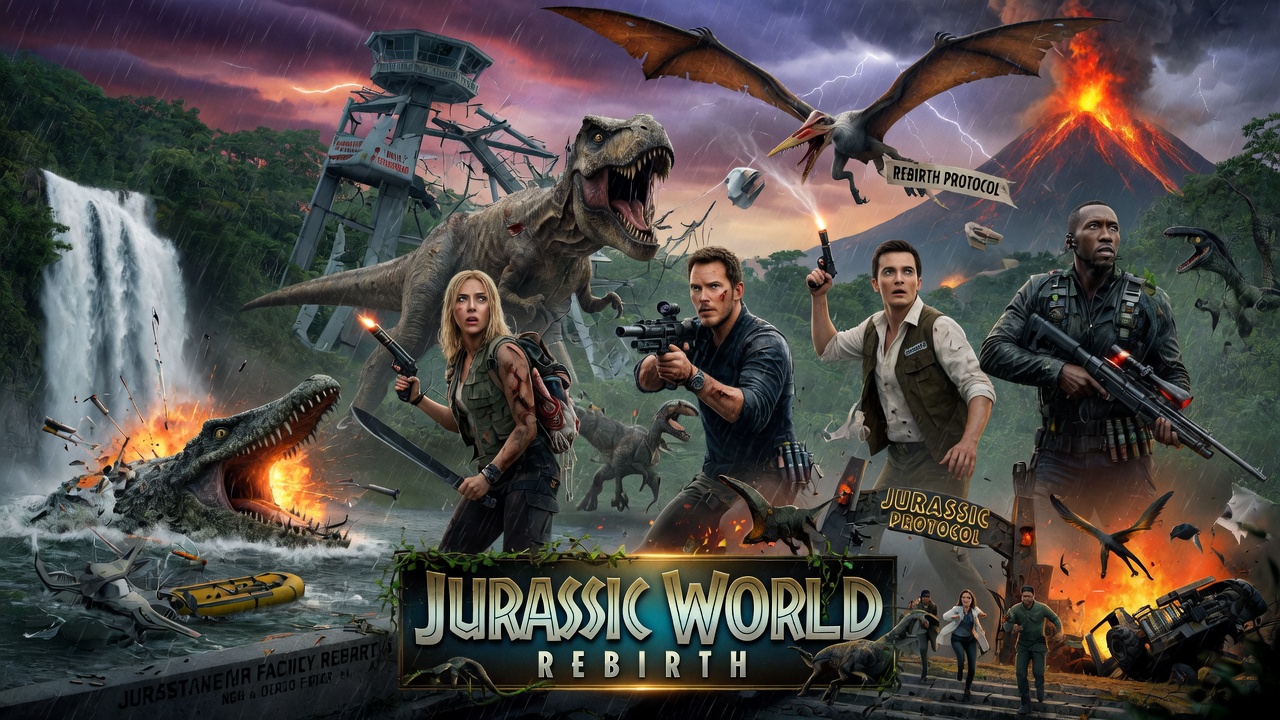
As communication fails and escape routes disappear, Owen, Elena, and their team become trapped inside a living battlefield where the rules of survival are constantly changing. Herd migrations trigger natural disasters across the jungle floor. Ancient skies darken with airborne hunters. Rivers become ambush zones for aquatic predators. Every corner of the sanctuary reminds them that this world does not belong to humans.
Yet beneath the spectacle and danger, Jurassic World Rebirth carries a deeper emotional core about legacy and humility. The original dream behind Jurassic Park was built on wonder—the desire to witness life thought lost forever. But that wonder was corrupted by profit, control, and mankind’s refusal to respect boundaries. Now, standing in the middle of an ecosystem no longer shaped by human hands, Owen and Elena are forced to confront a profound possibility: perhaps the greatest act of responsibility is not reclaiming control, but learning when to let go.
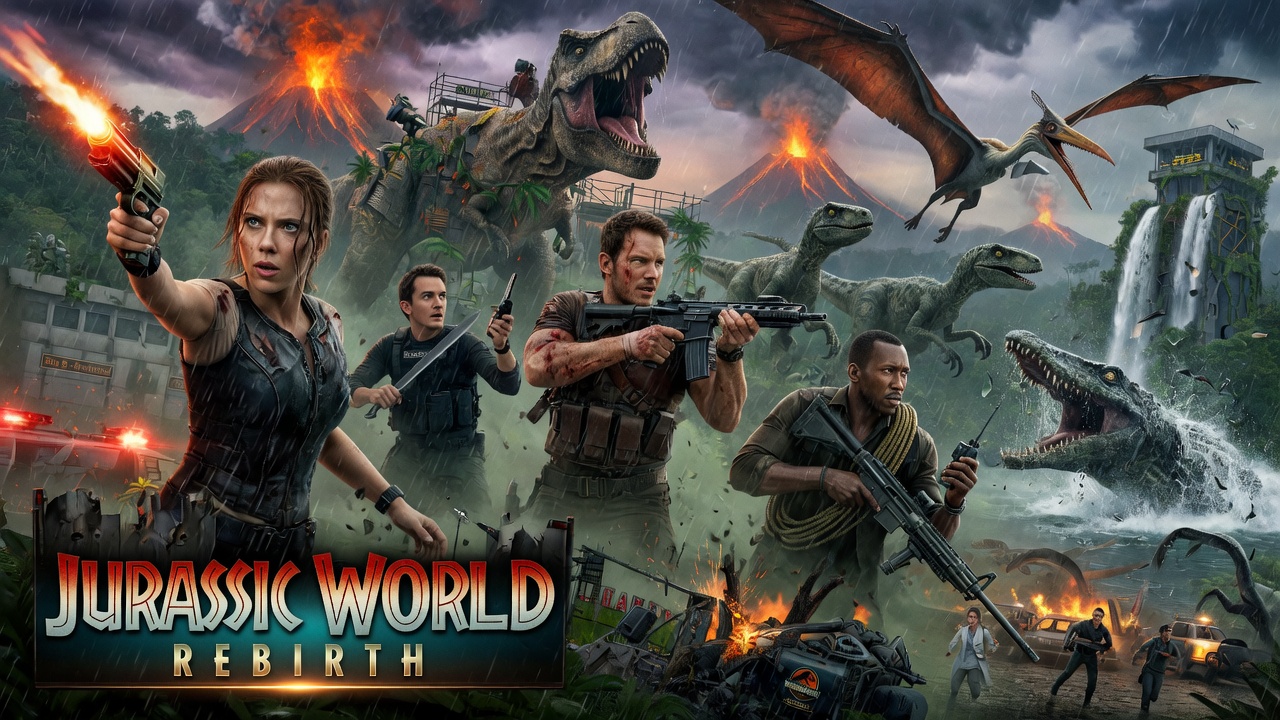
The film builds toward a breathtaking climax as the sanctuary collapses into chaos. Storm systems tear through ancient canopies, predator territories erupt into violent conflict, and humanity’s desperate evacuation collides with nature’s brutal order. In the final confrontation, survival depends not on overpowering the creatures, but on understanding the balance that has emerged between them.
For Owen, this journey becomes his most personal battle yet—a final attempt to protect both human lives and the fragile possibility that coexistence can still exist. For Elena, it is proof that life will always evolve beyond the limits humans try to impose upon it.
Jurassic World Rebirth ultimately becomes more than another survival adventure. It is a story about second chances—not just for humanity, but for life itself. It reminds us that rebirth is rarely comfortable. Growth demands change. Survival demands adaptation. And nature, no matter how many times humanity tries to control it, will always choose its own future.