THE RING THAT NEVER FORGETS – WHEN REALITY AND LEGEND STAND SIDE BY SIDE
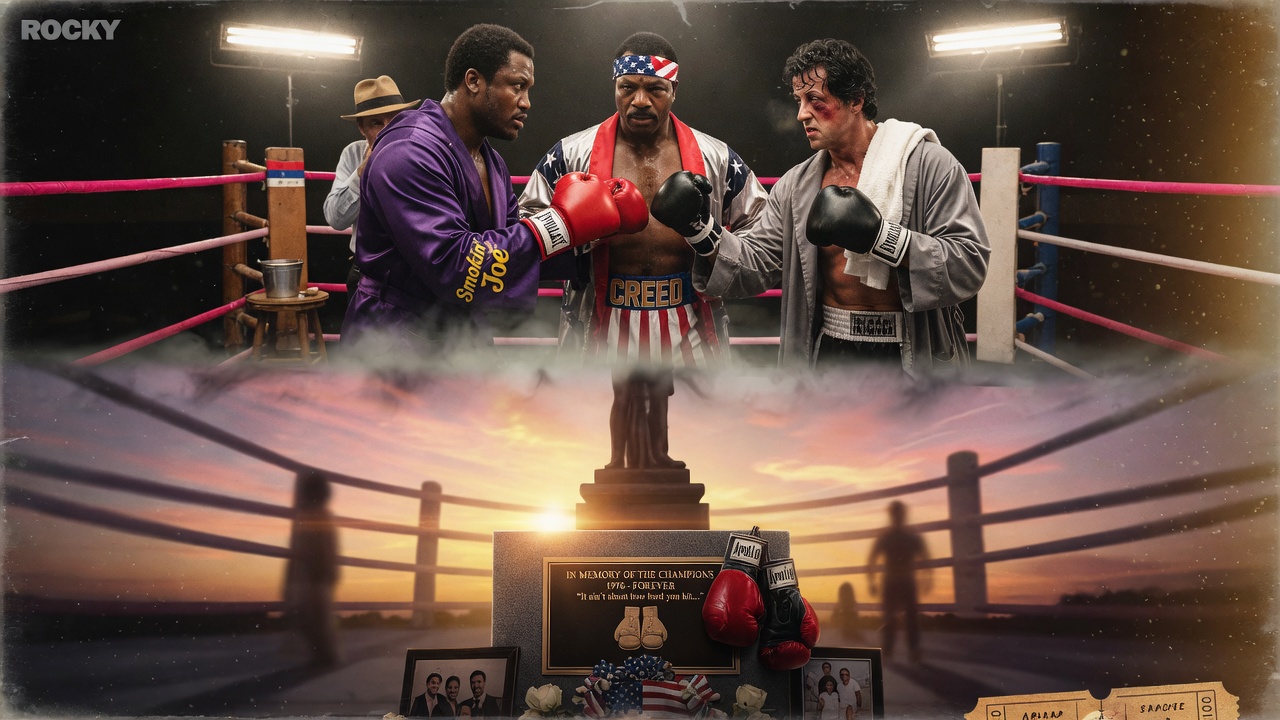
There are moments in history where the line between reality and fiction doesn’t just blur—it disappears entirely. A single photograph can hold more weight than entire biographies, because it captures something no script, no camera trick, and no imagination alone could ever recreate: presence.
In 1976, inside a boxing ring under harsh lights and roaring silence, three men stood together—each representing a different kind of truth. One was the most dangerous real fighter of his era. One was the most believable fictional champion cinema had ever created. And one was the man who understood both worlds well enough to bring them together.
Joe Frazier stood on the left. Not as a character. Not as a symbol. But as reality itself shaped into muscle, discipline, and pain. Smokin’ Joe was not acting toughness—he was it. A man whose left hook didn’t just win fights, but redefined what heavyweight boxing meant. Olympic gold. World champion. The man who gave Muhammad Ali his first professional defeat. In that ring, his presence didn’t need explanation. It simply dominated space.
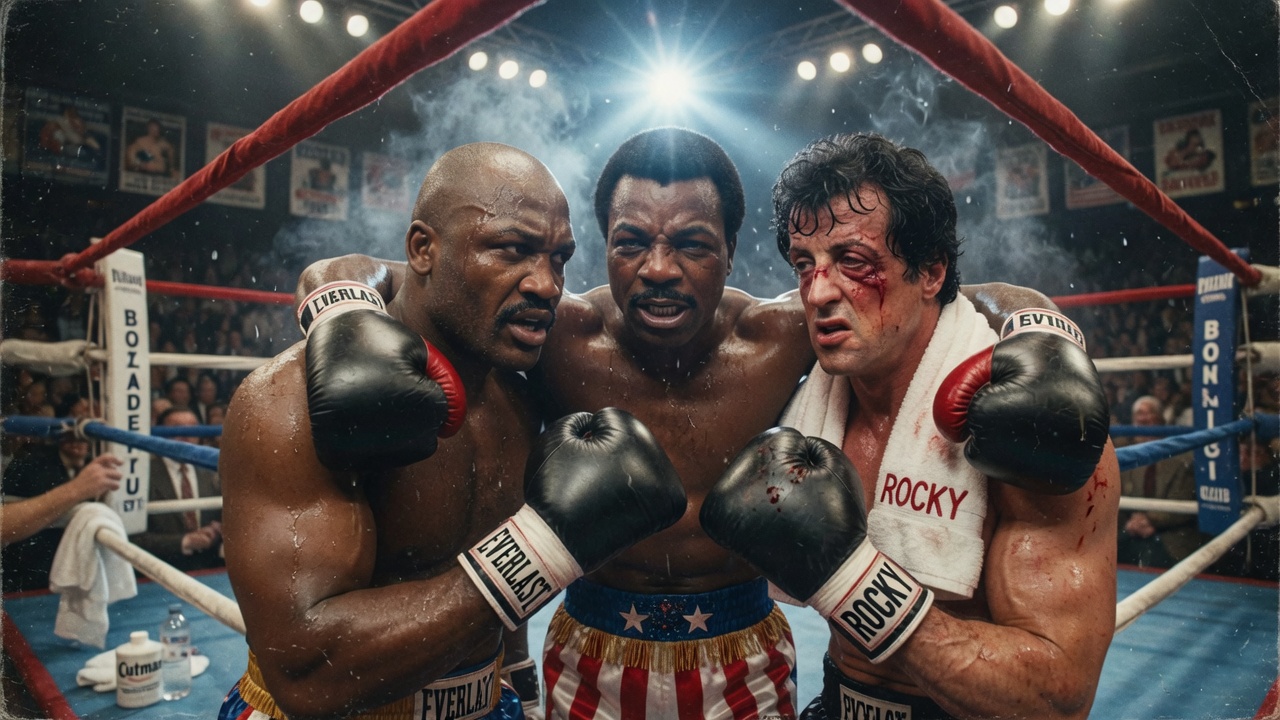
Next to him stood Carl Weathers as Apollo Creed. Fiction—but not fragile fiction. Apollo was not a shadow of a fighter; he was constructed with enough authenticity, charisma, and physical credibility that he could stand shoulder-to-shoulder with an actual world champion and not feel smaller. That is a rare kind of cinematic achievement. Apollo Creed didn’t imitate greatness—he became believable greatness.
Tony Burton stood nearby as the quiet constant, the corner presence every fighter needs but rarely celebrates. And then there was Sylvester Stallone—Rocky. Not yet a legend, not yet a cultural pillar, but already something unusual: a fictional underdog made real through sheer narrative force. A character who somehow belonged in the same air as real champions.
That ring was not just a set. It was a collision point of truth types: physical truth, performed truth, and written truth. And somehow, all three coexisted without contradiction.
Decades passed. And time did what it always does—it separated what was temporary from what was permanent.
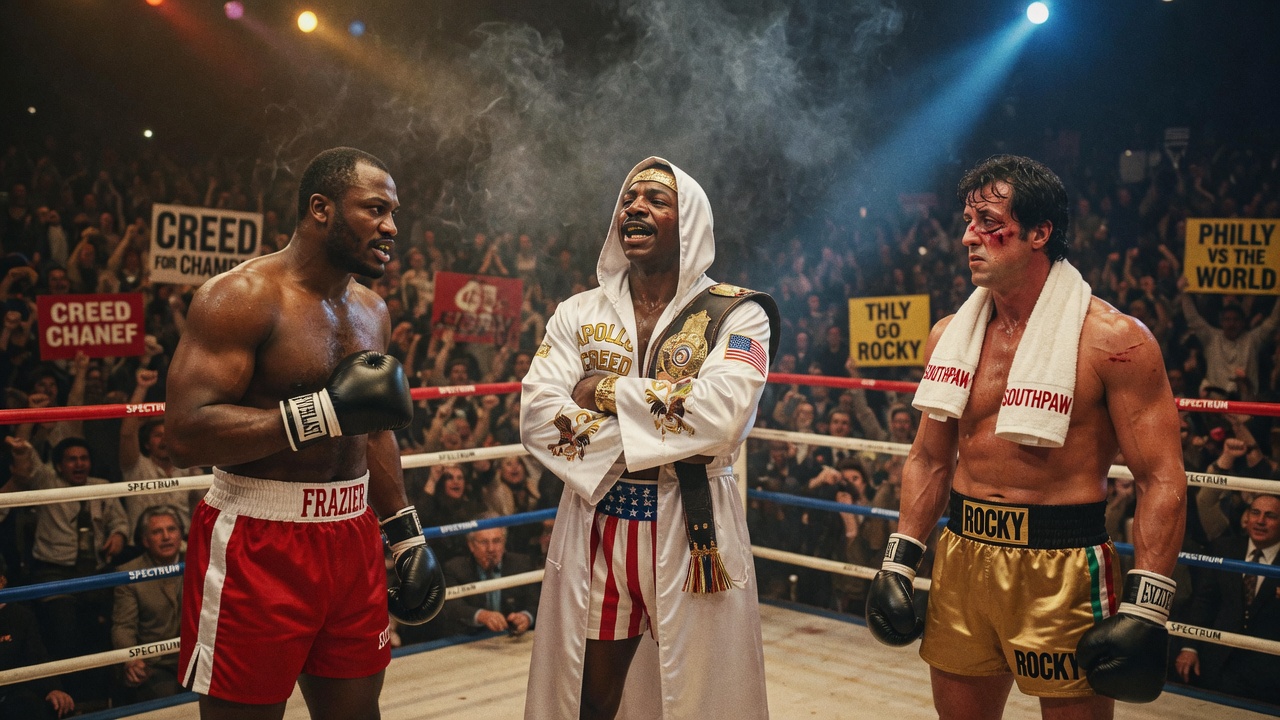
Joe Frazier left first in 2011. A man who carried the brutality and dignity of boxing with him until the end. No performance, no exaggeration—just the quiet exit of someone who had already proven everything there was to prove.
Carl Weathers followed in 2024. Apollo Creed died, but not as fiction dies. He left as a character who had outlived the screen, becoming part of cultural memory itself. And Carl, the man behind him, left with the same dignity he gave his creation—still working, still contributing, still present until the end.
And then there is Stallone. Still here in 2026. The last living thread connecting that original ring to the present. The writer. The fighter. The man who stood between real violence and cinematic myth and somehow made both feel equally alive.
What remains is not just nostalgia—it is inheritance.
Because that photograph is no longer about boxing alone. It is about what humans build when they try to preserve greatness in different forms. Joe Frazier represents the irreversible reality of physical excellence. Apollo Creed represents the idealized version of that same excellence. Rocky represents the human struggle to reach either.
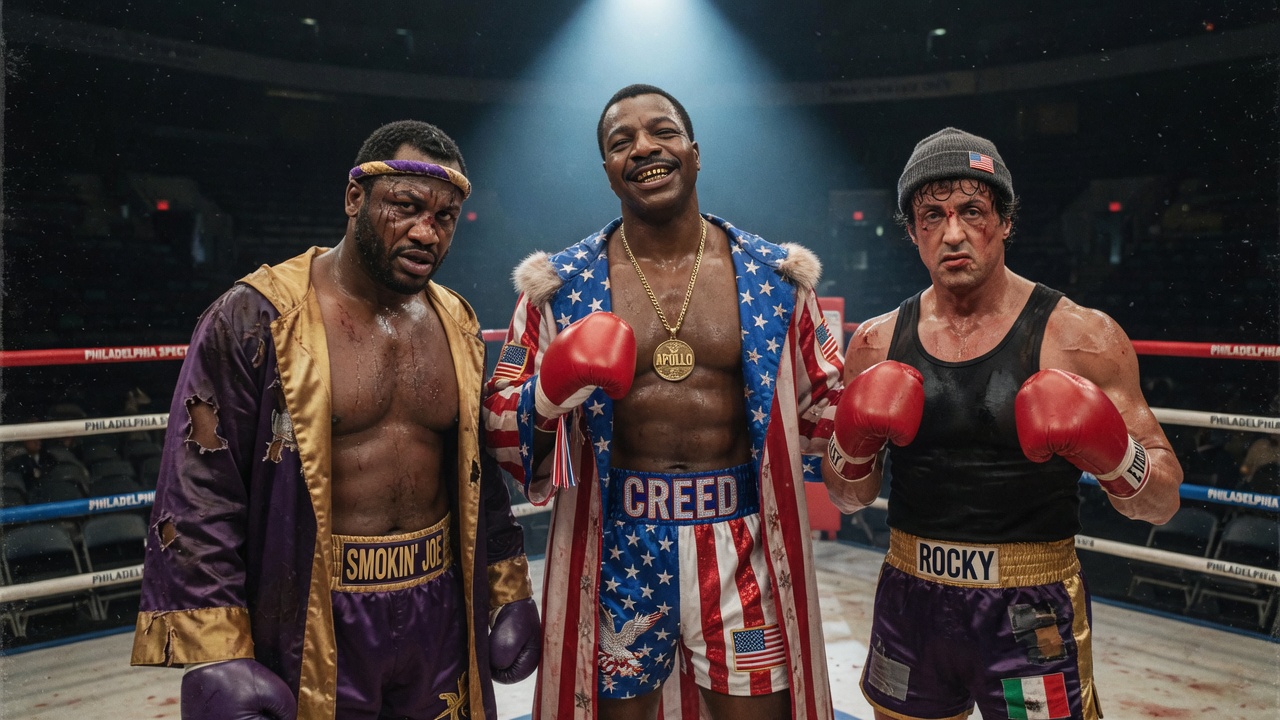
And Stallone carries them both now—not as memory, but as responsibility.
The real champion is gone. The fictional champion is gone. But what they represented is still standing in the cultural imagination, held together by the man who once put them in the same ring and asked the world to believe both were equally possible.
Maybe that is the final truth the image reveals:
The ring does not care whether a man was real or written.
It only remembers whether he mattered.
And some men—real, fictional, or somewhere in between—never leave it at all.