THE BOY IN THE TRUCK WINDOW – WHEN A MOVIE BECOMES A LIFE THAT NEVER ENDS
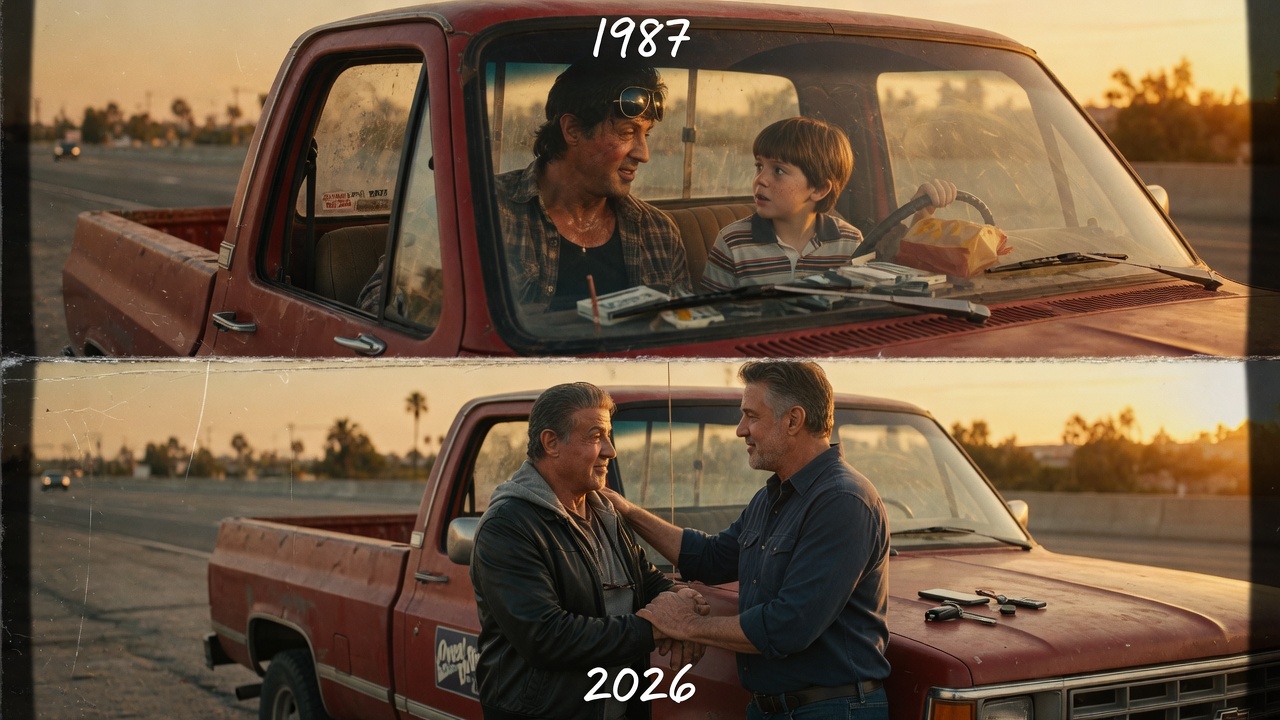
There are films that entertain… and there are films that quietly grow inside people over time. Over the Top (1987) belongs to the second kind. On the surface, it is a story about trucking, arm wrestling, and competition. But underneath all of that noise, it is something far more fragile and far more permanent: a story about a father trying to be seen by his son.
In the center of that story is a truck window.
A simple frame of glass separating two worlds. On one side is Lincoln Hawk—played by Sylvester Stallone—a man hardened by distance, sacrifice, and life on the road. On the other side is his son, Michael Hawk, played by David Mendenhall—a child trying to understand a father he barely knows, but instinctively feels he should trust.
That window is not just glass. It is emotional distance made visible.
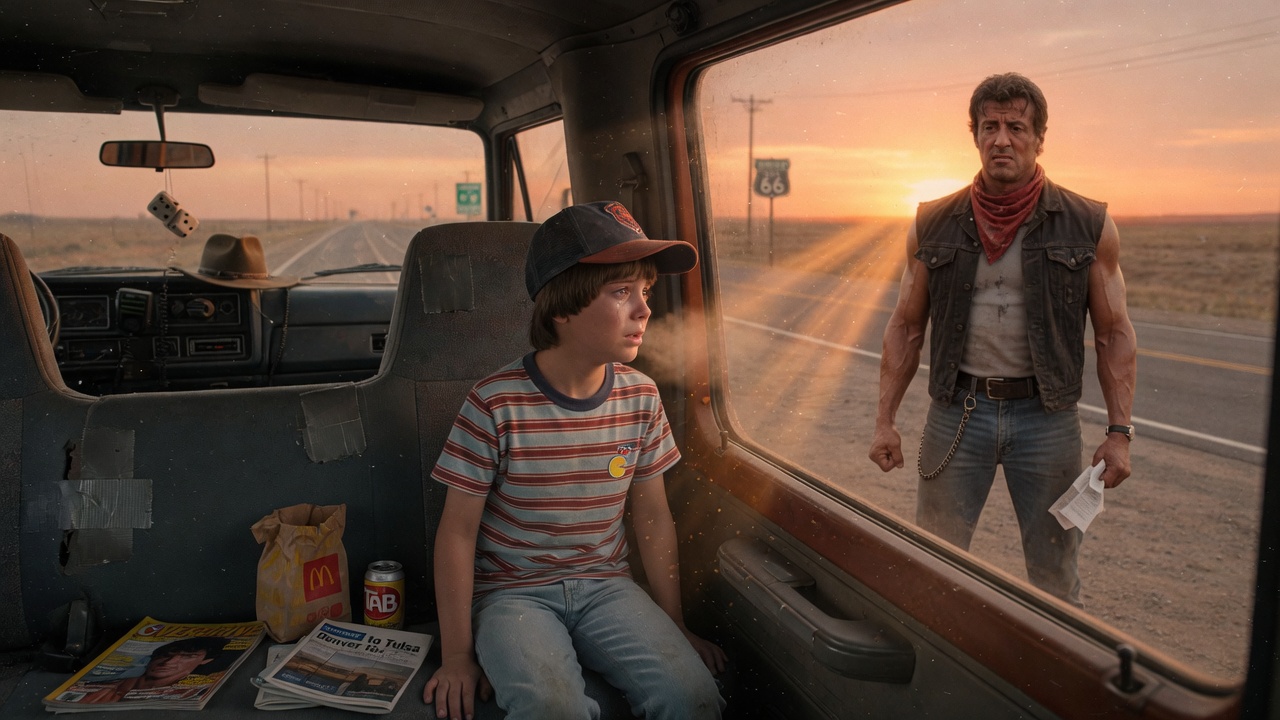
The father drives across America not for fame, not for victory, but for something far more difficult to win: a second chance at being a parent. Every mile, every drop of sweat, every arm wrestling match is not about sport—it is about redemption through presence. He is trying to prove something that cannot be measured in trophies: that love, once broken, can still choose to return.
And the boy watches.
Not with full understanding, but with something deeper than understanding—intuition. Children do not always know what sacrifice looks like, but they feel its weight when it stands in front of them. Michael Hawk watches his father fight men twice his size and slowly begins to learn something no classroom could ever teach: real love is not soft, and it is not easy. It is persistent. It refuses to quit.
The emotional truth of that film was never in the arm wrestling table. It was in that truck window.
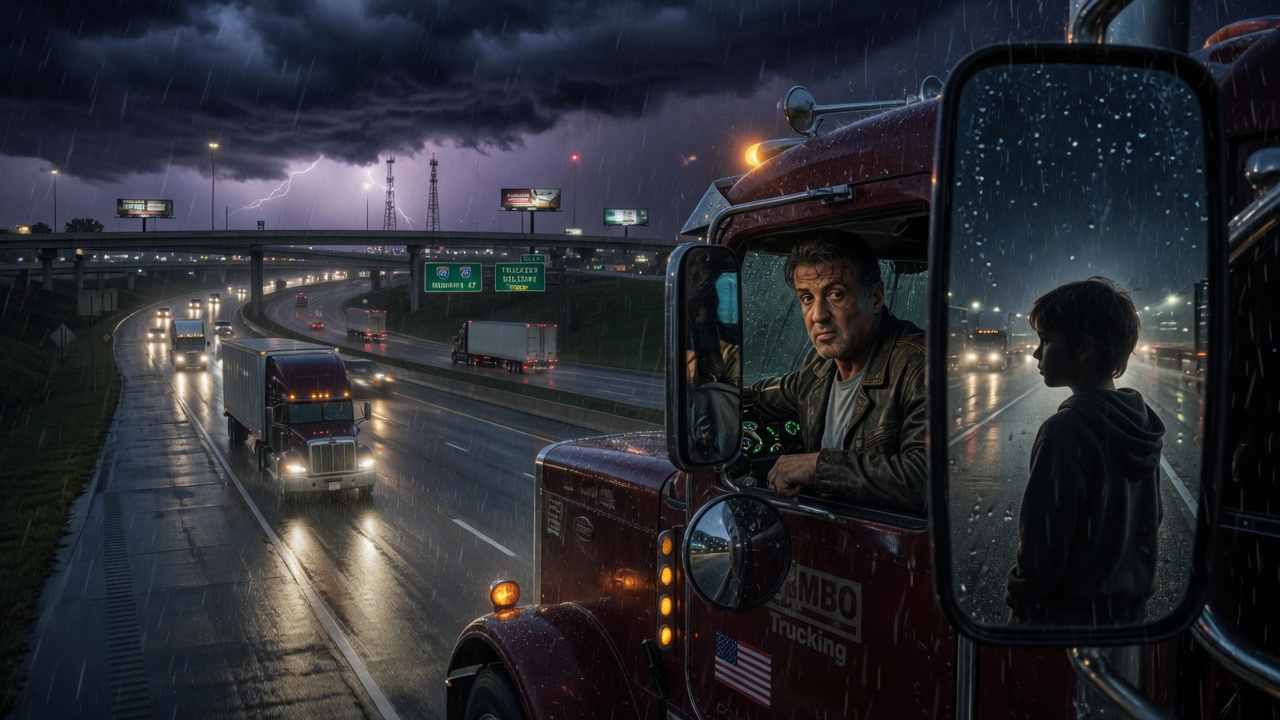
Because that window asked a question that every human eventually faces:
“What are you willing to endure for someone you love?”
And Lincoln Hawk answers it not with words—but with everything he has.
Years pass.
The road disappears. The neon glow of 1987 fades into memory. The film becomes something people rewatch, quote, and slowly begin to understand differently as they grow older themselves.
And then comes 2026.
The truck is gone. The boy is gone. But the people remain.
Sylvester Stallone stands beside David Mendenhall—no longer a child, no longer the boy in the window, but a grown man carrying the quiet dignity of someone who understands what was given to him, even before he fully knew how to name it.
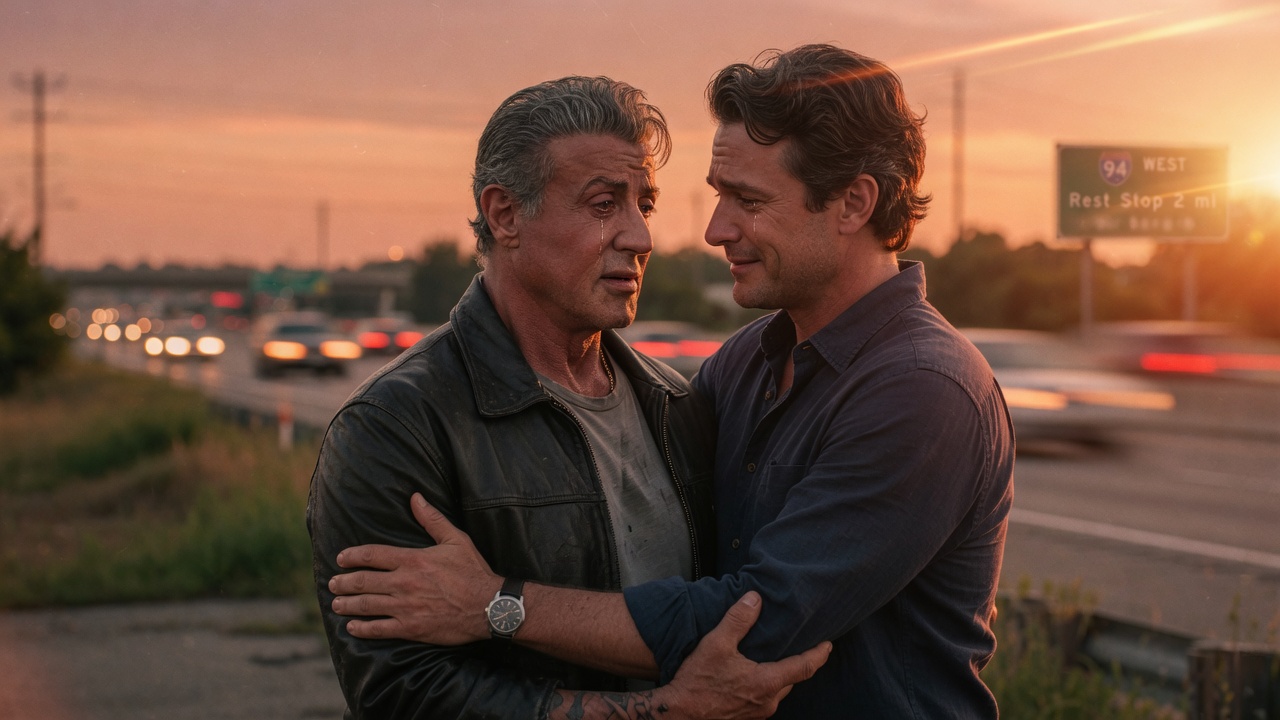
There is no performance in their expression. No scripted emotion. Just recognition.
Because some connections do not stay inside films. They spill out of them.
What makes this moment powerful is not nostalgia—it is completion.
The boy who once looked through glass and saw a father fighting for him… has become a man who understands what that fight cost.
And the father who once drove across America carrying nothing but determination… can now stand still and see that it meant something.
The story did not end when the credits rolled in 1987.
It continued quietly inside the people who lived it.
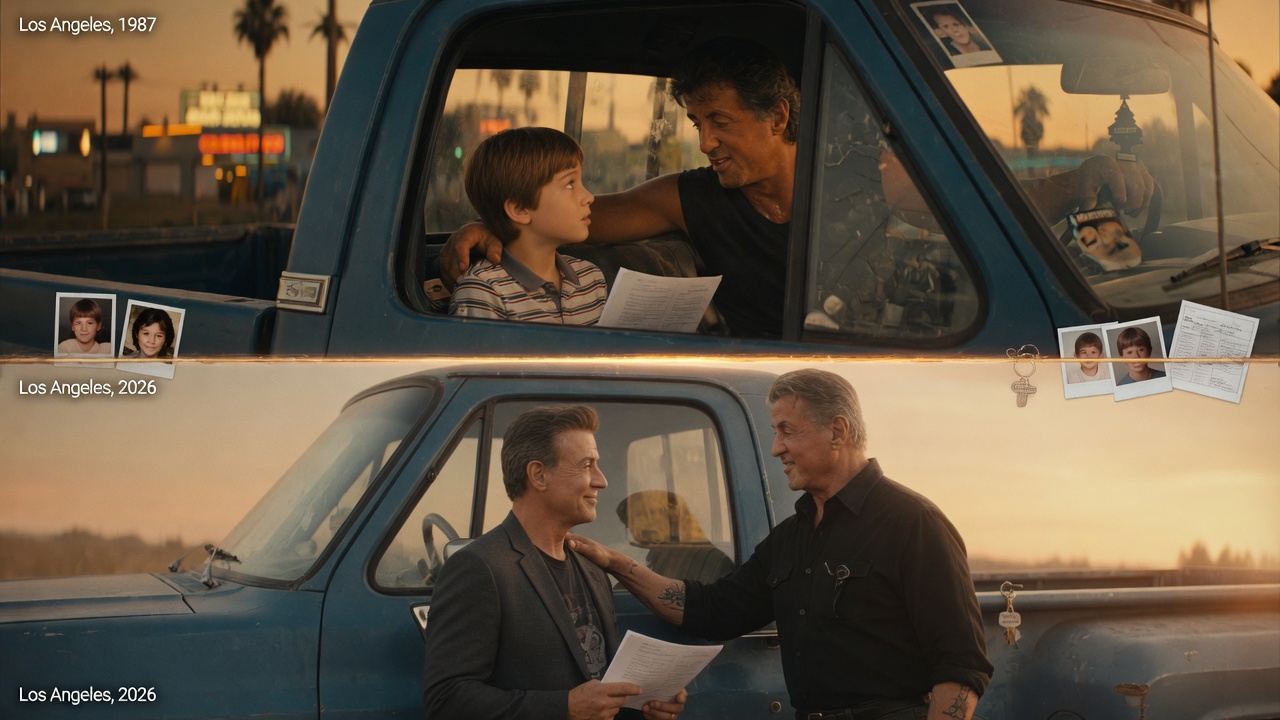
And now, decades later, it returns in a different form—not as a movie scene, but as lived memory shared between two men who once played father and son, and somehow became something close to it in the space between fiction and reality.
Because the deepest truth of Over the Top was never about winning.
It was about being seen.
A father trying to reach his child.
A child learning that love sometimes arrives in the form of effort, exhaustion, and impossible distance crossed anyway.
And in 2026, standing together again, that message no longer needs to be acted.
It simply exists between them.
The boy in the truck window grew up.
And the man who drove across the country to reach him… finally arrived.