BALLERINA 2 — She mastered the dance… now she writes the final movement in blood.
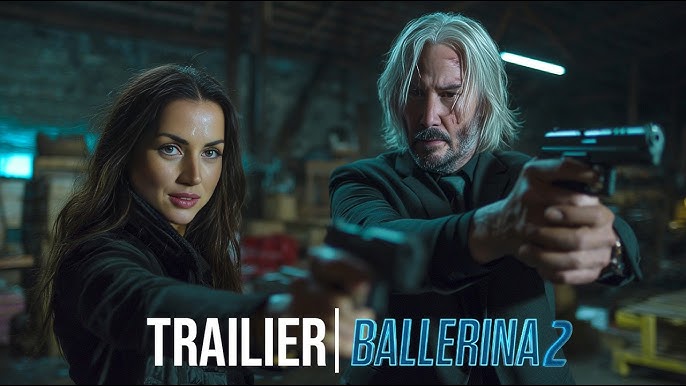
There’s elegance in violence, and Ballerina 2 knows it. From its opening frame, the film doesn’t ask for your attention—it commands it, pulling you into a world where grace and brutality exist in perfect, terrifying harmony. This isn’t just a continuation. It’s an escalation.
The story picks up in the aftermath of vengeance, where silence should mean closure—but for her, it never does. The past isn’t something she escaped. It’s something that learned how to follow. And this time, it doesn’t knock. It hunts.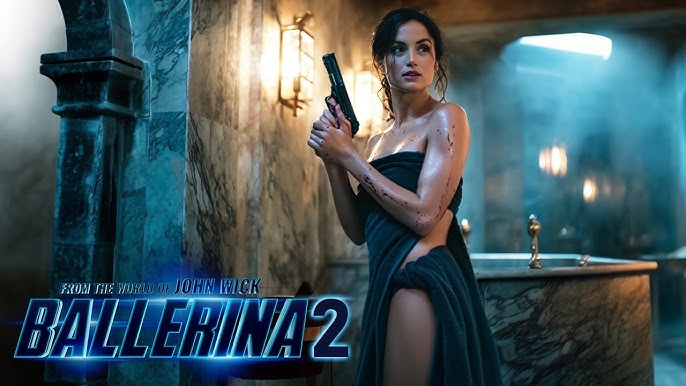
At the center stands a woman no longer defined by loss, but by control. She has refined every movement, every instinct, every breath into something lethal. Yet beneath that precision lies something unresolved—because no matter how perfect the performance, pain has a way of improvising.
What makes Ballerina 2 hit harder than its predecessor is its emotional restraint. It doesn’t rely on loud declarations or forced drama. Instead, it lets the silence speak. A glance lingers too long. A hand hesitates for half a second. And in those moments, you feel everything she refuses to say.
The action is where the film truly comes alive—and dies beautifully. Every fight feels choreographed like a performance, fluid yet unforgiving. Bodies move like music, collisions timed like beats, and every strike lands with purpose. This isn’t chaos. It’s composition.
But beneath the spectacle lies a deeper conflict. She isn’t just fighting enemies anymore—she’s fighting the idea that she can ever stop. That the life she’s built, the skills she’s mastered, may have already decided her fate. The question isn’t whether she can win… it’s whether she knows how to live without war.
The world around her expands, darker and more intricate than before. Alliances feel fragile, loyalty feels temporary, and every shadow seems to hold a memory waiting to resurface. Trust becomes a currency more dangerous than any weapon she carries.
Visually, the film leans into contrast—softness against brutality, beauty against destruction. A dimly lit stage becomes a battlefield. A quiet hallway turns into a death sentence. And through it all, she moves with the same haunting elegance, as if every step is part of a performance no one else can see.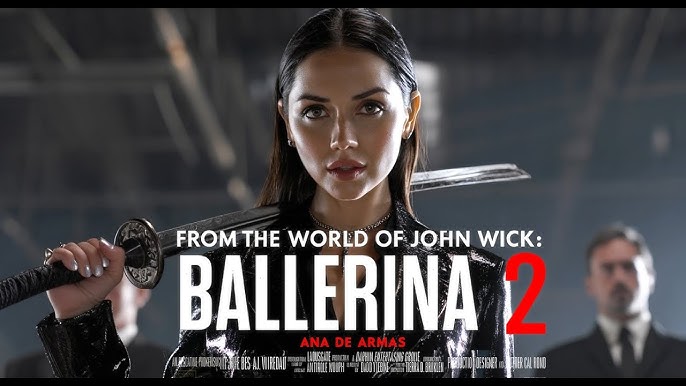
The music doesn’t just accompany the story—it defines it. Subtle at first, then overwhelming, it mirrors her descent into something colder, sharper, more detached. You don’t just watch her transformation—you hear it, feel it, breathe it.
What’s most compelling, though, is how the film reframes strength. It’s not about how many enemies she can defeat. It’s about how much of herself she’s willing to lose in the process. Because every victory feels heavier, every survival more costly.
By the time the final act unfolds, there’s no illusion left. The dance has changed. The rhythm is faster, the stakes higher, the consequences irreversible. And she stands at the center of it all—not as a victim, not as a survivor, but as something far more dangerous.
Ballerina 2 isn’t just a story about revenge. It’s about identity forged through violence—and the terrifying realization that some performances don’t end when the curtain falls.