Amur Tiger Killed in Highway Collision in Russia’s Far East
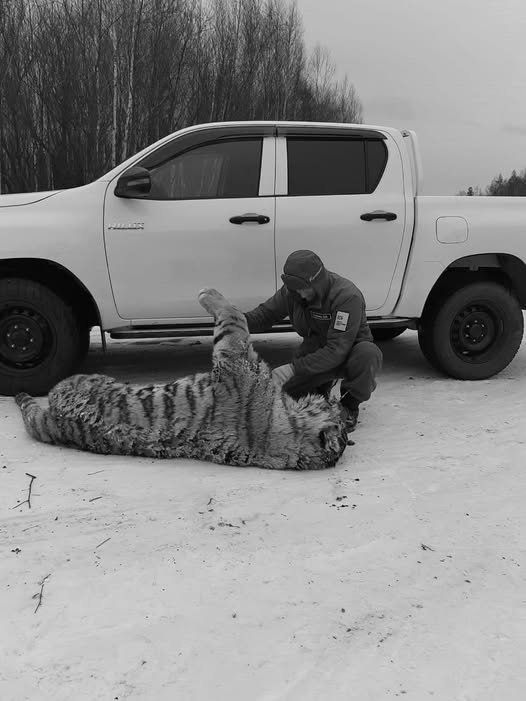
Amur Tiger Killed in Highway Collision in Russia’s Far East
A tragic incident unfolded in Russia’s Khabarovsk Territory last night when an Amur tiger was fatally struck by a vehicle on a highway in the Nanai district.
According to preliminary reports, the driver was unable to react in time as the tiger suddenly crossed the road in low visibility conditions.
The collision occurred in the early morning hours, a time when wildlife often moves closer to human infrastructure.
Immediately after the impact, the driver contacted the police to report the accident.
Authorities responded quickly, dispatching officers along with specialists from local wildlife services.
Experts from the Amur Tiger Center also arrived to assist with the investigation.
The tiger’s body was found just a few meters from the crash site.
A field examination confirmed that the animal was a healthy adult female.
Wildlife specialists noted that she was in excellent physical condition.
Her death represents a significant loss for the endangered Amur tiger population.
Conservationists stress that each individual is vital to the long-term survival of the species.
Roadway collisions have become an emerging threat as human activity expands into natural habitats.
Investigators are now working to determine the full circumstances surrounding the accident.
They will review road conditions, visibility, and potential preventive measures.
Local authorities may consider additional signage or protective barriers in high-risk areas.
The event has sparked renewed concerns among conservation groups.
They emphasize the urgent need for better coexistence strategies between humans and wildlife.
Many hope this tragedy will prompt stronger protections along migration routes.
The Amur tiger, native to Russia’s Far East, remains critically important to the region’s ecosystem.
With only a limited number in the wild, every loss has a measurable impact.
Experts highlight that preserving these predators requires coordinated efforts.
This includes habitat protection, monitoring, and public awareness campaigns.
As the investigation continues, conservationists call on the public to recognize the significance of the incident.
They urge communities to remain vigilant when traveling through wildlife zones.
The death of this prime female tiger serves as a sobering reminder of the fragility of endangered species.
Her story underscores the responsibility humans share in safeguarding the natural world.
May her memory strengthen ongoing commitments to protect the remaining Amur tigers.
Her loss, though heartbreaking, must not be in vain.