Her seven-year-old daughter was raped and murdered
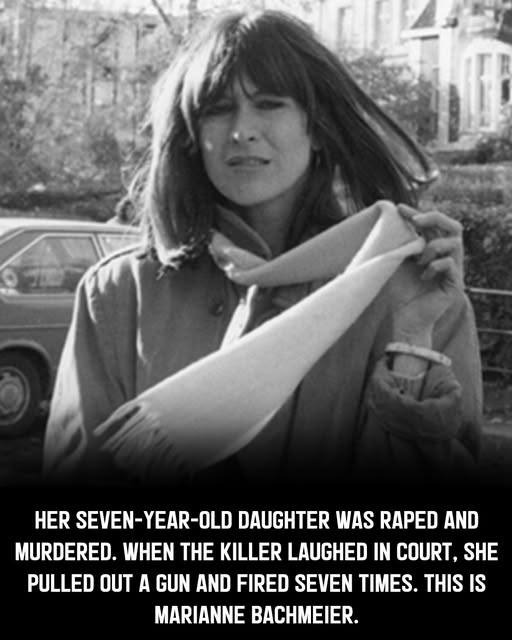
Her seven-year-old daughter was raped and murdered. When the killer laughed in court, she pulled out a gun and fired seven times. This is Marianne Bachmeier.
On the morning of May 5, 1980, seven-year-old Anna Bachmeier had an argument with her mother. Like any frustrated child, she decided to skip school. She wandered to a neighbor’s apartment to play with his cats—a man she had visited before.
She never came home.
The neighbor was Klaus Grabowski, a 35-year-old butcher. What Anna didn’t know—what her mother didn’t know—was that Grabowski was a convicted sex offender who had previously been sentenced for sexually abusing young girls. In 1976, he had voluntarily undergone castration to reduce his predatory urges. But afterward, he secretly took hormone treatments to reverse the procedure.
The monster had returned.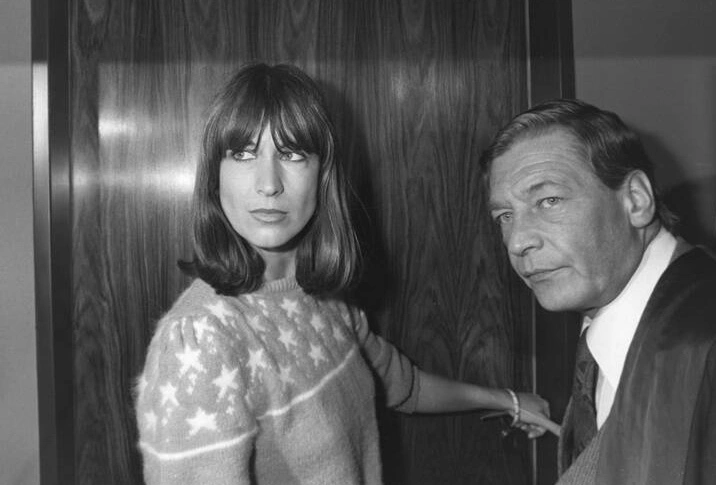
Grabowski held Anna captive for hours. He assaulted her. And then he strangled the seven-year-old girl to death.
When Grabowski’s fiancée discovered what he had done, she alerted the authorities. He confessed to the murder. But in his confession, he said something that would haunt Marianne Bachmeier until her dying day: he claimed that little Anna had tried to seduce him, and that he only killed her because she threatened to blackmail him.
A seven-year-old blackmailer. A seven-year-old seductress.
That was his defense.
Marianne Bachmeier was thirty years old when her daughter was murdered. Her own life had been a catalog of trauma—an abusive childhood, teenage pregnancy, abandonment. Anna was the one light in her darkness, the child she loved most fiercely.
Now Anna was gone. Murdered by a man who was blaming the victim.
The trial began on March 3, 1981. Grabowski sat in the courtroom, alive and well, preparing to spread more lies about a dead child who couldn’t defend herself. Marianne sat in the gallery, watching the man who had taken everything from her.
On the third day, March 6, 1981, Marianne Bachmeier arrived at the Lübeck District Court with a .22-caliber Beretta pistol hidden in her handbag.
She had heard that Grabowski planned to testify that day. More lies. More slander against her dead daughter. More claims that a seven-year-old was somehow responsible for her own murder.
At around 10 a.m., as Grabowski stood before the court, Marianne rose from her seat. She walked toward him. She pulled the gun from her bag.
And she fired.
Seven shots. Six hit Klaus Grabowski in the back. He collapsed to the courtroom floor and died almost instantly.
Chaos erupted. Screams filled the chamber. Officers rushed toward Bachmeier. But she didn’t run. She didn’t resist. She simply lowered the gun and let them take her.
As they led her away, witnesses heard her speak.
“I wanted to shoot him in the face, but I shot him in the back.”
She called him a pig.
The courtroom shooting became an international sensation. Marianne Bachmeier was instantly transformed from grieving mother to vigilante killer. Newspapers around the world ran her photograph. Magazine covers debated whether she was a hero or a murderer.
Germany was split down the middle.
To many, she was a broken mother who had done what the justice system couldn’t—or wouldn’t—do. Grabowski was a repeat offender. He had been convicted before. He had been allowed to reverse his castration. He had been free to hunt again. The system had failed Anna Bachmeier, and her mother had corrected that failure with seven bullets.
To others, she was a dangerous vigilante who had undermined the rule of law. No matter how monstrous Grabowski was, he deserved a trial. Justice must be administered by courts, not by grieving mothers with guns.
Marianne Bachmeier’s own trial began in 1982. The prosecution initially charged her with murder, but after hearing the evidence—the horrific details of Anna’s death, Grabowski’s history, his slanderous defense—they reduced the charge to manslaughter.
During the trial, Bachmeier testified that she had shot Grabowski “as if in a dream.” She said she saw visions of her daughter in the courtroom. When asked to provide a handwriting sample, she wrote: “I did it for you, Anna.” She decorated the page with seven hearts—one for each year of her daughter’s life.
In March 1983, Marianne Bachmeier was convicted of manslaughter and unlawful possession of a firearm. She was sentenced to six years in prison. She served three before being released on probation.
She never expressed remorse for killing Klaus Grabowski. Not once. Not ever.
After her release, Bachmeier briefly became famous. She gave interviews. Her autobiography was published. She appeared on television, where she admitted that she had shot Grabowski after careful consideration—to stop him from spreading more lies about Anna.
But fame couldn’t fill the void.
Bachmeier married a German schoolteacher and moved to Nigeria. The marriage ended in divorce. She drifted to Sicily. And then came the diagnosis that would end her story: pancreatic cancer.
Marianne Bachmeier returned to Lübeck, the city where her daughter had been murdered and where she had taken her revenge. She asked a journalist to film the final stages of her life.
On September 17, 1996, Marianne Bachmeier died. She was forty-six years old.