A Dublin Bus Ride Turns into a Life-or-Death Rescue on O’Connell Street
A Dublin Bus Ride Turns into a Life-or-Death Rescue on O’Connell Street
The evening rush hour in Dublin is usually predictable: slow traffic, tired commuters, and the soft glow of phone screens reflecting off bus windows. But on one weekday evening, the 46A bus crawling up O’Connell Street became the scene of a sudden medical emergency—and an extraordinary act of courage.
At the wheel was Patrick Byrne, a 54-year-old driver with nearly two decades of experience. He’d been feeling mild discomfort after grabbing a quick bag of chips from Molloy’s Takeaway before his shift. At first, he dismissed the tightness in his chest as nothing more than indigestion. But as the bus idled in traffic, the discomfort surged. His hands slipped from the wheel. The bus jolted forward, struck the curb, and sent a tourist’s shopping bag skittering across the aisle.
Passengers screamed. A baby wailed in its stroller. Shock rippled through the bus as people clung to poles and seats, trying to steady themselves. And then, amid the fear and confusion, a single voice cut through.
“Someone pull the handbrake!”
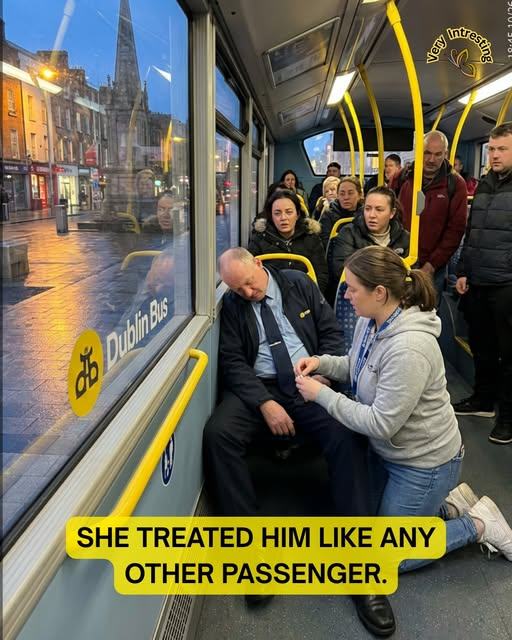
It belonged to Aoife Collins, a cardiac nurse from St. Mary’s Hospital who happened to be riding a few rows back. A nearby student reacted instantly, yanking the brake and bringing the bus to a grinding halt just past Parnell Square. Even before the wheels stopped turning, Aoife was at the front, dropping to her knees beside Patrick.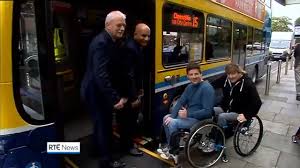
The driver’s face had turned an alarming shade of gray. Sweat seeped through his uniform shirt, and his breathing was faint. When he didn’t respond to her voice, Aoife checked his pulse, then immediately began chest compressions. Passengers fell silent, watching as her hands moved with practiced precision against the hard bus floor scattered with coins and loose receipts.
Outside, cars honked impatiently, unaware of the battle unfolding inside the stopped bus. A woman cried quietly into a paper shopping bag. A small boy clutched his toy Dublin Bus, eyes fixed on the real one where the driver wasn’t moving.
After nearly two minutes—though to everyone on board it felt much longer—Patrick suddenly drew a ragged gasp. His eyelids fluttered, confusion clouding his expression before fear settled in.
The ambulance arrived moments later. As paramedics prepared to close the doors, Patrick gathered enough strength to ask a single question: “Did I… hurt anyone?”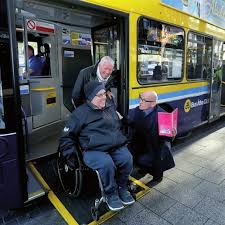
Aoife squeezed his hand and gave him a gentle smile. “No, love. You just scared us a bit. That’s all.”
He was taken to the hospital for emergency care, alive thanks to the nurse who had been sitting only a few rows away.
The moral is simple, but profound:
Sometimes the person who saves your life is quietly riding the same bus as you—until the moment you need them most.