When the Gavel Fell, the Courtroom Went Silent—Except for the Judge Who Refused to Look Away
When the Gavel Fell, the Courtroom Went Silent—Except for the Judge Who Refused to Look Away
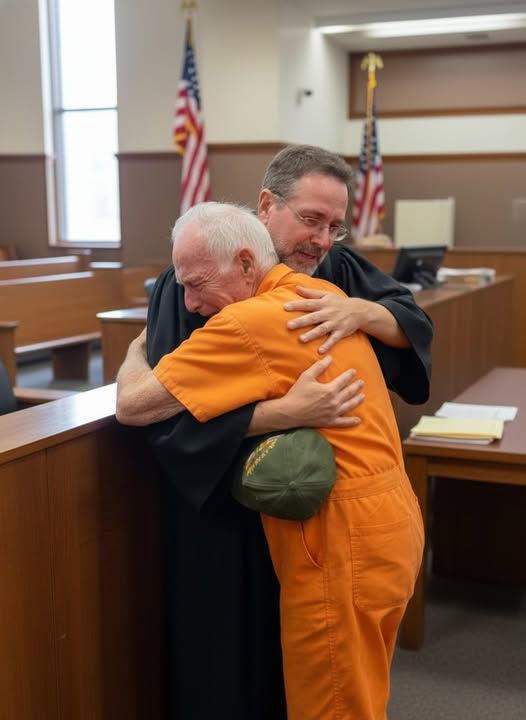
The courtroom was nearly full when an 82-year-old man entered slowly, his orange jumpsuit hanging loosely from his frail frame. In his hands, he clutched a worn Vietnam veteran’s cap, holding it as if it were the final anchor connecting him to the life he once knew.
James had not slept in a real bed for three years. During last week’s ice storm, with temperatures dropping well below freezing, police found him curled up inside a post office lobby. When officers attempted to wake him, he panicked—confused, frightened, and disoriented after years of surviving on the streets. The charges were simple on paper: trespassing and resisting arrest. But for James, they felt like the final confirmation that the world had given up on him.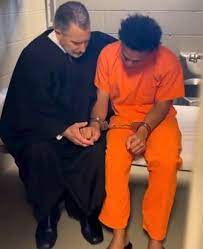
Judge Lou Stevens reviewed the case with routine efficiency—until he reached the last page of the folder. Paper-clipped to the back was James’s military record. Purple Heart. Bronze Star. Two tours in Vietnam. The judge froze, his expression shifting from formality to something far heavier.
Stevens looked at the prosecutor, then at the trembling elderly man before him. His voice broke as he spoke: “This man is not a criminal. He is a hero we left out in the cold.”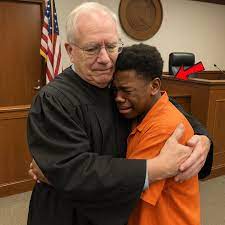
James lifted his head, stunned.
What happened next startled the entire room. Judge Stevens rose from his bench, leaned over the high wooden barrier, and physically reached down to pull James into an embrace. The veteran collapsed into the judge’s arms, gripping his robe and crying for the first time in years. Not a single person in the courtroom spoke.
“The system failed you when you came home,” Stevens said quietly but firmly. “We will not fail you again today.”
He returned to his seat, wiped his eyes, and dismissed the charges on the spot. But he did not stop there. Judge Stevens instructed his staff to personally escort James to the local veterans’ center and to remain with him until he was registered for housing, medical care, and the benefits he had been deprived of for decades.
Later, when reporters asked why he had crossed the courtroom barrier, Judge Stevens answered simply: “Because when someone who fought for you needs help, you don’t walk away. You step forward.”