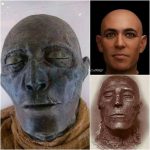
The Final Resting Place of Genghis Khan? A Legendary Discovery in Mongolia
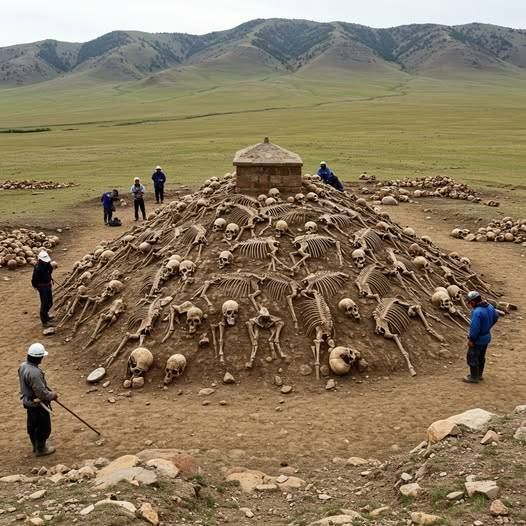
A mind-blowing discovery in Mongolia’s remote Khentii province has sent shockwaves through the world of archaeology, as researchers believe they may have uncovered the final resting place of one of history’s most legendary figures—Genghis Khan. Hidden near the Onon River, road construction workers stumbled upon a mass grave containing 68 skeletons atop a mysterious stone structure, prompting forensic experts to hypothesize that these were the laborers who built Genghis Khan’s tomb, sacrificed to ensure its secrecy. But the discovery didn’t end there. The excavation revealed something even more astonishing: twelve horse skeletons found nearby, possibly symbolizing the sacred bond between the great leader and his revered animals.
Could this be the long-lost tomb of Genghis Khan, or does this site offer even deeper secrets of a powerful and ancient civilization that once ruled the vast Mongolian Empire?
The Mass Grave: The Laborers and Their Sacrifice
In a location that has long been the subject of mystery and legend, the discovery of a mass grave has sparked intense interest and speculation. Forensic experts believe that the 68 skeletons were the laborers who were forced to build the tomb, their lives sacrificed to ensure that the tomb’s location remained hidden for centuries. This practice of burying workers who constructed royal tombs was not unheard of in ancient cultures, but the scale and context of this find suggest it could be tied directly to the legendary leader Genghis Khan, whose tomb has remained one of the world’s greatest archaeological mysteries.
What makes this discovery even more fascinating is the level of preservation and the strategic placement of the bodies—intentionally arranged atop a stone structure—which could imply a highly ritualistic and deliberate effort to keep the final resting place of Genghis Khan a secret from invaders, explorers, and later generations.
The Twelve Horse Skeletons: A Sacred Connection
In an even more astonishing development, twelve horse skeletons were found in close proximity to the mass grave. Horses were revered in Mongolian culture and played an essential role in Genghis Khan’s military campaigns and way of life. These horse skeletons could suggest a deep connection between the great leader and the sacred bond between horse and rider, reflecting his profound relationship with his horses that helped him conquer vast territories. The presence of these horses, potentially placed near the tomb of Genghis Khan, points to their symbolic significance in his journey to the afterlife.
Could these horses have been sacrificed to accompany their master into the next world, or were they part of a greater ritual that honored the Mongol Empire’s military legacy and Genghis Khan’s indomitable spirit?
A Discovery that Could Rewrite History
While some experts caution that the site may not definitively belong to Genghis Khan himself, the sheer significance of the location—close to the Onon River, Genghis Khan’s birthplace—and the presence of sacrificed laborers and horse remains make it a strong contender for being his final resting place. If confirmed, this discovery could be one of the most significant archaeological finds of the century, shedding light on the practices of Mongol rulers, their relationships with horses, and the mysterious ways they ensured the secrecy of their tombs.
Could this find be the long-awaited tomb of Genghis Khan, or does it reveal an even deeper secret about the civilization that ruled the largest land empire in history? As scientists continue to study the site, the world watches, waiting to learn whether this discovery will unlock new insights into Mongolian history and the legacy of Genghis Khan.