My Glock was unholstered, safety off, while eighty pounds of muscle
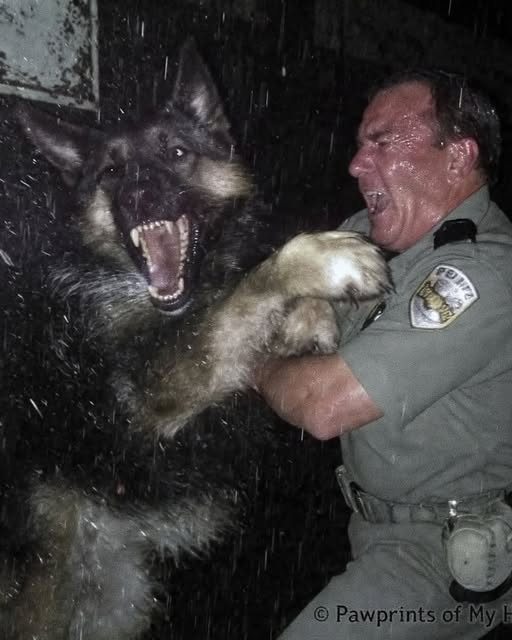
My Glock was unholstered, safety off, while eighty pounds of muscle and teeth strained against the leather lead in my left hand. Brutus didn’t growl; he vibrated. That’s when you know it’s bad.
We were sweeping the Old Union Depot on the east side. It was a condemned relic of the rail industry, slated for demolition next Monday. The dispatch call was standard: Trespasser. Possible 10-10 (suspicious person). In this part of town, at 2:00 AM in the pouring rain, that usually meant a copper thief or a junkie looking for a fight.
“Police K9! Come out with your hands up or I will release the dog!” I shouted, my voice echoing off the peeling lead paint and rusted steel beams.
Nothing but the sound of rain hammering the metal roof.
Brutus, my German Shepherd, locked onto a scent. He dragged me toward the old ticketing counter, his claws clicking on the cracked terrazzo floor. I tightened my grip. Brutus is a “land shark”—a highly trained weapon designed to take down felons twice my size. He doesn’t do ‘gentle.’
We rounded the corner, and I raised my weapon, flashlight cutting through the gloom.
“Show me your hands! Now!”
But Brutus didn’t lunge. The leash went slack. The low, menacing rumble in his throat vanished, replaced by a soft, confused whimper. He sat down, tilted his massive black-and-tan head, and thumped his tail once against the floor.
I lowered my light.
Standing there wasn’t a meth addict. It was an old man. He had to be eighty-five, shivering violently in the damp draft. He was wearing a tuxedo—a genuine, vintage tailcoat style from the 1950s, though it was moth-eaten and soaked through. In his trembling hand, he clutched a bouquet of red roses that had long since wilted into a brown, sodden mess.
“Sir?” I holstered my weapon, stepping forward cautiously.
The old man didn’t look at me. He looked past me, his eyes glassy and fixated on the empty tracks outside where only weeds grew now.
“Excuse me, young man,” he said, his voice raspy but surprisingly dignified. “Is the 2:15 from Chicago on time? I… I can’t be late. Eleanor gets upset if I’m not standing right here.”
My heart sank. It wasn’t a crime; it was a tragedy.
I recognized the look. My own grandfather had it before he passed. Alzheimer’s. The man wasn’t in a condemned building in 2024; he was in 1957, waiting for the love of his life.
“Sir,” I started, reaching for my radio to call for a welfare check.
But then, Brutus did something that wasn’t in the training manual. He walked up to the old man. Usually, if a stranger moves a hand near Brutus, they lose a finger. But the old man simply reached down and rested his shaking hand on the dog’s wet fur.
Brutus leaned his entire weight against the man’s frail legs, offering himself as a living crutch. He licked the man’s cold knuckles, gentle as a nurse.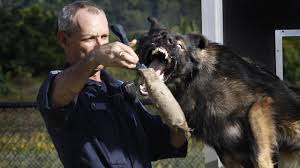
The old man smiled, tears mixing with the rain on his cheeks. “She loves dogs. We’re going to get a puppy after the wedding. A big one. Just like this.”
I looked at the rotting benches, the graffiti on the walls, and then at the man’s hopeful eyes. I couldn’t shatter his world. Not tonight. Not when the depot was coming down next week anyway.
I checked my watch. 2:14 AM.
I keyed my shoulder mic, but I didn’t call for backup. I pulled out my personal smartphone instead. I searched for a song I hadn’t heard in years, turned the volume up to max, and set it on the dusty ticket counter.
The opening notes of Unchained Melody echoed through the empty hall.
“Sir,” I said, clearing the lump in my throat. “I just got word from the station master. The train is delayed due to the storm. But… I believe this is your song?”
The old man’s eyes widened. “Our song. Yes. The last dance.”
He closed his eyes, humming along. He held one hand out to the empty air, embracing a ghost, and began to sway.
But his legs were too weak. He stumbled, nearly hitting the concrete.
I lunged forward, but Brutus was faster. The dog wedged his sturdy shoulder firmly under the man’s thigh, locking his stance. Brutus stood like a statue, bearing the old man’s weight, allowing him to finish his dance with his memory.
For three minutes, nobody spoke. It was just the rain, the Righteous Brothers, an old man in a ruined tuxedo, and a police dog who had decided that his duty tonight wasn’t to attack, but to uphold.
When the music faded, the blue lights of the ambulance finally flashed through the broken windows. I had silently texted dispatch the situation.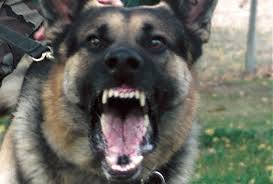
A woman in her fifties ran in, frantic. “Dad! Oh, thank God!”
She stopped dead when she saw the “vicious” police K9 resting his head on her father’s shoe.
As the paramedics gently guided him onto the gurney, the old man turned to me. He tipped an imaginary hat. “Thank the conductor for the music, will you? And tell that dog he’s a good boy.”
“I will, sir,” I whispered.
We watched the ambulance drive away. The adrenaline was gone, replaced by a heavy, quiet peace. I knelt down in the dirt and mud, scratching Brutus behind the ears. He looked at me, tongue lolling out, waiting for his reward toy.
“You’re a good boy, Brutus,” I told him, my voice cracking slightly. “The best.”
Tonight, we didn’t make an arrest. We didn’t seize any drugs. But looking at the single rose petal left on the floor where the old man had danced, I knew it was the most important shift of my career.
Because sometimes, protecting and serving means knowing when to holster the weapon, and simply offering a hand—or a paw—to hold onto.