He Was Only 23. She Was 38, a Single Mother of Two. She Thought She Was “Too Much” — Until He Showed Her What Real Love Looks Like
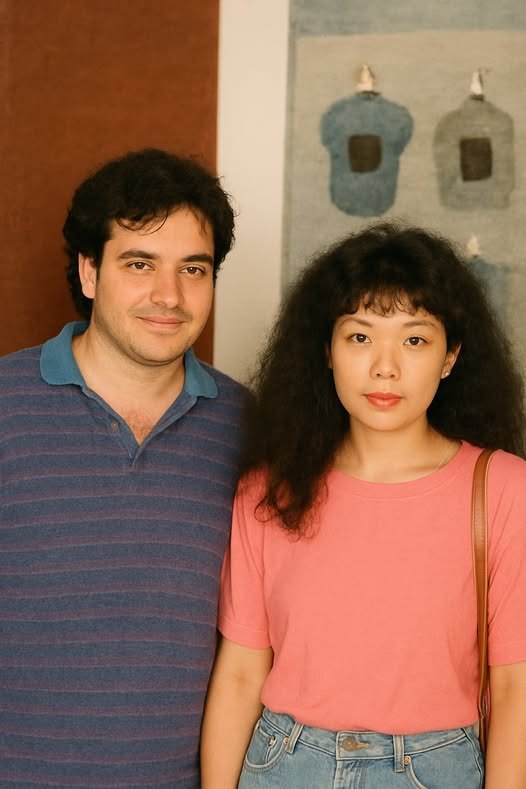
He Was Only 23. She Was 38, a Single Mother of Two. She Thought She Was “Too Much” — Until He Showed Her What Real Love Looks Like
When he first met her, he was just twenty-three — young, energetic, certain of nothing except the strange, unshakeable pull he felt toward the woman fifteen years older than him. She was thirty-eight, a single mother of two children, a little boy not yet three and a daughter already on the edge of adolescence. Life had worn her down in ways she rarely admitted. She carried responsibility the way other people carried air — constantly, silently, heavily.
And she could not understand why someone so young would choose someone like her.
One evening, after weeks of trying to push him away for his “own good,” she finally confronted him with the fears she had been holding tight in her chest:
“I just don’t see how this is ever going to work. I’m so much older than you. I come with too much baggage.”
He simply smiled — not dismissively, but with the quiet certainty of a man who had already made up his mind.
“It’s just math,” he told her softly. “I’m 23 and you’re 38. When I’m 50, you’ll be 65. When I’m 60, you’ll be 75. Those are just numbers on paper. What matters is what we feel.”
But she wasn’t done. She looked down, twisting her hands nervously.
“I can’t give you children. I’m too old. You deserve a family of your own one day.”
He shook his head gently.
“What’s wrong with the two we already have?”
She froze, as if the world had stopped spinning around her.
“You… you want to raise another man’s children?” she whispered, voice cracking under the weight of disbelief.
He stepped closer, looked her in the eyes, and answered the most important sentence of his life:
“I don’t love them because they’re someone else’s. I love them because they are part of you. And I love you. Why wouldn’t I love the people who came from your heart?”
That conversation changed everything.
What she thought was her “baggage” became the very thing that convinced him he had found the person he wanted to build a life with. What she feared would drive him away only pulled him closer. And what she thought made her unlovable made her real — made her human — made her someone worth choosing.
That was thirty-two years ago.
The children grew up under his roof, with his voice in the hallway, his hands helping with homework, his presence at every school play, every parent conference, every late-night fever, every graduation ceremony.
He never demanded the title “Dad.”
They simply gave it to him.
And their biological father — the man who had contributed to their existence but not their upbringing — eventually became just a first name.
Today, he is 55 years old, and she is 70.
Their life together is full of a thousand ordinary moments stitched into something extraordinary: shared coffee in the kitchen at dawn, arguments about bills, laughter over old memories, road trips, gray hairs, anniversaries, quiet evenings watching TV, and the kind of peace you only find with someone who knows your soul.
Their son is now 35, a practicing general physician — calm, reliable, compassionate, much like the man who raised him.
Their daughter, now 43, is thriving in the world of finance, earning a six-figure salary, respected for her work ethic and resilience.
Both call him Dad.
Both credit him for the stability that shaped their lives.
Both say they couldn’t have asked for a better father.
And through all the years — the challenges, the aging, the seasons of life — the love between him and the woman who once feared she was “too old, too complicated, too much” has only grown deeper.
“She is the love of my life,” he says without hesitation.
“And I’m the love of hers.”
Sometimes love doesn’t follow a timeline.
Sometimes family isn’t defined by biology.
Sometimes the best things in life begin the moment you stop worrying about numbers — and start listening to your heart.