This biker kept visiting my comatose daughter every day for 6 months and I had no idea who he was.
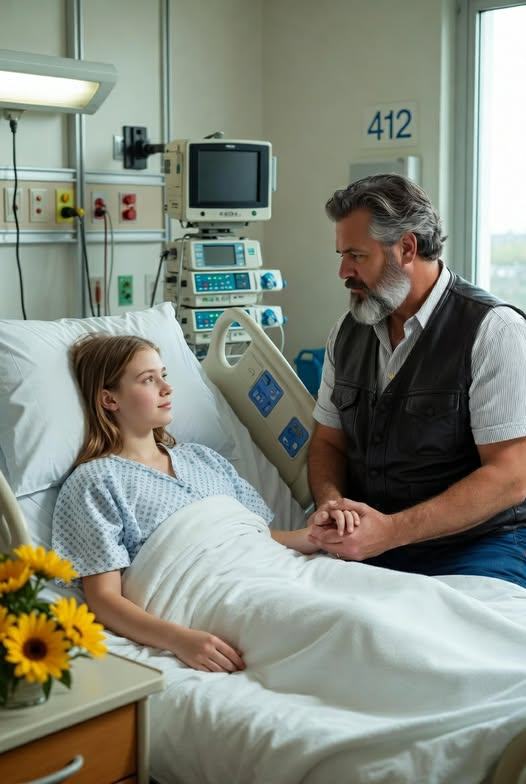
This biker kept visiting my comatose daughter every day for 6 months and I had no idea who he was.
Every afternoon at exactly 3 PM, this massive man with a gray beard and leather vest would walk into room 412, sit beside my seventeen-year-old daughter’s bed, and hold her hand for exactly one hour.
The nurses knew him by name. Thomas, they called him. They’d smile when he arrived. Bring him coffee. Chat with him like he was family.
But he wasn’t family. I’d never seen this man before in my life.
My daughter Emma had been in a coma since the car accident six months ago. A drunk driver ran a red light and hit her driver’s side door at fifty miles per hour. She was driving home from her part-time job at the bookstore. Five minutes from our house. Five minutes from safety.
One afternoon, after watching Thomas leave the room with his usual quiet nod to the nurses, I couldn’t take the mystery any longer. I followed him into the hallway.
“Excuse me,” I said, my voice shaking more than I wanted. “Sir? Can I speak with you for a moment?”
He stopped, turned slowly, and looked down at me with kind, tired eyes the color of storm clouds. Up close, he was even bigger than he seemed—broad shoulders under that worn leather vest patched with a faded Harley emblem, hands like bear paws scarred from years of work.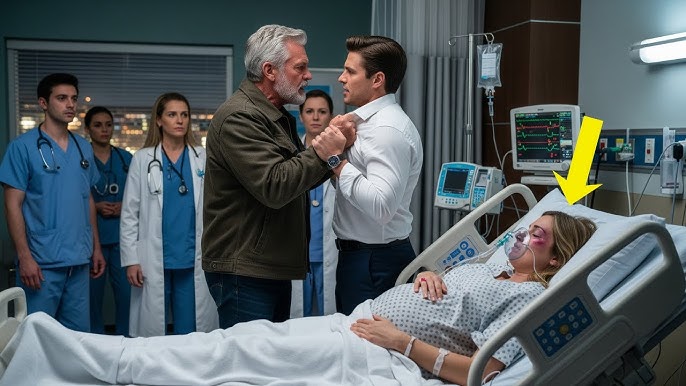
“Of course, ma’am,” he said softly. “You’re Emma’s mom.”
I nodded, unsure whether to feel frightened or grateful. “I… I’ve seen you here every day. For months. And I don’t know who you are. The nurses act like they know you, but no one’s ever told me why you come.”
He took a slow breath, glanced back toward room 412, then gestured to a small waiting area nearby. We sat on the hard plastic chairs.
“My name’s Thomas Callahan,” he began. “Most folks just call me Big Tom.”
He paused, rubbing his beard like he was searching for the right words.
“Six months ago, on the night of the accident… I was the drunk driver.”
The air left my lungs. My vision blurred. I felt the world tilt.
He didn’t look away. His eyes were wet now.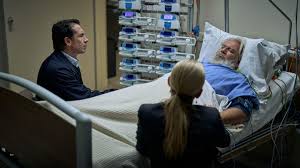
“I ran that red light. I hit your little girl’s car. I’d been at a bar after losing my job—stupid, selfish, the worst mistake a man can make. I wasn’t hurt bad. Just a few bruises. But Emma…”
His voice cracked. He pressed a fist to his mouth for a moment.
“I’ve been sober since that night. Haven’t touched a drop. Went to court, pleaded guilty, did my time—ninety days. Judge said community service, AA meetings, restitution. But none of that felt like enough. Not even close.”
He looked at his hands.
“So I started coming here. Every day at three—the exact time of the accident. I sit with her for one hour. I hold her hand and I tell her I’m sorry. I tell her about the meetings, about the new job I got fixing bikes at a shop downtown. I read her the books she had in the car that night—those fantasy novels with the dragons on the covers. Nurses said she liked those. I tell her about my granddaughter, who’s just a year younger than her. I tell her she’s strong, and brave, and that the world’s waiting for her to wake up.”
Tears were running down my cheeks now. I couldn’t stop them.
“I never told you,” he said quietly, “because I didn’t think I had the right to ask forgiveness. I just wanted her to know someone who hurt her was trying—really trying—to be better. If she ever wakes up, I want her to know I never stopped being sorry.”
I sat there in silence for a long time. Rage, grief, confusion—all of it swirled inside me. But underneath it was something else. Something I didn’t expect.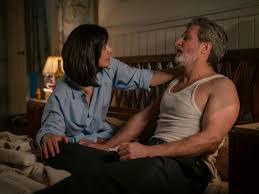
Grace.
I reached out and placed my hand over one of his massive ones.
“Thomas,” I whispered. “She squeezed my fingers last week. The doctors say it’s a good sign. Reflex maybe, but… a good sign.”
His face crumpled. He bowed his head and cried like a child.
Two weeks later, on a quiet Tuesday afternoon, I was sitting by Emma’s bed reading aloud from one of her favorite books. Thomas arrived at three, as always, carrying a small paper bag.
He hesitated in the doorway when he saw me smile at him. Real smile this time.
Then it happened.
Emma’s fingers moved. Not a twitch—a deliberate curl around mine. Her eyelids fluttered. Slowly, so slowly, those beautiful green eyes opened for the first time in six months.
“Mom?” she croaked, voice raspy from disuse.
I sobbed, pressing the call button, kissing her forehead, telling her I loved her over and over.
Thomas stood frozen in the doorway, tears streaming down his weathered face.
Emma turned her head weakly toward him. Blinked. Focused.
“You’re… the man who reads to me,” she whispered. “The one with the deep voice… who says he’s sorry.”
He nodded, unable to speak.
She looked at me, confused, then back at him.
“Thank you,” she said softly. “For not giving up… on being better.”
Over the next months, Emma made a miraculous recovery—doctors called it nothing short of astonishing. Physical therapy, speech therapy, laughter returning to her voice day by day.
Thomas kept coming, but now he sat with both of us. He brought Emma little gifts—a new bookmark, a tiny model dragon, stories about the rides he’d take her on one day when she was strong enough.
One spring afternoon, almost a year after the accident, Emma walked out of the hospital on her own two feet, leaning lightly on my arm and Thomas’s.
She stopped at the entrance, looked up at the big man who had once been a stranger, and hugged him with all the strength she’d fought to regain.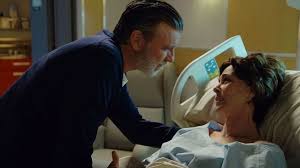
“You saved me too, you know,” she told him.
He hugged her back gently, like she was made of glass.
“No, sweetheart,” he said. “You saved me.”
And from that day on, Big Tom became family—the kind you choose, the kind forged in sorrow and redemption.
Emma went back to the bookstore. She started college the next fall. And every year on the anniversary of the accident, the three of us meet for coffee at 3 PM.
We don’t talk about the crash much anymore.
We talk about life. About second chances.
About how even the worst mistakes can lead to the most unexpected love.