She Survived Auschwitz. Then She Chose to Forgive.
She Survived Auschwitz. Then She Chose to Forgive.
In 1944, Eva Kor was deported to Auschwitz.
She was a child.
Upon arrival, her parents and two older sisters were taken away and murdered. Eva didn’t understand what was happening. She later said she never even got the chance to say goodbye — because she didn’t know there would be no tomorrow.
Eva and her twin sister, Miriam, were spared only for one reason: they were twins.
That made them valuable to Josef Mengele, the camp doctor known as the “Angel of Death.” For months, the girls were subjected to cruel medical experiments. Eva was injected with unknown substances that left her gravely ill. She ran a fever for weeks. Doctors told her she had two weeks to live.
She refused to accept that.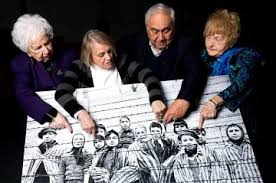
“I must survive,” she told herself. “I must survive.”
In 1945, Auschwitz was liberated. Eva and Miriam lived.
Years later, the damage surfaced. Miriam developed severe kidney problems, believed to be caused by the experiments. Eva didn’t hesitate. She gave her sister one of her kidneys.
“I have one sister and two kidneys,” she said. “It was an easy choice.”
Miriam died in 1993.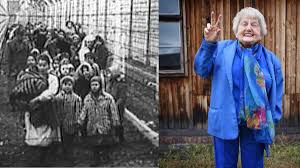
For decades, Eva carried anger, pain, and trauma. Then she made a choice that shocked the world.
She forgave.
Not because the crimes were small.
Not because the pain was gone.
But because she refused to let hatred control the rest of her life.
In the 1990s, Eva publicly forgave the Nazis — including Mengele — saying forgiveness was a personal act of liberation, not an absolution of guilt.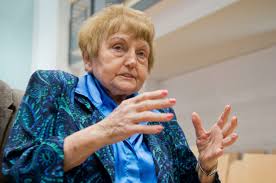
Eva Kor died in 2019.
She left behind a legacy that still unsettles and challenges us — a reminder that survival is not just about living through horror, but deciding what comes after.
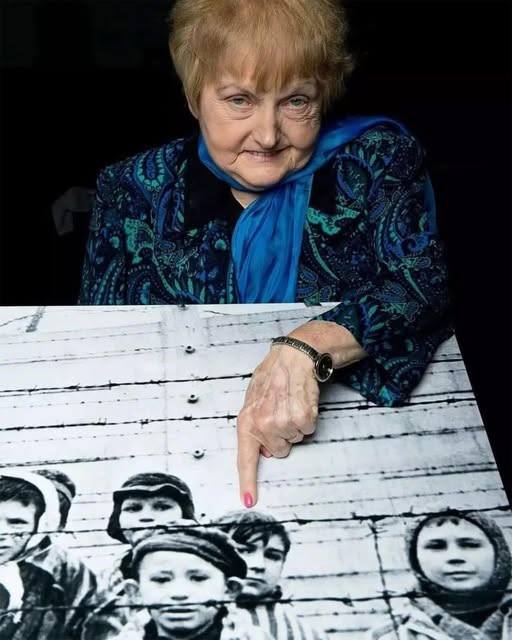
The photograph of her holding an image of herself and Miriam at Auschwitz is not about forgetting.
It’s about remembering — and choosing life anyway.