How the 1968 Dodge Charger Became America’s Eternal Outlaw Car
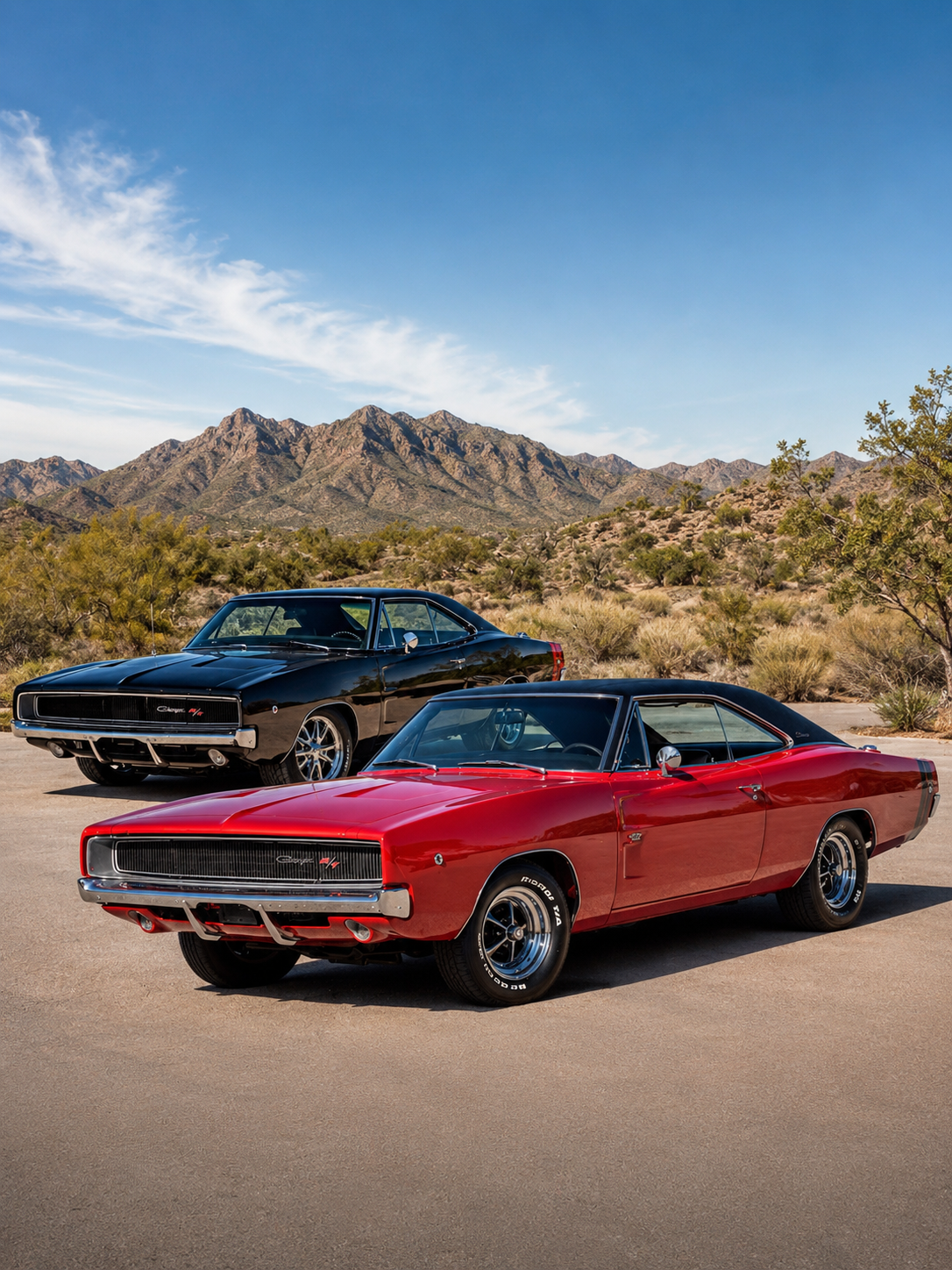
The black Dodge Charger appeared in the rearview mirror like a predator.
During the celebrated chase in the 1968 film Bullitt, its dark body stayed close to Steve McQueen’s Ford Mustang as both cars thundered through the streets of San Francisco. The Charger looked heavy, menacing and almost impossible to shake.
That screen image established a role the car would play for generations.
In the years that followed, the 1968–1970 Dodge Charger became a getaway car, a television rebel’s flying machine and the intimidating centerpiece of a global action franchise. It came to represent speed without restraint—a machine seemingly designed for anyone unwilling to follow the rules.
Yet the Charger was not created as a movie prop. It began as Dodge’s attempt to rescue a promising nameplate that had failed to attract enough buyers.
The redesign worked so well that its shape still influences Dodge more than half a century later.
Dodge Gives the Charger a Second Chance
The original Charger arrived for the 1966 model year as an upscale fastback based on Dodge’s intermediate B-body platform.
It offered dramatic styling and a distinctive interior, but its broad roofline and unusual proportions did not generate the sales Dodge expected. Fewer than 16,000 were produced for 1967, making a major redesign necessary.
For 1968, Dodge gave the Charger an entirely new body.
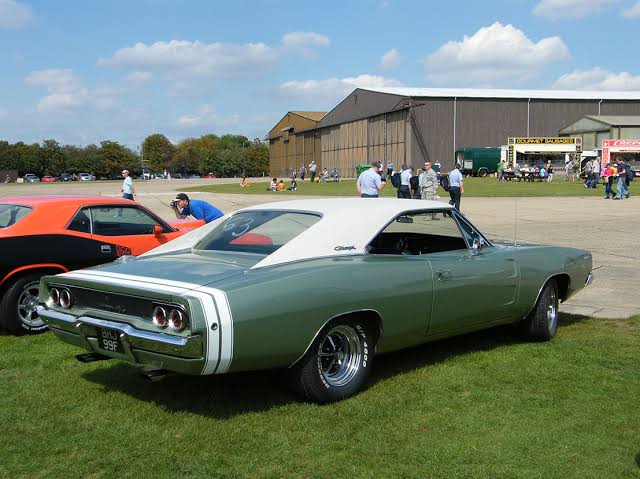
The long roof and nearly uninterrupted fastback of the earlier model disappeared. In their place came a cleaner, more muscular profile with a recessed rear window framed by sweeping roof pillars.
Its body narrowed through the center before swelling over the front and rear wheels, creating the shape commonly described as “Coke bottle” styling. The doors were sculpted, the rear fenders looked powerful, and a broad grille stretched across the front with concealed headlights behind it.
At the rear, round taillights helped complete a design that looked elegant from one angle and threatening from another.
The transformation was immediate. Dodge sold more than 96,000 Chargers for the 1968 model year—several times the previous year’s total.
The company had not merely repaired the Charger. It had created one of the defining shapes of the muscle-car era.
Power for Nearly Every Kind of Buyer
Not every second-generation Charger left the factory as a tire-smoking monster.
Buyers could order relatively modest engines, including a 225-cubic-inch Slant Six during the generation’s production run, along with the 318-cubic-inch V8. Larger options included the 383, while serious performance customers could move into the Charger R/T.
The initials stood for Road/Track.
The R/T came standard with Dodge’s 440-cubic-inch Magnum V8, rated at 375 horsepower under the measurement system used at the time. Buyers willing to pay more could order the legendary 426 Hemi, officially rated at 425 horsepower.
Those figures helped define the Charger’s reputation, but the car’s appeal was never based on speed alone.
It was large enough to feel substantial and stylish enough to stand apart from more basic performance cars. The Charger could serve as comfortable transportation during the week and become a drag-strip weapon on the weekend.
Dodge made visual changes for 1969, including a divided grille and revised taillights. The 1970 version received another updated front end with a chrome loop bumper surrounding the grille.
All three years retained the essential proportions that made the generation recognizable: the long hood, short rear deck, deeply sculpted sides and roofline flowing into muscular rear quarters.
Bullitt Made the Charger Look Dangerous
The redesigned Charger reached theaters almost as soon as it reached showrooms.
Two black 1968 Charger R/Ts were used during the production of Bullitt. Their role was simple: pursue Frank Bullitt’s green Mustang through one of the most influential car chases ever filmed.
The Charger was driven onscreen by the hitmen Bullitt was hunting. With its black paint, hidden headlights and deep V8 sound, it looked less like transportation than a threat closing in.
The chase helped establish a cinematic contrast that would be repeated for decades. The Mustang was the agile hero. The Charger was the larger, darker outlaw.
Although the Mustang received top billing, the Charger proved equally memorable. It absorbed hard landings, filled the frame with its wide front end and gave the sequence much of its danger.
Hollywood had discovered what Dodge’s designers had created: The Charger could communicate menace before the driver said a word.
The General Lee Turned It Into a Folk Hero
A decade later, the Charger took on an entirely different identity.
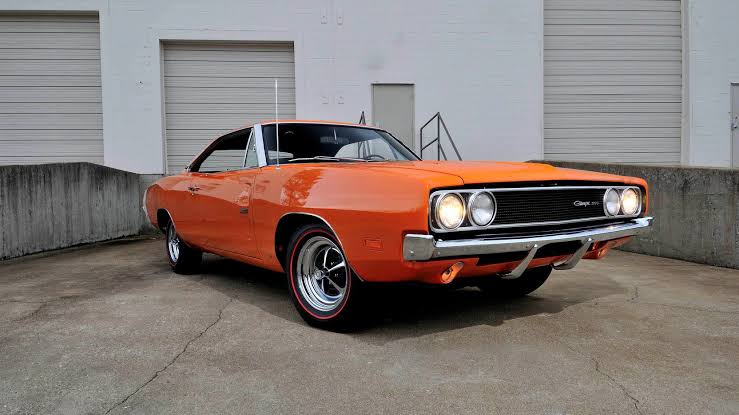
The Dukes of Hazzard, which premiered on CBS in 1979, followed cousins Bo and Luke Duke as they outran corrupt authorities in fictional Hazzard County. Their car was an orange 1969 Dodge Charger called the General Lee.
It carried the number 01 on its doors, a distinctive horn and a Confederate battle flag on its roof. Its doors were presented as welded shut, forcing the Duke cousins to climb through the windows.
Most importantly, it jumped.
The General Lee flew over roads, rivers, police cars and nearly anything else placed in its path. The television show used numerous Chargers because the large jumps frequently bent or destroyed the stunt cars on landing. As suitable examples became harder to locate, the production sometimes converted 1968 models to resemble 1969 Chargers.
For a generation of viewers, the General Lee became inseparable from the Charger itself.
Its imagery later became controversial because of the Confederate flag and the car’s name, both connected to the Confederacy and its defense of slavery. That controversy has complicated the General Lee’s legacy and affected how the program and its merchandise have been presented.
Even so, the series permanently expanded the Charger’s cultural reach. The car was no longer merely the villain from Bullitt. It had also become a reckless, airborne symbol of resistance to authority.
Dominic Toretto Introduces the Charger to Another Generation
By the late 1990s, many surviving Chargers had become collector cars. Then The Fast and the Furious brought one back as an object of fear.
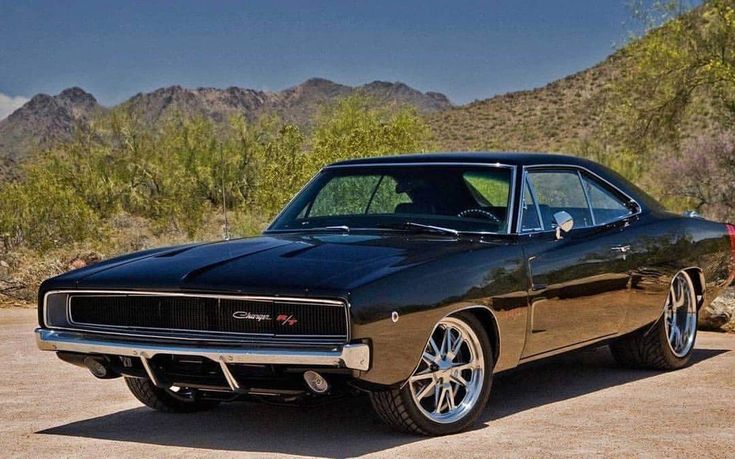
The 2001 film introduced Dominic Toretto, played by Vin Diesel, alongside a black 1970 Dodge Charger R/T. Within the story, the car had been built by Dom and his father and was said to produce 900 horsepower.
Dom admitted that it frightened him.
The Charger appeared near the end of the movie, its supercharger rising through the hood as the body twisted under acceleration. During a race against Brian O’Conner’s Toyota Supra, it lifted its front wheels before charging toward a railroad crossing.
The scene connected two eras of performance culture: traditional American muscle and the import-tuning world that defined much of the original film.
Dom’s Charger returned in different forms throughout the franchise. It became as closely associated with his character as his emphasis on loyalty and family.
For younger viewers, the 1970 Charger was not an antique from their parents’ youth. It was the most intimidating car in a modern action series.
That distinction helped preserve demand far beyond the generation that remembered the Charger when it was new.
One Shape, Vastly Different Prices
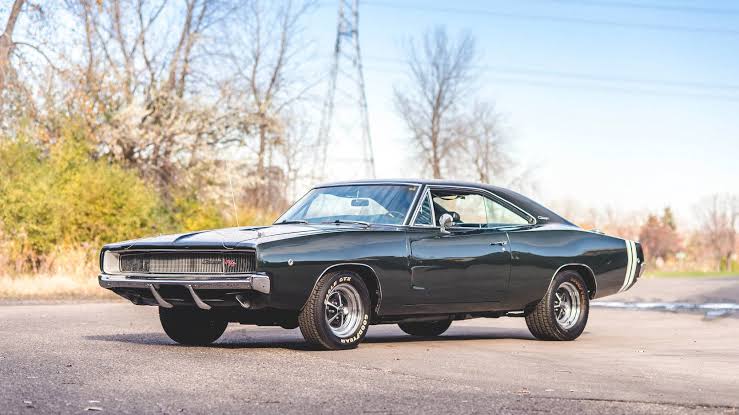
The collector market now treats 1968–1970 Chargers very differently depending on specification, condition and authenticity.
A standard car with a smaller V8, automatic transmission or substantial restoration needs may trade for a fraction of the price commanded by a documented R/T. Cars with original high-performance engines, desirable colors and strong histories can bring six-figure sums.
At the top are genuine 426 Hemi examples, rare factory configurations and historically significant cars. Their values can rise dramatically above those of ordinary Chargers that appear almost identical from a distance.
Restoration quality also matters because these cars are expensive to rebuild correctly. Rust, missing trim, poor body repairs and replaced drivetrains can sharply affect value.
The enormous price range has created several kinds of ownership.
Some collectors pursue factory accuracy and documentation. Others build R/T or General Lee replicas from less valuable cars. Restomod owners preserve the classic body while installing modern brakes, suspension, air conditioning and high-output engines.
All are responding to the same essential design.
Why the Charger Outlived Its Original Era
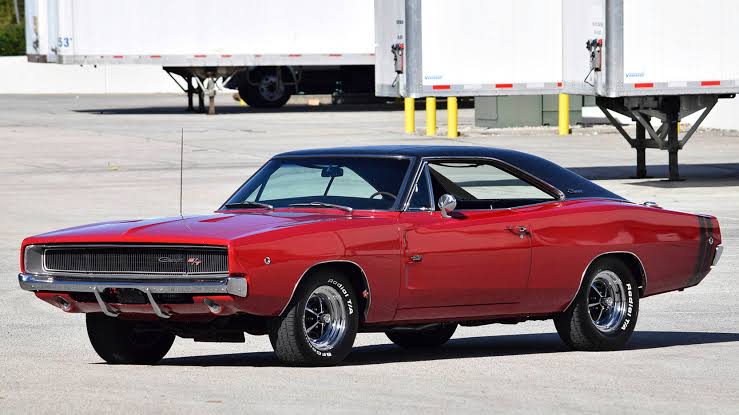
Many muscle cars remain strongly associated with people who were young when the cars first appeared. The second-generation Charger has escaped that limit.
Older buyers may remember seeing the car on American roads or watching Bullitt and The Dukes of Hazzard. Generation X encountered it through television reruns, toy cars and posters. Millennials and younger enthusiasts discovered it through video games and the Fast & Furious franchise.
Broader Mopar market data also shows increasing interest from Gen X and younger collectors, evidence that demand is no longer driven only by aging Baby Boomers.
The Charger’s influence remains visible in modern Dodge design. When the company needed to express the heritage of a new generation, it repeatedly returned to details inspired by the 1968 model.
That is because the car achieved something performance statistics alone cannot explain.
A Hemi Charger was genuinely fast, but many vehicles have been faster. The General Lee made spectacular jumps, but those stunts destroyed the cars performing them. Dom Toretto’s Charger possessed fictional power beyond most factory examples.
What remained constant was the shape.
It looked dangerous in 1968, rebellious in 1979 and powerful in 2001. It still does.
The second-generation Dodge Charger was created to improve sales during a fierce contest among American automakers. Instead, it became a character that Hollywood could repeatedly recast without changing its identity.
Hero or villain, television folk legend or street-racing monster, it always carried the same message.
Rules belonged to someone else.