Discarded SpaceX Rocket Strikes the Moon at 5,400 MPH, Leaving a New Scar Near Einstein Crater
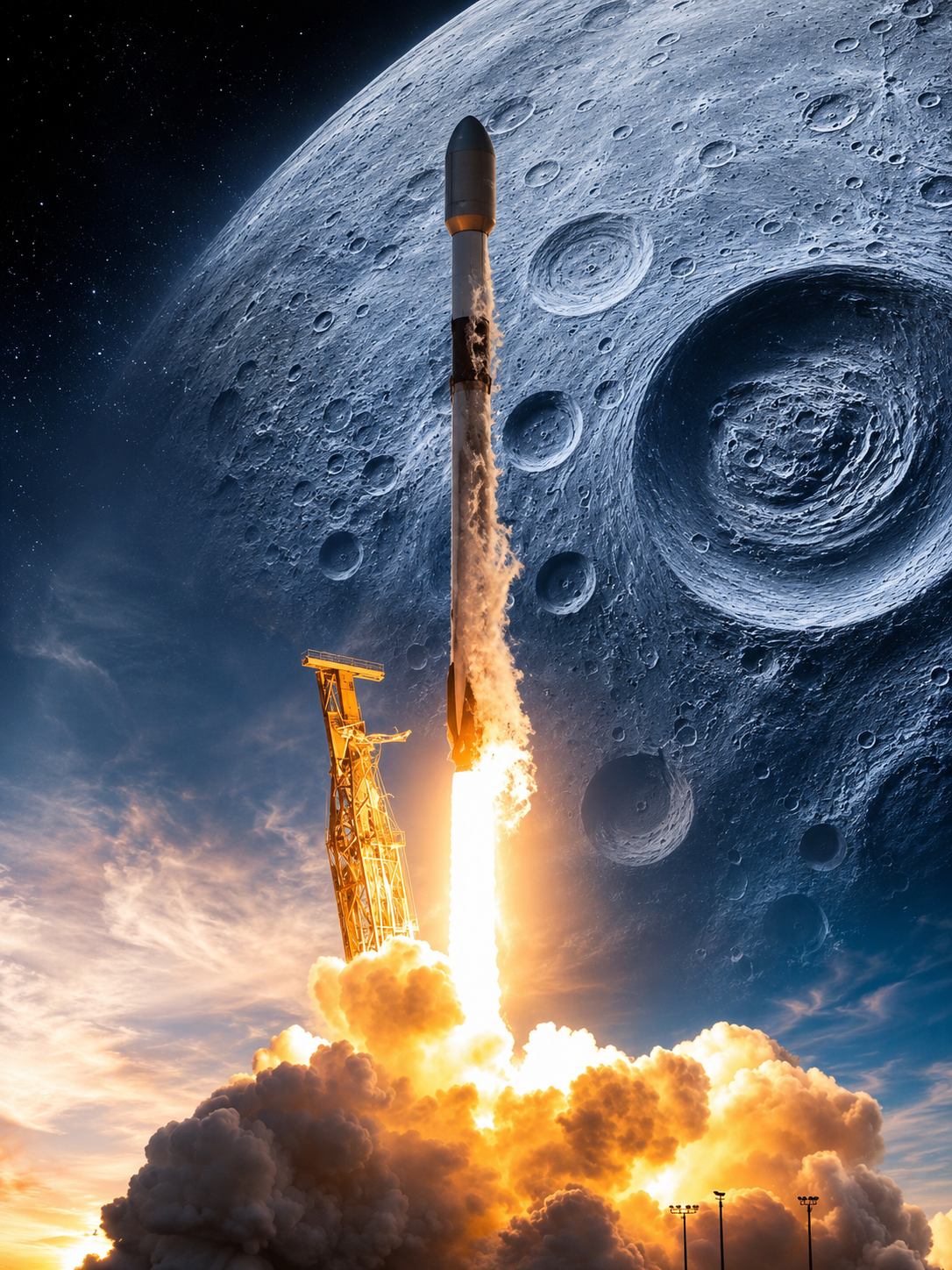
A piece of space hardware that had spent more than a year circling Earth appears to have ended its journey by slamming into the moon at roughly 5,400 mph.
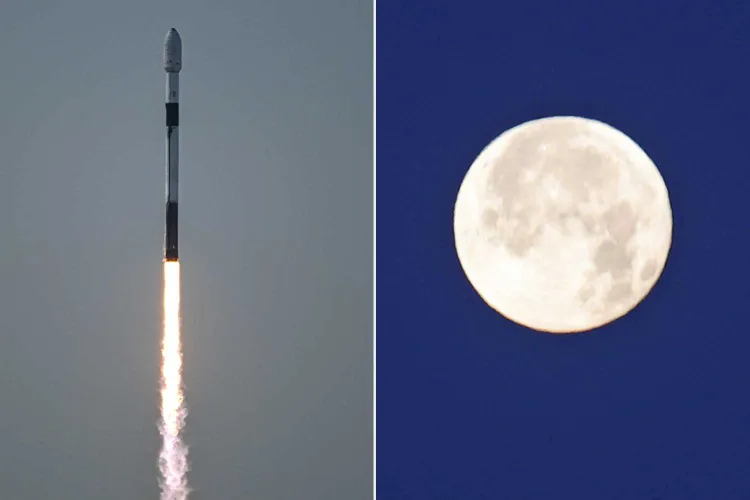
The discarded upper stage of a SpaceX Falcon 9 rocket was expected to hit the lunar surface at about 2:35 a.m. ET on Wednesday, Aug. 5, traveling at more than seven times the speed of sound.
Its predicted destination was near Einstein Crater on the moon’s northern side.
There was no danger to Earth, according to NASA. But for scientists watching from millions of miles away, the collision offered a rare opportunity to observe what happens when a known human-made object strikes a world with no atmosphere to slow it down.
Experts expected the impact to produce a flash of light, throw lunar dust and rock above the surface and create a fresh crater that may soon be visible in satellite images.
A Rocket Stage Left Behind
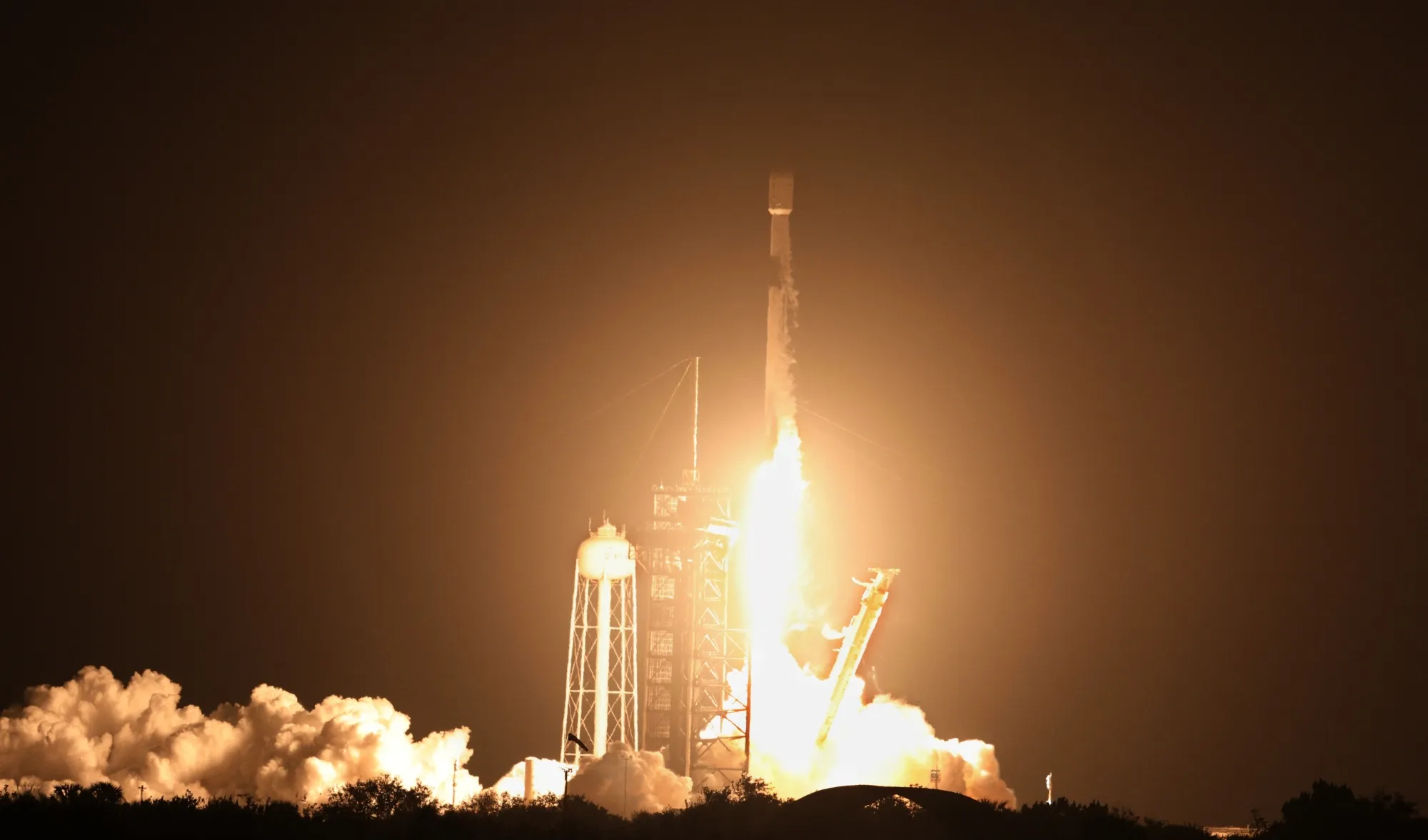
The object began its final journey during a SpaceX launch in January 2025.
A Falcon 9 rocket had carried a lunar lander toward the moon. After completing its role in the mission, the rocket’s upper stage was left in space rather than returning to Earth.
It then settled into a long orbit around the planet.
The discarded stage reportedly took approximately 26 days to complete each trip around Earth. For more than a year, it continued along that path without falling low enough to reenter the atmosphere.
Eventually, gravitational forces placed it on a collision course with the moon.
Unlike pieces of space debris that return toward Earth, the stage had no atmosphere waiting to destroy it.
When objects fall through Earth’s atmosphere, friction produces intense heat that can break them apart or burn them up. The moon has almost no atmosphere, so the rocket stage was expected to reach the ground at full cosmic speed.
Nothing stood between the metal structure and the lunar surface.
The Expected Moment of Impact
Scientists calculated that the stage would strike near Einstein Crater early Wednesday morning.
The location is on the moon’s far northern side, making the collision difficult to observe directly from Earth.
Researchers nevertheless watched for indirect signs.
A telescope operator in Chile reported detecting a change in light around the expected time of impact. That observation supported the belief that the collision occurred close to the predicted schedule.
Libby Jackson, head of space at London’s Science Museum, said there was no clear reason to believe the impact had failed to happen.
The strongest confirmation is expected to come from spacecraft images.
Satellites orbiting the moon may photograph the area after the collision, allowing researchers to compare the new images with older ones. A fresh crater or disturbed patch of surface would reveal where the rocket landed.
Jackson said such images could become available within days.
Until then, scientists are working from the object’s calculated trajectory and the limited observations made during the expected impact window.
A Flash, a Dust Cloud and a New Crater
The collision was expected to last only an instant.
Its effects could remain on the moon for an extremely long time.
Benjamin Fernando, a postdoctoral researcher at Los Alamos National Laboratory in New Mexico, described several features scientists anticipated.
The rocket stage would likely create a brief flash as its energy was released against the lunar surface. The impact could also launch a plume of ejecta—dust, broken rock and loose material known as regolith—above the ground.
Researchers had considered the possibility that the plume might be large enough to detect from Earth.
A new crater was also expected.
The precise size and appearance will depend on the stage’s mass, angle and speed when it struck, along with the physical properties of the ground near Einstein Crater.
Because the moon has little wind, weather or flowing water, its surface changes slowly. A crater created by the collision would not quickly erode as it might on Earth.
The mark could remain as a long-lasting record of an object launched by humans in the 21st century.
Why Scientists Care About an Accidental Crash
The impact was not described as a deliberately planned lunar experiment.
Even so, it may provide useful information.
Researchers can estimate the energy of the collision because they know the type of object involved and its approximate speed. Once images reveal the crater, they can compare those expectations with what actually appeared on the surface.
That comparison may improve understanding of lunar geology and impact physics.
Natural objects have struck the moon for billions of years, creating the craters visible from Earth. But in most cases, scientists do not know the exact dimensions, composition or speed of the object responsible.
A tracked rocket stage offers a more controlled set of clues.
The resulting crater could help researchers study how the moon responds when a known piece of hardware hits at extreme velocity.
It could also demonstrate how difficult it is to monitor objects once they have completed their missions and entered unusual orbits.
No Threat to Earth
Despite the dramatic speed and the possibility of a visible plume, the collision presented no danger to people.
NASA confirmed that Earth was not at risk.
The rocket stage was traveling toward the moon, not back toward the planet, and the impact was occurring far from any inhabited location.
There was also no suggestion that the collision threatened active crews or settlements on the lunar surface.
The event was significant because of what it could teach scientists and because of the unusual path the rocket had followed—not because it created an emergency for the public.
The Falcon 9’s Larger Role
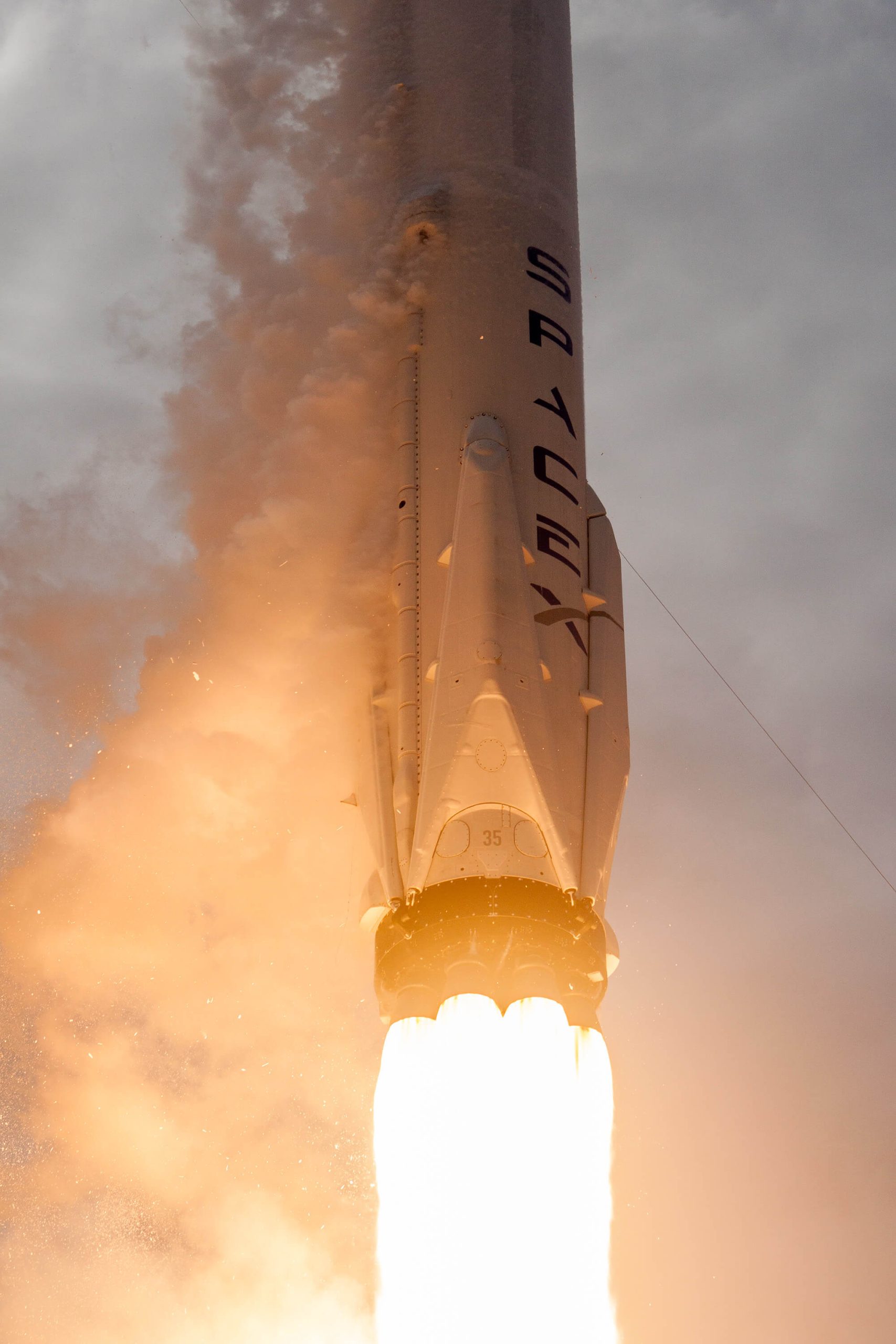
The Falcon 9 is one of SpaceX’s most frequently used launch vehicles.
Standing nearly 230 feet tall, it was designed to transport people and cargo into Earth orbit and beyond. It can carry approximately 50,000 pounds of payload.
Since its debut in 2010, Falcon 9 rockets have launched hundreds of times from Florida’s Space Coast and Vandenberg Space Force Base in California.
Their missions have carried commercial satellites, scientific equipment and large numbers of Starlink broadband satellites into orbit.
The rocket is known partly for its reusable first stage, which can return to Earth and land after launch.
The upper stage operates differently.
It continues carrying the payload after separation from the returning booster. Depending on the mission, that upper stage may later reenter Earth’s atmosphere, remain in orbit or travel deeper into space.
The stage that struck the moon had remained on a distant looping path since the 2025 lunar launch.
Its final destination was not a landing platform or a controlled recovery zone.
It was the lunar ground.
A New Human-Made Mark on the Moon
For generations, the moon’s craters were created almost entirely by asteroids, meteoroids and other natural objects.
Human exploration has added a small number of new marks.
Spacecraft have landed, crashed or been deliberately sent into the surface. Now another piece of machinery appears to have joined them.
The abandoned Falcon 9 stage completed its mission long before the impact. For 18 months, it continued moving through space, largely invisible to the public, while gravity gradually determined its end.
At 2:35 a.m. on Aug. 5, that journey likely stopped near Einstein Crater.
Satellite images may soon reveal the exact result: a patch of displaced dust, a new crater and a permanent trace left by a rocket that was never intended to become part of the moon.
The collision lasted seconds.
The scar it created may remain for millions of years.