A Child’s Question That Exposes a Quiet Truth About Beauty and Belonging
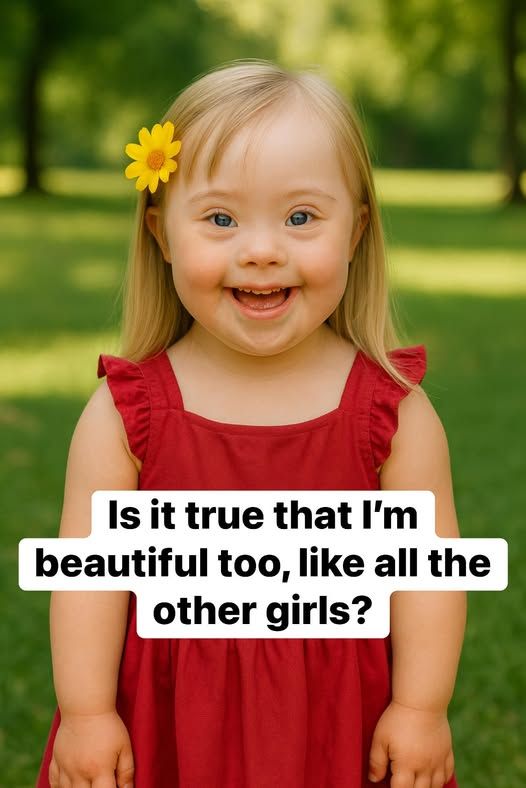
A Child’s Question That Exposes a Quiet Truth About Beauty and Belonging
She smiled the way she always does—open, sincere, and full of light. It was the kind of smile that comes naturally, without self-consciousness or fear. Then she asked a question that stilled the room.
“Is it true that I’m beautiful too, like all the other girls?”
The question did not come from a lack of love at home or an absence of joy in her life. It came from something far quieter and far more common: the subtle lessons children absorb from the world around them.
No one had told her she was not beautiful. No one had needed to. Sometimes it is enough to feel a stare linger too long, to hear a comment framed as curiosity, or to notice the silence where affirmation should have been.
In those moments, children begin to compare themselves. They begin to wonder whether beauty is something they are allowed to claim, or something reserved for others.
This is how doubt enters young hearts—softly, invisibly, without cruelty spoken aloud.
Experts in child development note that self-worth is shaped early, often long before children have the words to describe what they feel. When affirmation is inconsistent or absent, questions take its place.
The truth is simple, yet powerful. Beauty is not conditional. It is not measured by comparison, conformity, or approval. It is not something a child must earn.
Every smile has value. Every face carries its own story. Every child’s existence is something to be celebrated, not explained.
For parents, educators, and caregivers, the responsibility is clear. Speak first. Speak often. Say the words before the world teaches children to question themselves.
Tell them they are beautiful. Tell them they belong. Tell them they are enough.
Because sometimes, the most important thing a child needs to hear is the truth—clearly, confidently, and without hesitation.