11-Year-Old Gives His Championship Ring to His Disabled Brother — Then the Opposing Coach Makes Everyone Cry
The championship game was over, but the moment that stayed with the families had little to do with the final score.
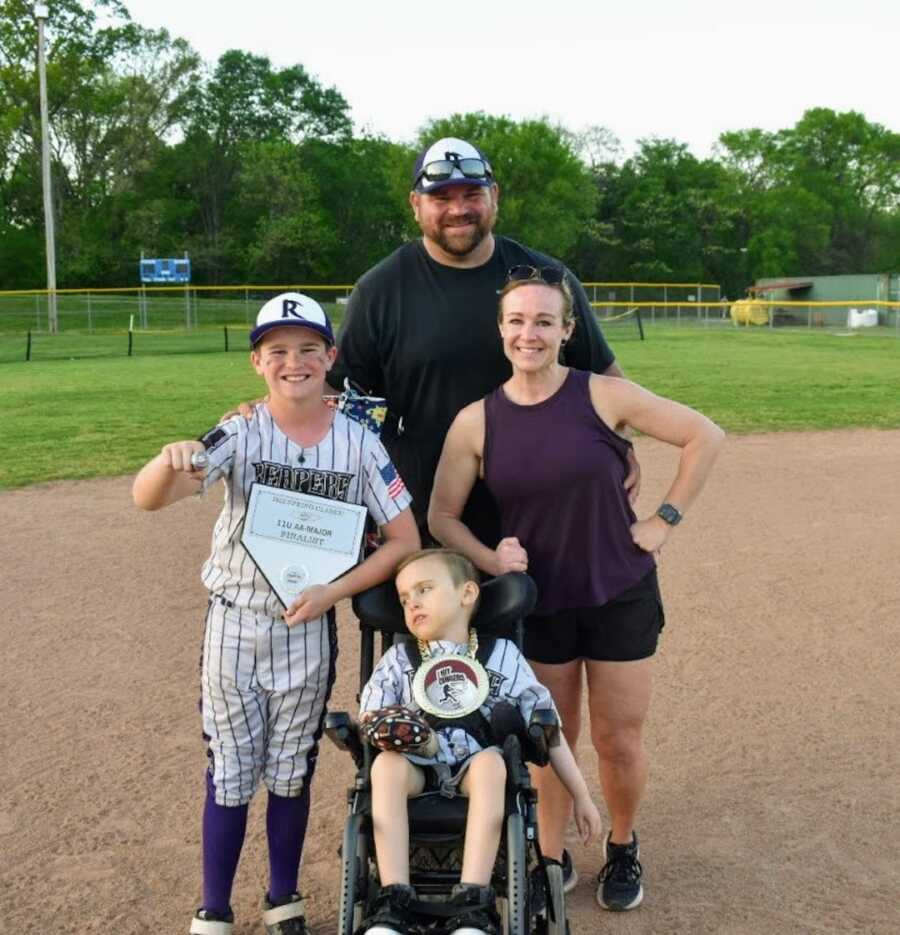
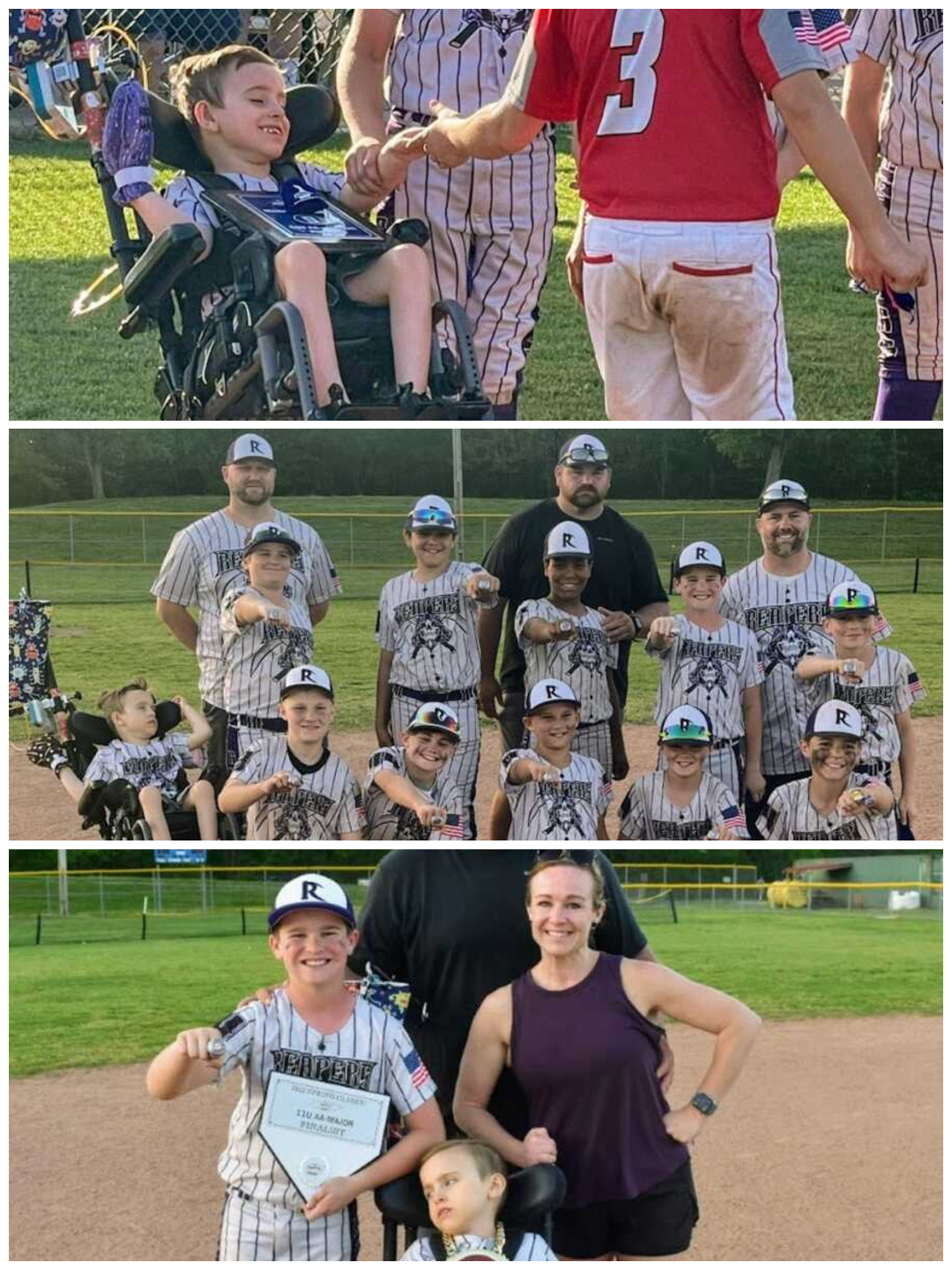
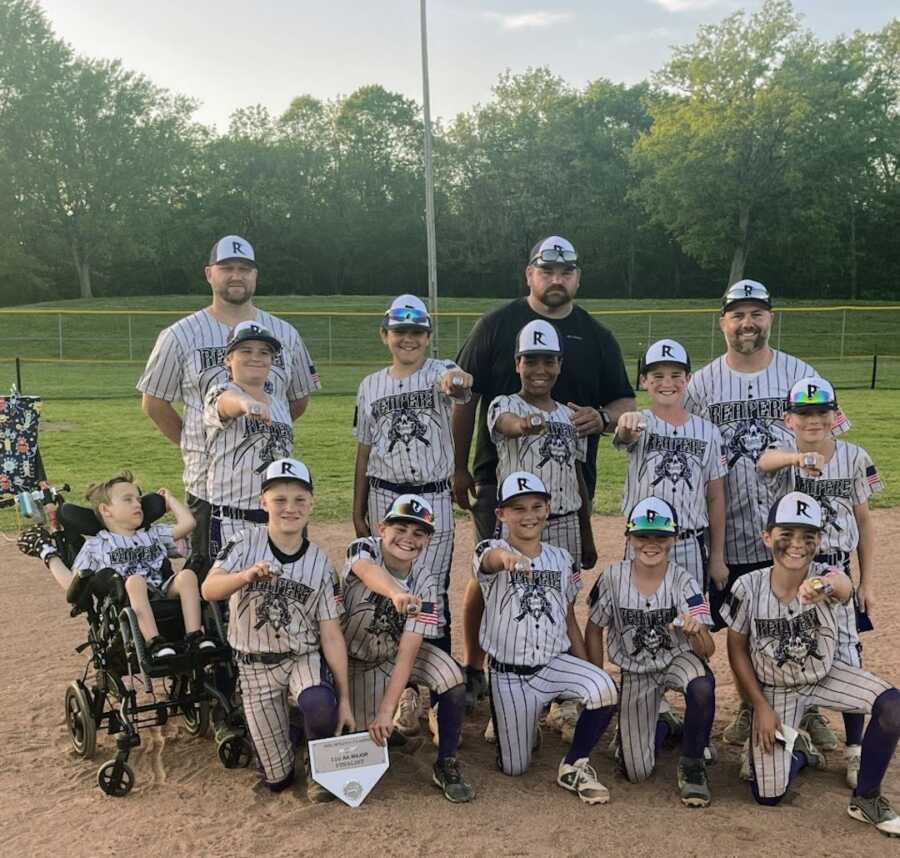
The Rockvale Reapers had lost their tournament matchup against another Middle Tennessee baseball team. Yet during the postgame celebration, 11-year-old Tanner Grimes turned toward his 6-year-old brother, Carson, and offered him his championship ring.
Tanner did not realize the coaches had already planned something special: they had ordered an additional ring for Carson.
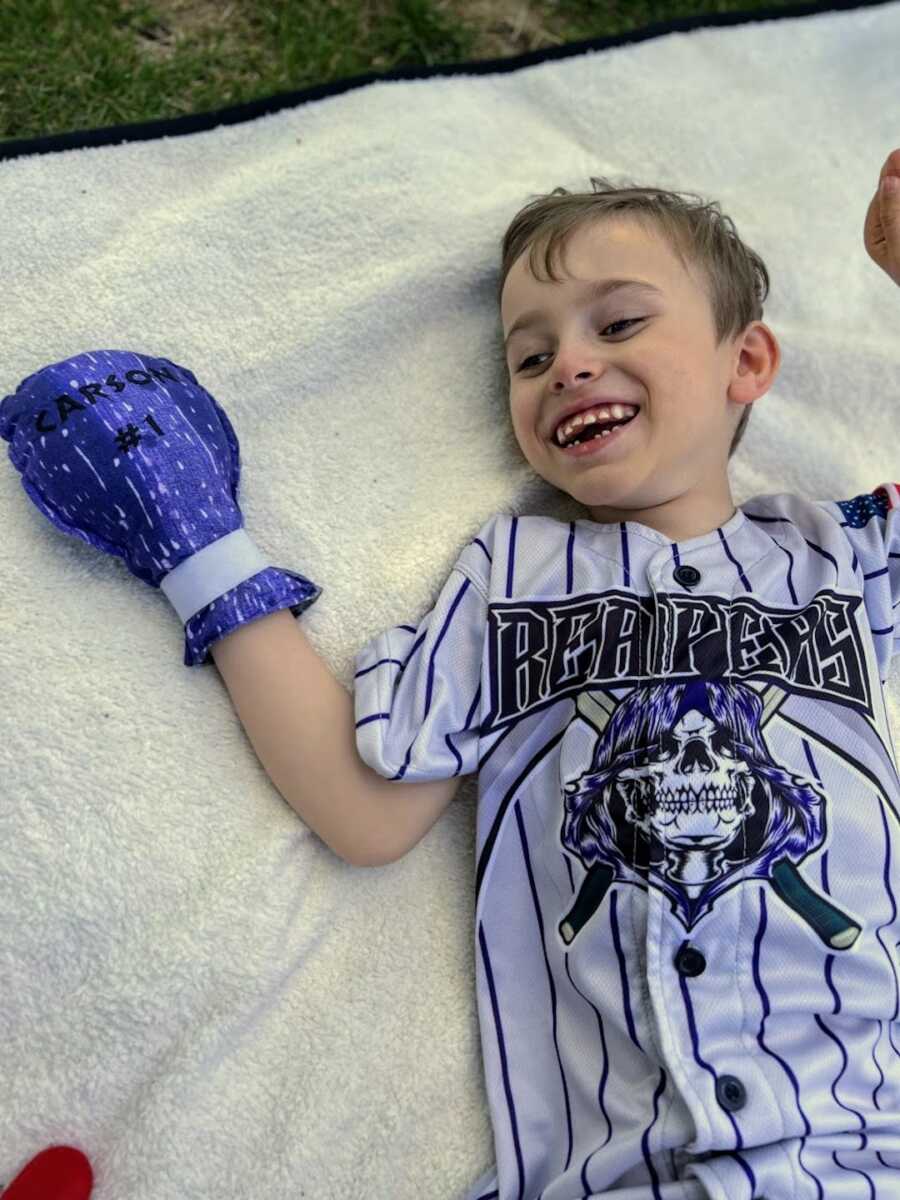
Carson lives with GRIN1, a rare genetic mutation that affects communication between his brain and muscles. He is nonverbal, uses a wheelchair, receives nutrition through a feeding tube and experiences seizures, movement disorders and other medical complications. Despite more than 20 diagnoses, his mother, Shannon Grimes, describes him as an exceptionally happy child.
To Tanner’s teammates, however, Carson is not simply a younger brother watching from the sidelines.
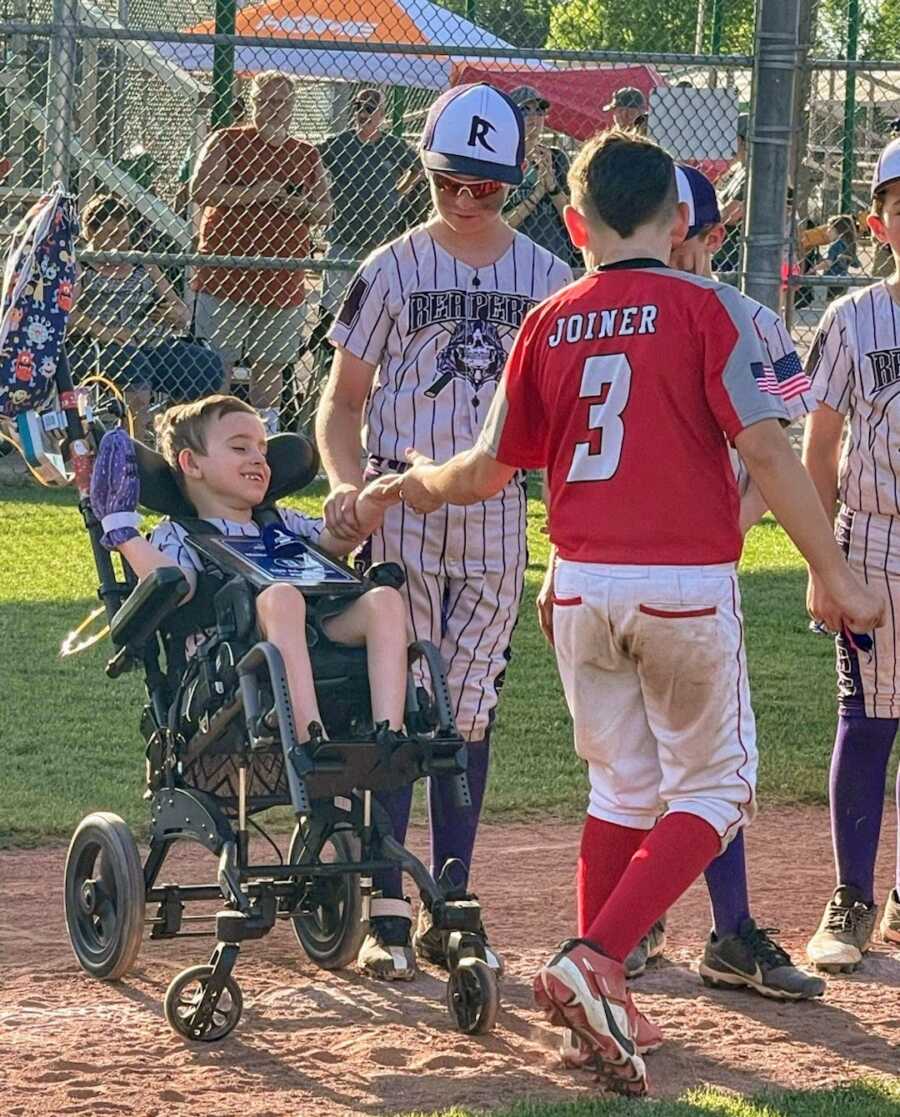
He is part of the Reapers.
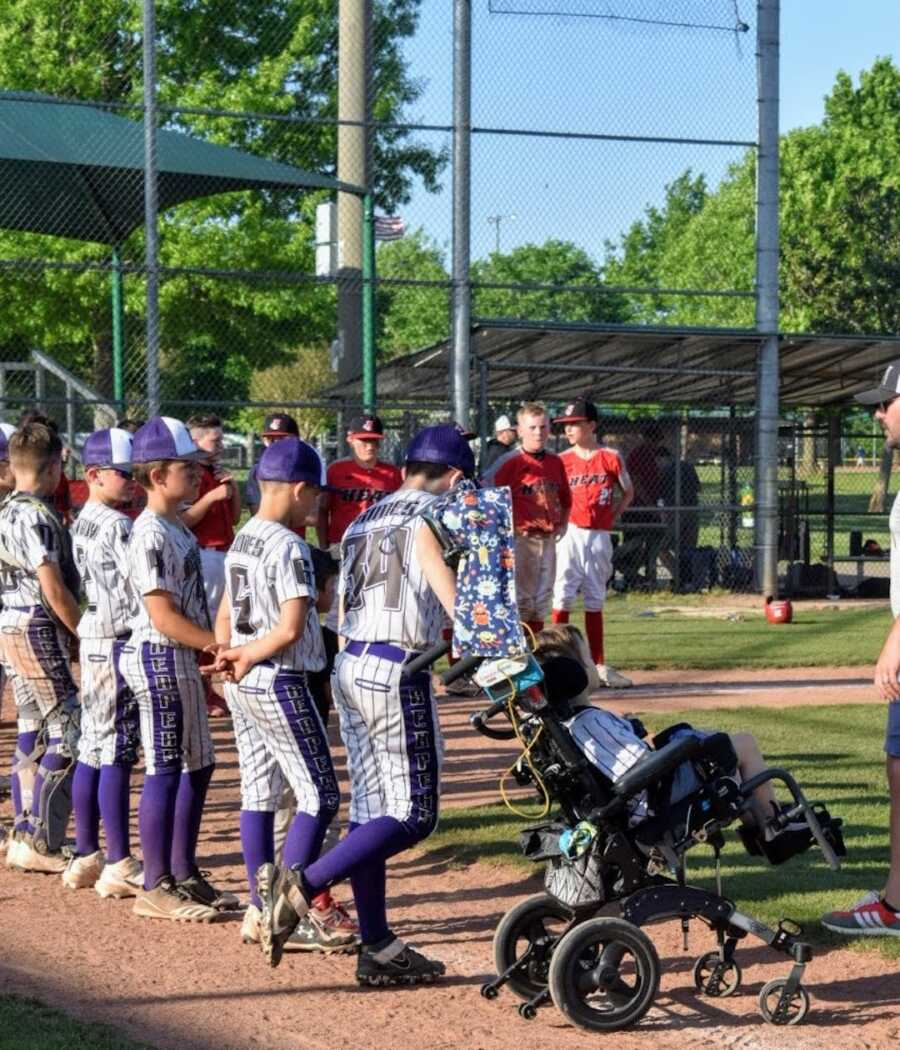
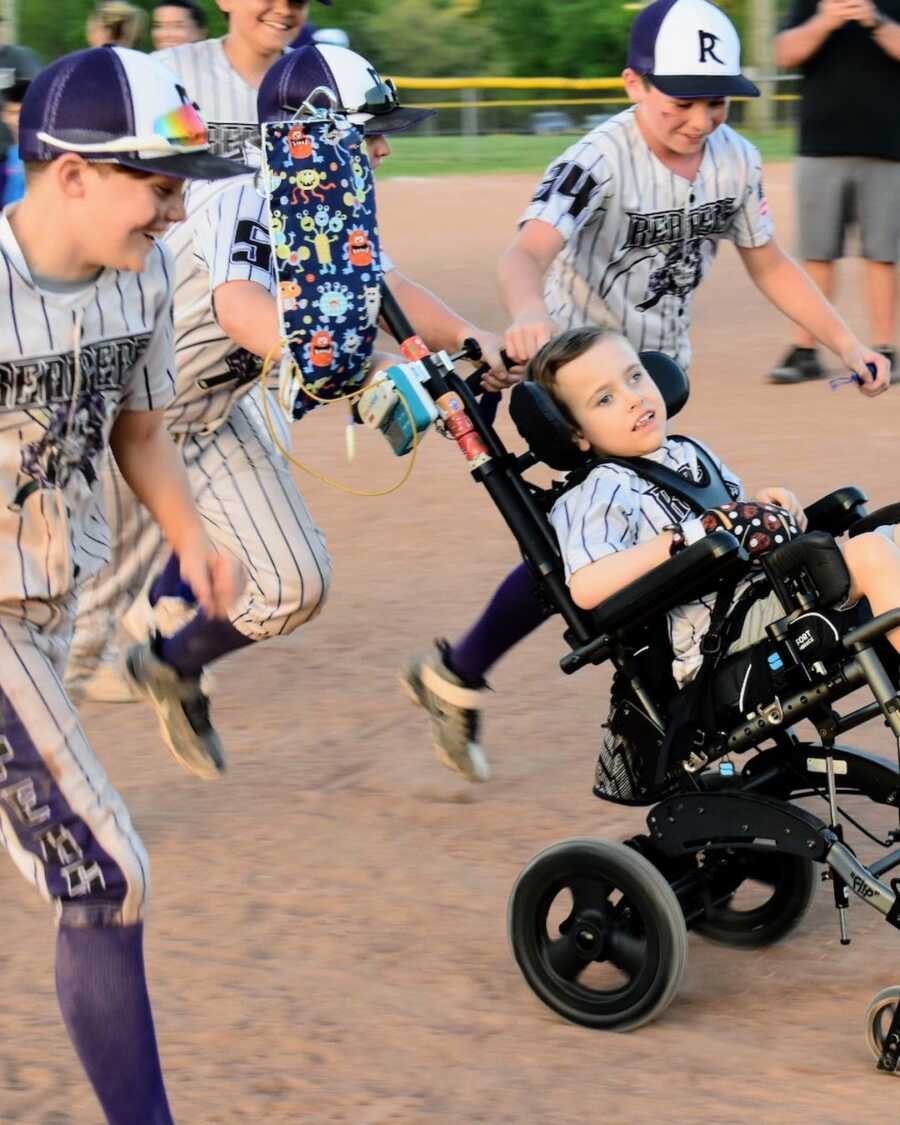
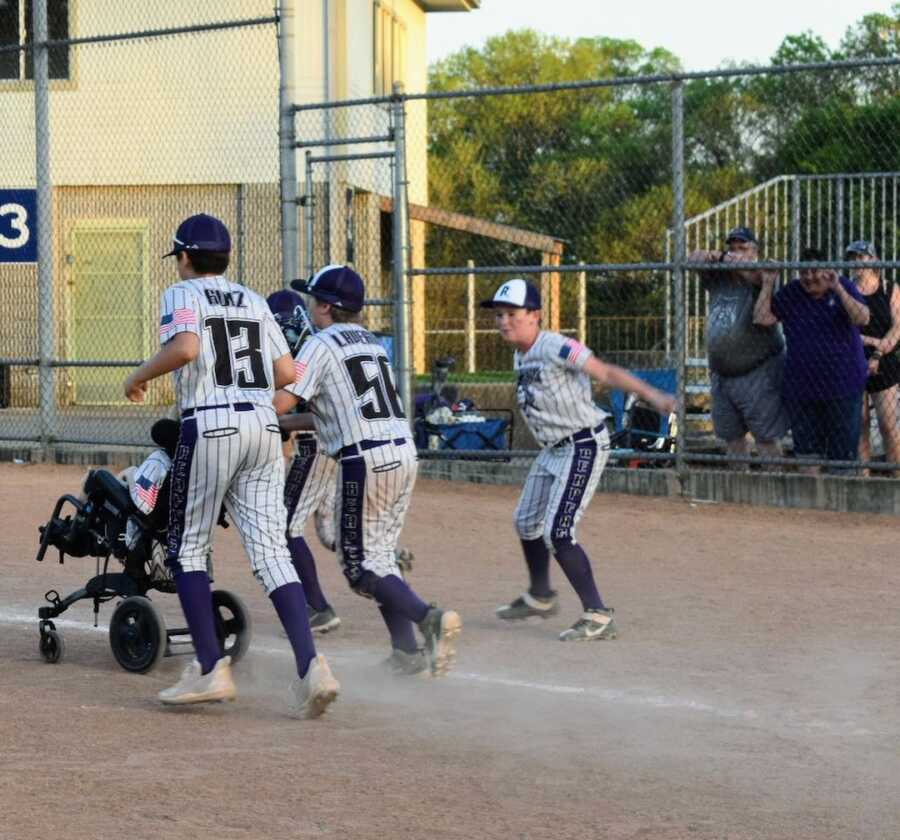
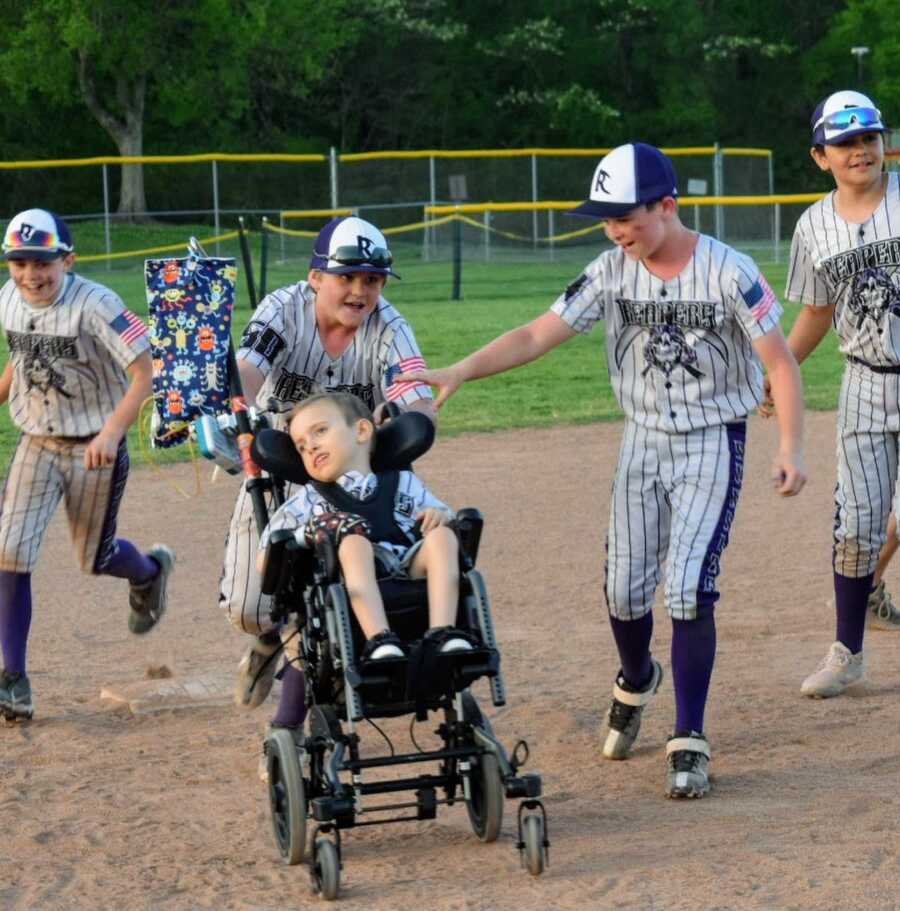
The coaches had quietly arranged for Carson to have a matching jersey and named him a team captain. After games, the players have also developed a tradition of taking him around the bases in his wheelchair.
Following the championship, they did it again.
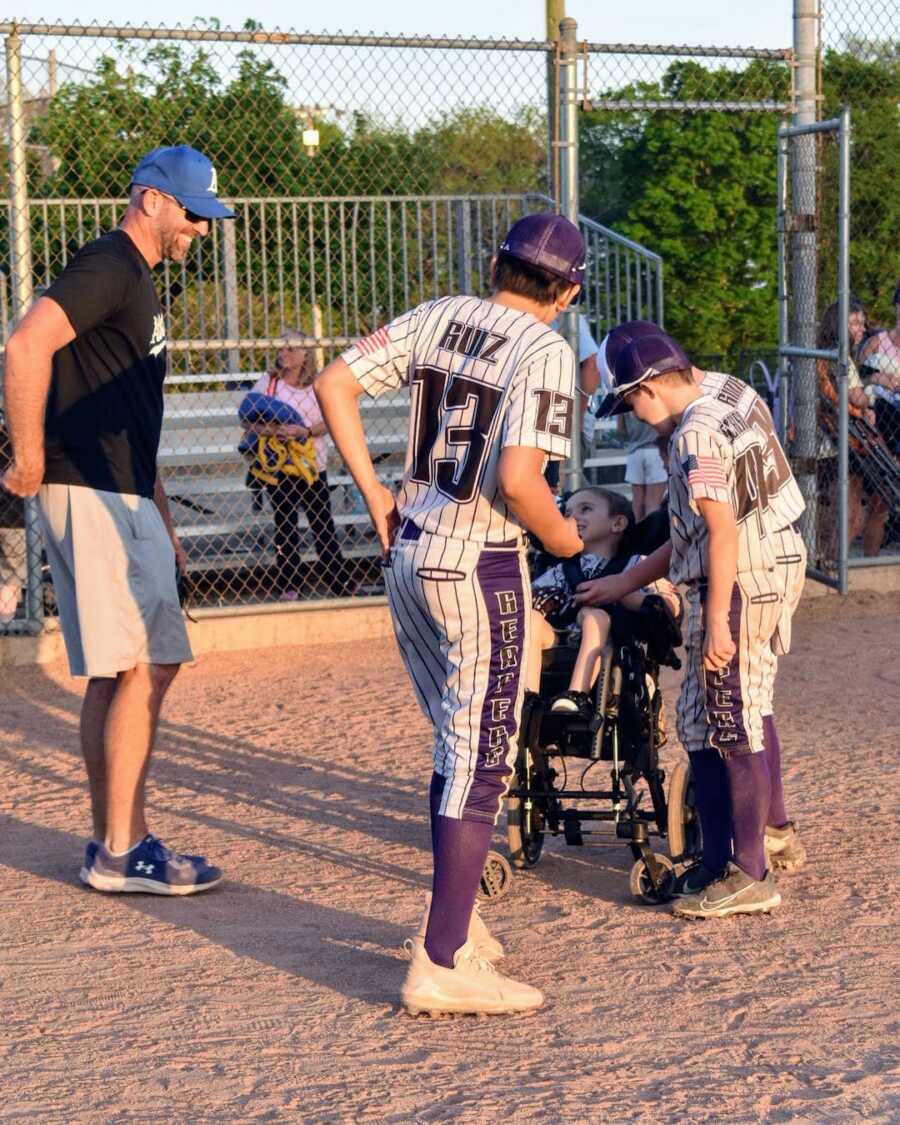
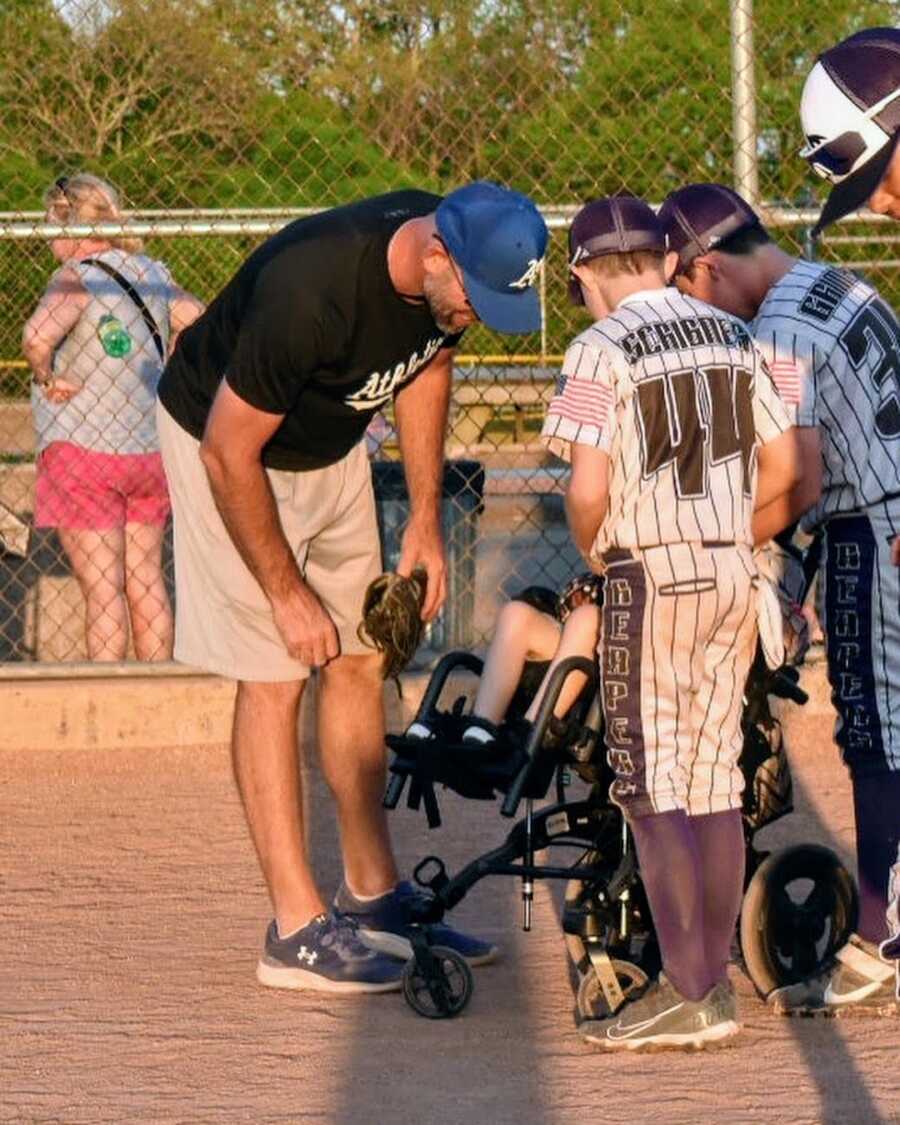
As several Reapers pushed Carson across the field, the coach of the opposing Hendersonville team noticed what was happening. He approached Carson and began talking directly to him.
Carson could not answer with words.
His smile answered instead.
Then the coach gave Carson the team’s game-winning baseball.
When the Reapers returned and told Shannon what had happened, she began crying. She later noticed she was far from alone. Parents throughout the field had been moved by what they had witnessed.
For Shannon, the most meaningful part was how naturally the children included her son. Several players attend the same elementary school as the Grimes family, and some regularly stop to greet Carson. One player, Eli, makes a point of saying hello when he sees Carson and his nurse in the cafeteria.
Those ordinary interactions are exactly what Shannon hopes people will learn from.
Children and adults can sometimes feel uncertain about approaching someone with a disability, particularly when that person communicates differently. Shannon encourages parents not to silence children who ask questions about wheelchairs, feeding tubes or medical equipment.
Instead, she hopes families will introduce themselves and begin a conversation.
Sometimes inclusion does not require knowing exactly what to say.
Sometimes it begins with a simple hello.
On that Tennessee baseball field, a group of young players demonstrated that lesson without apparently realizing they were teaching it. To them, Carson was not someone they needed to make an exception for.
He was their teammate.
And by the time both teams left the field, the most memorable victory of the day belonged to something bigger than baseball.