Why Right Now May Be One of the Worst Times to Sell a Home, According to New Data

Why Right Now May Be One of the Worst Times to Sell a Home, According to New Data
NEW YORK — Homeowners hoping to sell their properties may want to think twice before putting a “For Sale” sign in the yard.
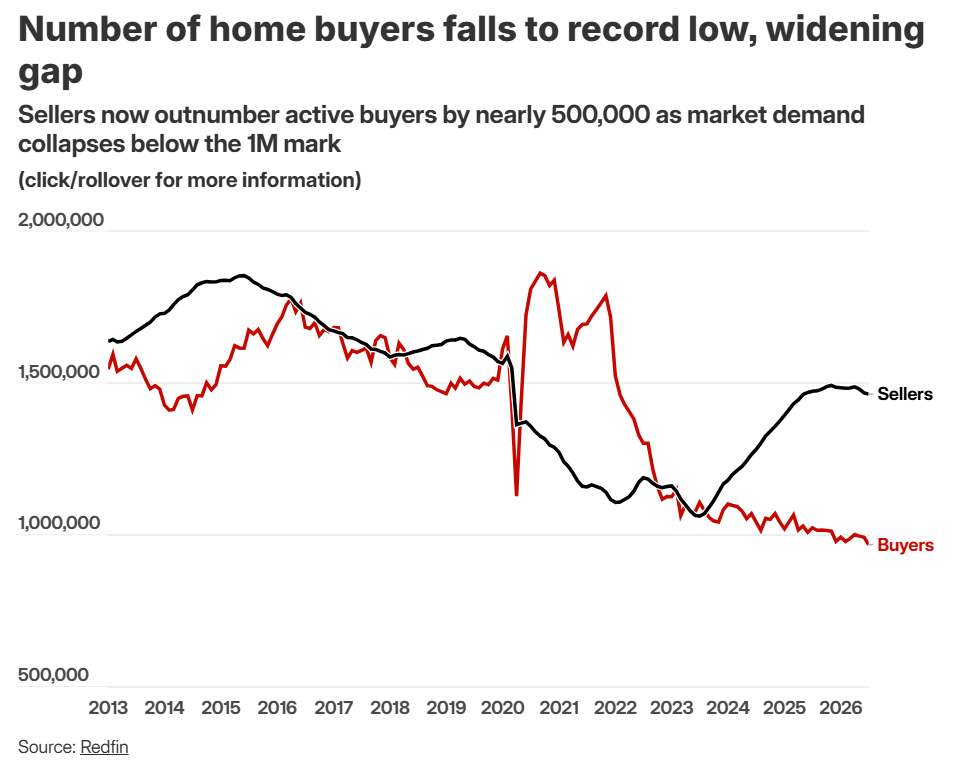
New housing data suggests that the current market is particularly difficult for sellers, with homes taking longer to move and buyers becoming increasingly resistant to high asking prices.
The shift marks a significant change from the frenzied housing market of recent years, when limited inventory and intense competition pushed buyers to make quick decisions and often bid above asking prices.
Buyers Have Gained the Upper Hand
One of the biggest changes in today’s housing market is the growing negotiating power of buyers.
Higher mortgage rates have made monthly payments considerably more expensive, forcing prospective buyers to be more selective about what they can afford.
At the same time, homeowners who locked in extremely low mortgage rates several years ago have been reluctant to sell. That has contributed to an unusual market in which both buyers and sellers face significant financial pressures.
For sellers, the problem is that today’s buyers aren’t necessarily willing to pay yesterday’s prices.

Homes Are Sitting on the Market Longer
Properties that might once have attracted multiple offers within days can now remain available for weeks or months.
That longer selling period can force homeowners to reconsider their asking prices.
When a listing receives little interest, sellers may eventually reduce the price, offer concessions or make improvements to attract buyers. Those reductions can become especially painful for homeowners who purchased their properties near the peak of the housing boom.
The longer a home remains listed, the more difficult it can also become to maintain the impression that demand is strong.
Mortgage Rates Are Still a Major Factor
Mortgage rates remain one of the most important forces shaping the housing market.
Even when home prices stabilize or decline slightly, elevated borrowing costs can keep the total monthly cost of homeownership high.
For example, a buyer who could comfortably afford a particular property when mortgage rates were near historic lows may no longer qualify for the same home at today’s rates.
That reduces the pool of potential buyers — and creates additional pressure on sellers.
Sellers Face a Difficult Calculation
Homeowners considering a sale now have to weigh several competing factors.
Selling could make sense for someone who needs to relocate, downsize, retire or unlock equity. But owners who are not under financial pressure may decide that waiting is preferable to accepting a lower price.
That calculation becomes particularly complicated for people who would also need to purchase another home.
A seller may receive less than expected for the current property while simultaneously facing a high mortgage rate on the next one.

Some Sellers Still Have an Advantage
The market isn’t equally difficult for everyone.
Homes in desirable neighborhoods, properties that are competitively priced and houses in excellent condition can still attract significant interest.
Sellers who have substantial equity and flexibility may also be able to wait for the right offer rather than accepting the first bid.
But the days when simply listing a property guaranteed a bidding war appear to be increasingly distant.

Pricing Has Become More Important Than Ever
Real-estate agents increasingly emphasize realistic pricing as buyers become more cautious.
An overpriced home can quickly lose momentum. Once buyers perceive that a property has been sitting on the market for too long, they may assume the seller is willing to negotiate aggressively.
By contrast, a properly priced home can still generate interest even in a slower market.
That makes the initial listing price one of the most important decisions a homeowner can make.
Is It Really the “Worst” Time to Sell?
The answer depends heavily on the individual homeowner.
For someone who bought a home many years ago and has substantial equity, selling today could still produce a healthy financial return.
For someone who purchased recently at a high price and needs to sell quickly, however, the current environment could be considerably more challenging.
The broader message from the latest housing data is less that nobody should sell now and more that sellers no longer have the overwhelming advantage they enjoyed during the housing boom.
Today’s market rewards patience, realistic expectations and careful financial planning.
For homeowners who have the luxury of waiting, that may make postponing a sale attractive. For those who need to move, the key may be accepting that the era of effortless, above-asking-price home sales has largely disappeared.