When Her Son’s Communication Device Died, One Mom Found a Way to Make Sure He’d Never Lose His Voice Again
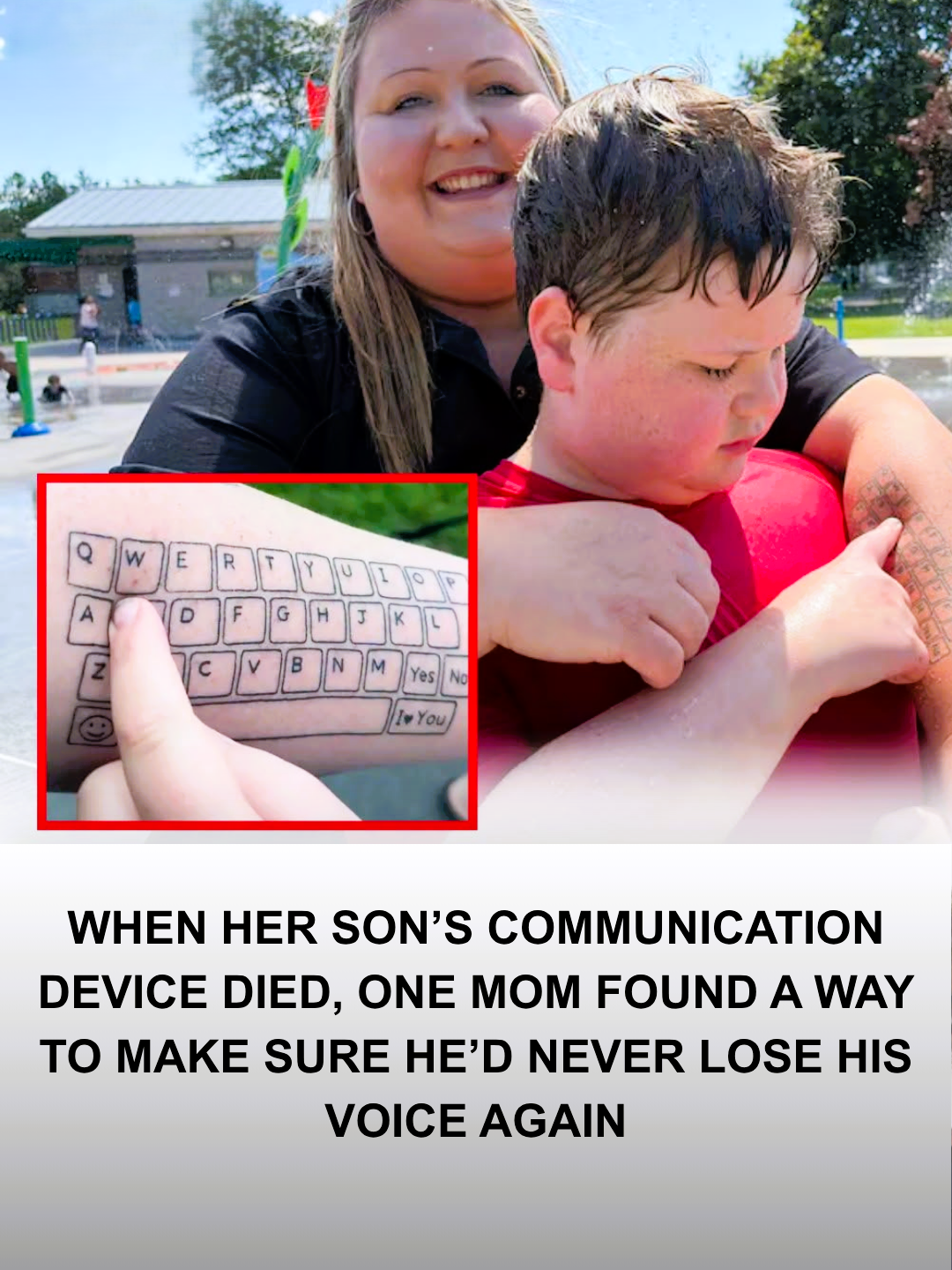
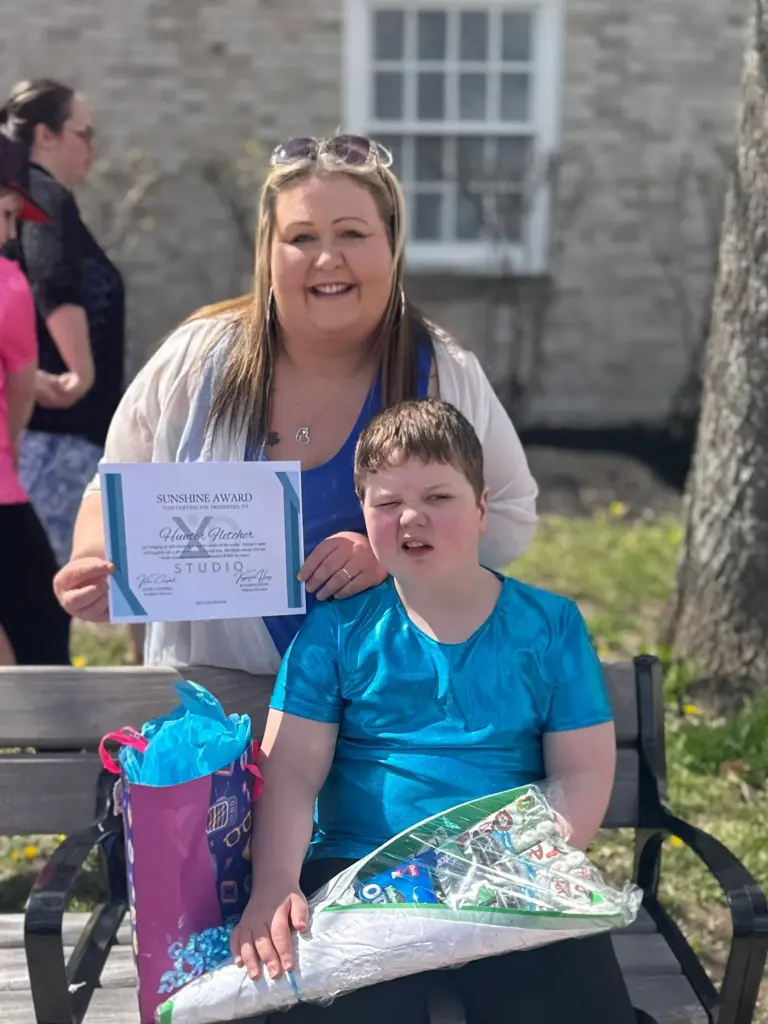
Jessica Fletcher knew how important technology was to her 11-year-old son, Hunter.
Because Hunter is autistic and nonverbal, he typically relies on an Augmentative and Alternative Communication device, or AAC device, to express what he wants, needs and feels. The tablet gives him access to words and symbols that help him communicate with the people around him.
But one ordinary trip to a restaurant exposed a problem Jessica could no longer ignore.
The battery died.
Suddenly, the device that usually helped Hunter communicate was unavailable. There was no dramatic emergency, but for Jessica, the moment revealed how vulnerable communication could become when it depended entirely on a piece of technology.
She needed another way for her son to be heard.
What Hunter did next gave her one.
A Dead Battery Led to an Unexpected Idea
With the AAC device out of power, Jessica improvised.
She drew the alphabet on a piece of paper, hoping Hunter could point to the letters and spell out what he wanted to order.
Hunter had a different idea.
He turned the paper over and drew something familiar from memory: a keyboard.
Then, using his finger as though the hand-drawn keys were real, he began “typing” his order.
For Jessica, the significance of that moment went far beyond choosing food at a restaurant.
Hunter had shown her that the communication system he understood did not necessarily need a battery, a screen or a speaker. What mattered was giving him an accessible way to organize letters and express what was already in his mind.
Jessica later explained that the experience made her realize she could not allow her son’s ability to communicate to depend entirely on technology.
Devices can lose power. They can break. They can be forgotten.
Hunter still needed a voice when that happened.
So Jessica decided to create a backup that could not run out of battery.
She Put a Keyboard on Her Arm
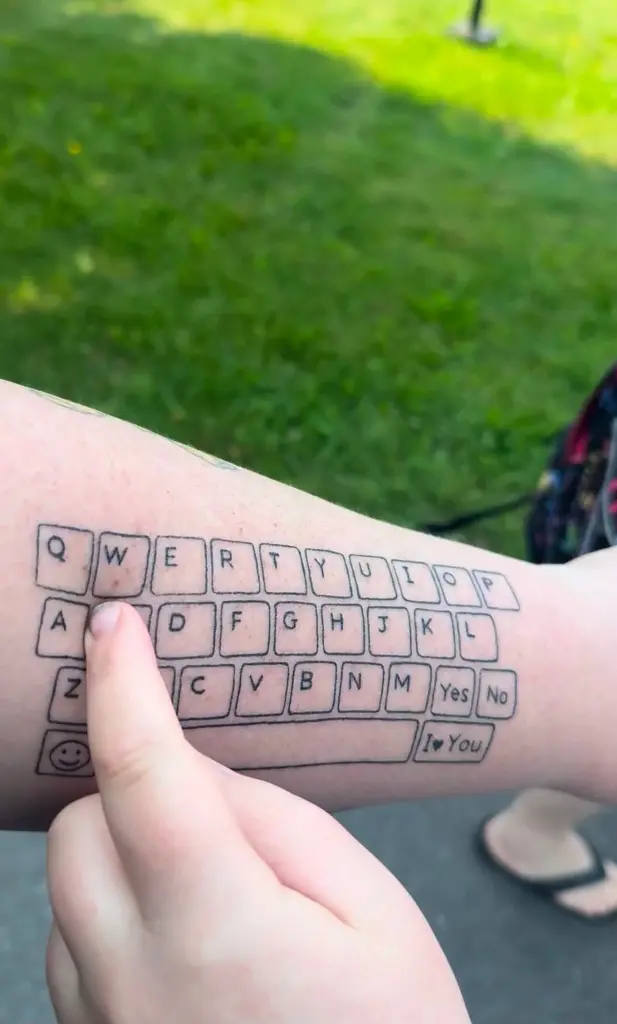
Working with a tattoo artist, Jessica had a keyboard permanently tattooed on her forearm.
It was not simply a decorative image.
The design was created for Hunter to use.
Along with letters, the tattoo includes simple emotional options such as a happy face and a sad face. It also contains an “I heart you” button, giving Hunter another way to communicate affection without needing his electronic device.
Whenever mother and son are together, the keyboard is now available.
Hunter can touch the letters on Jessica’s arm in sequence, spelling out what he wants to communicate.
For most people, a tattoo is something to look at.
For this family, it became something to talk through.
More Than an Emergency Backup
The tattoo solved the obvious problem Jessica had encountered at the restaurant: it could serve as a communication tool when Hunter’s AAC device was unavailable.
But she soon recognized another advantage.
Electronic AAC devices can speak selected words aloud. That feature can be extremely useful, but it can also mean that a person’s communication becomes public simply because of the technology being used.
With the tattoo, Hunter can communicate more quietly.
He can tap letters on his mother’s arm without broadcasting every word to everyone nearby.
That makes the keyboard more than a backup plan. In certain situations, it can also offer him greater privacy.
For Jessica, the larger lesson is about giving nonspeaking people as many ways as possible to express themselves rather than expecting everyone to communicate through the same method.
“When we remove communication barriers, we’re giving non speakers the chance to show us who they really are,” she said.
Millions of People Saw Hunter Use It
The idea might have begun with one mother and one child, but it did not remain private for long.
A video showing Hunter using the keyboard tattoo spread widely across social media, eventually drawing millions of views and more than 1.5 million likes.
Viewers responded not just to the unusual tattoo, but to what it represented: a parent adapting herself to her child instead of asking the child to adapt to everyone else.
The video carried an emotional message about mothers finding different ways to carry the words their children may not be able to speak aloud.
For families familiar with communication challenges, Jessica’s solution clearly struck a nerve.
And soon, people began asking how they could have something similar.
The Idea Started Spreading Beyond Their Family
Jessica eventually partnered with a clothing company to place keyboard designs along the sleeves of shirts.
The concept meant someone would not necessarily need a permanent tattoo to offer a similar communication surface.
According to Jessica, interest came from far beyond parents of autistic children.
She heard from nurses, doctors, first responders and families around the world who wanted shirts featuring the keyboard.
Tattoo artists also began contacting her, with some offering to create similar tattoos free of charge for parents of nonspeaking children.
What started as a practical solution after a dead tablet battery had become an idea other caregivers and professionals could adapt for themselves.
What Happens When Someone Is Finally Given the Right Tool?
The response also brought attention to a broader point about nonspeaking autistic people.
Maddy Dever, chair of the National Autism Network and a parent to four autistic young adults, emphasized that an inability to communicate through speech should not be mistaken for an inability to think, understand or have something meaningful to say.
The difference can sometimes be access to the right communication method.
When people are given a system that works for them, Dever said, others may suddenly discover just how much intelligence and understanding had been there all along.
That idea sits at the heart of Jessica and Hunter’s story.
The tattoo did not give Hunter thoughts that were missing before.
It did not create his preferences, emotions or personality.
It simply gave him another route for expressing them.
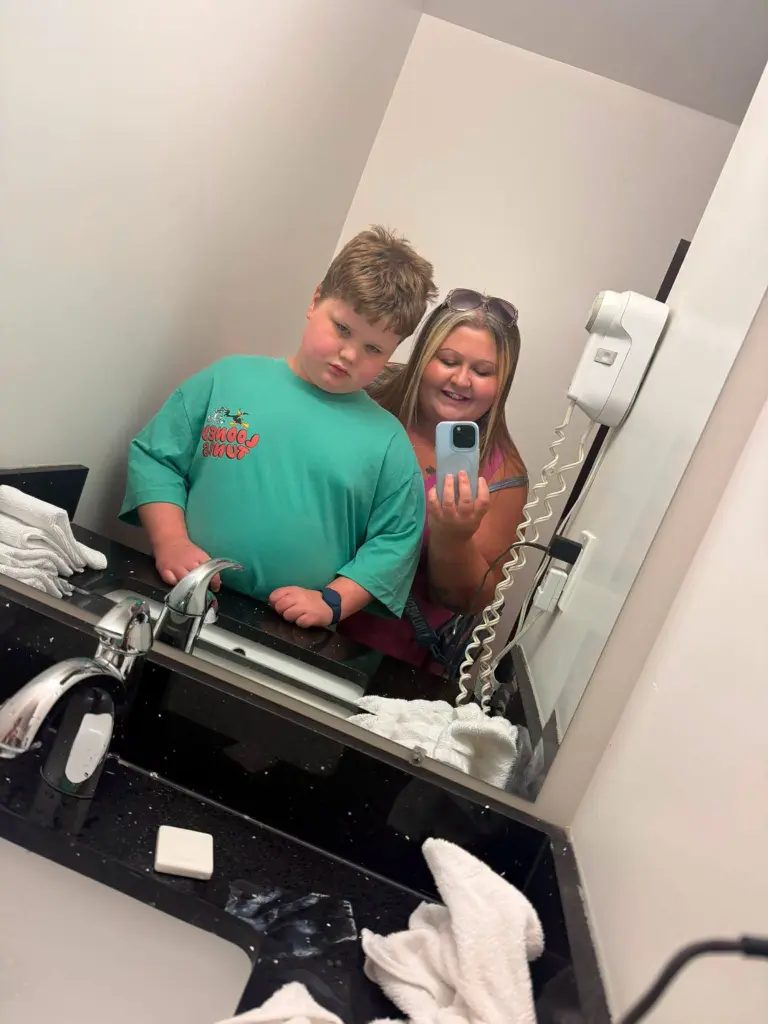
A Permanent Reminder on Her Arm
Technology remains an important part of Hunter’s communication. Jessica’s tattoo was never meant to erase the usefulness of his AAC device.
Instead, it ensures that technology is not the only option.
If a battery dies, there are letters on her arm.
If Hunter wants a quieter way to communicate, there are letters on her arm.
If he wants to express an emotion or tell his mother he loves her, those options are there too.
The keyboard is permanent, but perhaps the most meaningful part of the story is the reason Jessica chose permanence in the first place.
Her son’s ability to communicate mattered enough that she wanted a solution she could carry everywhere.
A restaurant mishap could have remained nothing more than an inconvenient moment involving a dead battery.
Instead, Hunter drew a keyboard.
His mother paid attention.
And from that small exchange came a reminder now reaching families around the world: having something to say and having a way to say it are not always the same thing.
Sometimes the most important thing another person can do is make sure the second one is always possible.