Troy 2: Legends Rise From Blood and Fire (2026) – A Fierce Clash of Power, Glory, and Legacy
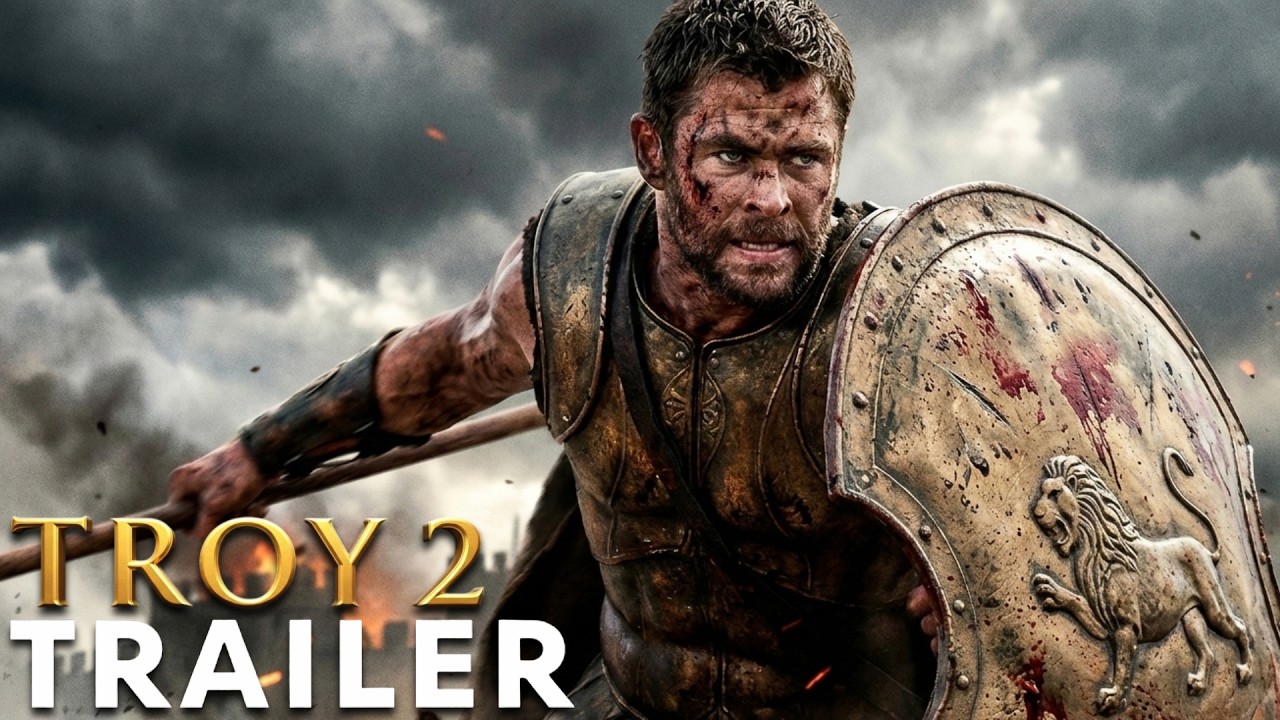
In Troy 2: Legends Rise From Blood and Fire (2026), the echoes of the Trojan War have barely faded, but new wars, conquests, and kings are already rising to claim their own place in history. The world remains a battleground, with every sword strike and battle cry adding to the growing legends of the ancient world. This epic action-packed sequel to Troy takes us deeper into a world where the line between men and gods is blurred, and glory is the ultimate prize.
While Achilles may have fallen, Brad Pitt returns in an immortal form, this time not as a man, but as a spirit whose legacy looms large over every warrior who dares to fight in his shadow. Though his flesh is gone, his influence remains, and it’s this powerful echo of Achilles that drives the warriors of the new age to seek fame, fortune, and eternal glory. Pitt’s presence is felt in every battle, with his ghostly influence shaping the hearts and minds of those who seek to carve their names into history. His role adds a supernatural layer to the story, as Achilles’ legend continues to cast a long, intimidating shadow over the men who come after him.
In direct contrast, Dwayne Johnson enters the world as a fierce and merciless warlord king, a man who sees the world not as a place to rebuild, but as a canvas to conquer. His character brings a new kind of brutality and ambition to the world of Troy 2, wielding power with an iron fist and a vision of domination. Johnson’s portrayal of this ruthless leader is intense, grounded in a philosophy of destruction and supremacy that pits him against the lingering ideals of Troy’s once-glorious legacy. His presence in the ancient world brings forth a clash of ideologies—one where survival is the goal, and honor is a fleeting concept.
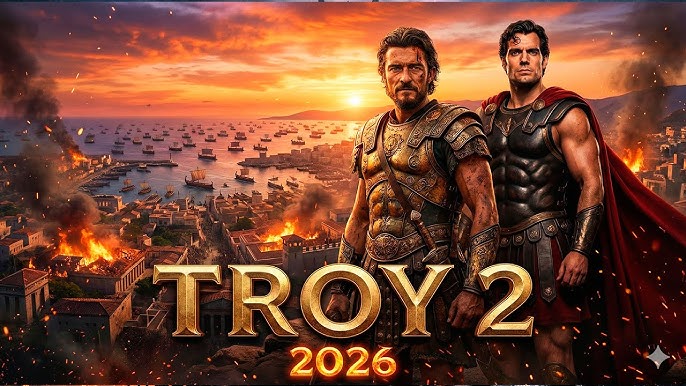
As the world teeters on the edge of chaos, these two men—one living, one spirit—become entwined in a conflict that is as much philosophical as it is physical. The power struggle between rebuilding and conquering takes center stage, forcing the surviving warriors to question the true meaning of glory. Can a legacy built on honor and sacrifice withstand the weight of unchecked ambition and destruction? And what happens when the legend of Achilles stands in the way of a new world order?
The action in Troy 2 is as brutal as it is breathtaking, with epic battle sequences that capture the scale and ferocity of ancient warfare. The choreography is fierce, the combat bloody, and the stakes higher than ever. The film’s mythic atmosphere is enhanced by stunning cinematography, capturing the grandeur of the ancient world with sweeping landscapes and jaw-dropping visuals. The clashes of swords, the roar of battle cries, and the thunder of warhorses remind us that this world is one of endless conflict—where power is claimed, and glory is earned.
What truly sets Troy 2 apart is its emotional depth. While the battles are fierce, the film’s heart lies in the philosophical conflict between the characters. Dwayne Johnson’s warlord king represents the harsh realities of power—where victory is only achieved through bloodshed and subjugation. In contrast, the lingering influence of Achilles offers a more noble, if tragic, perspective on heroism. The tension between these two ideologies creates a compelling narrative that asks the question: what is the true cost of power? And can any legacy survive when the cost of glory is so high?
Review: Troy 2: Legends Rise From Blood and Fire delivers an epic saga of brutal combat, deep emotional conflict, and a clash of philosophies that drives the story forward. With standout performances from Brad Pitt and Dwayne Johnson, this sequel lives up to its predecessor’s legacy, while introducing new layers of complexity and intensity. It’s a mythic journey that will keep you on the edge of your seat, reminding us that legends, once forged, never truly fade.