The Real Story Behind Forrest Gump’s Alabama Home — What Was Built, What Was Real and What Remains Today
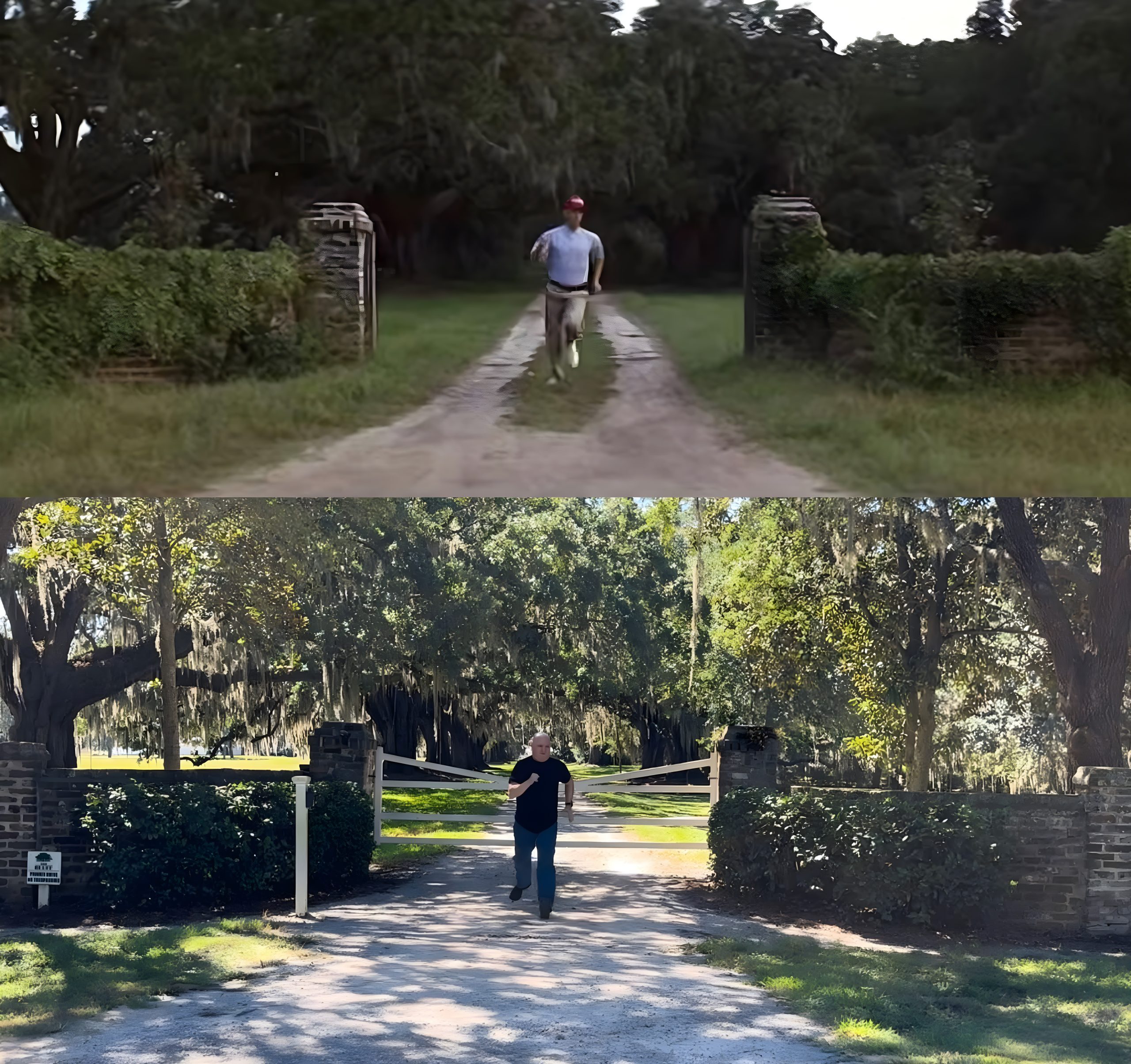
For millions of moviegoers, the road is unmistakable.
A long dirt driveway disappears beneath towering Southern trees. Young Forrest Gump races along it, first struggling with the braces on his legs and later discovering that he can run faster than anyone expected.
It feels completely connected to Greenbow, Alabama — the fictional hometown where Forrest grows up with his mother before his extraordinary life takes him around the world.
But Greenbow was never a real Alabama town.
And the landscape surrounding Forrest’s childhood home wasn’t filmed in Alabama at all.
The familiar road can be traced to 3547 Combahee Road near Yemassee, South Carolina, on property associated with Bluff Plantation.
Coordinates commonly given for the filming location are:
32.68758° N, 80.73731° W.
More than 30 years after Forrest Gump arrived in theaters in 1994, parts of that landscape remain recognizable.
But one of the most important things fans remember seeing there has completely disappeare house in the traditional sense.
It was a movie set.
Hollywood Built Greenbow in South Carolina
Robert Zemeckis’ Forrest Gump follows its title character, played as an adult by Tom Hanks, from an unusual childhood in the American South through decades of U.S. history.
The movie repeatedly identifies Forrest’s hometown as Greenbow, Alabama.
Greenbow, however, was fictional.
To create it, the production used several different locations.
Scenes representing the town itself were filmed in Varnville, South Carolina, while much of the rural landscape surrounding Forrest’s childhood home was created around Bluff Plantation near Yemassee.
That is why someone driving through Alabama looking for the Gump house would never find it.
The filmmakers had constructed their version of Alabama somewhere else.
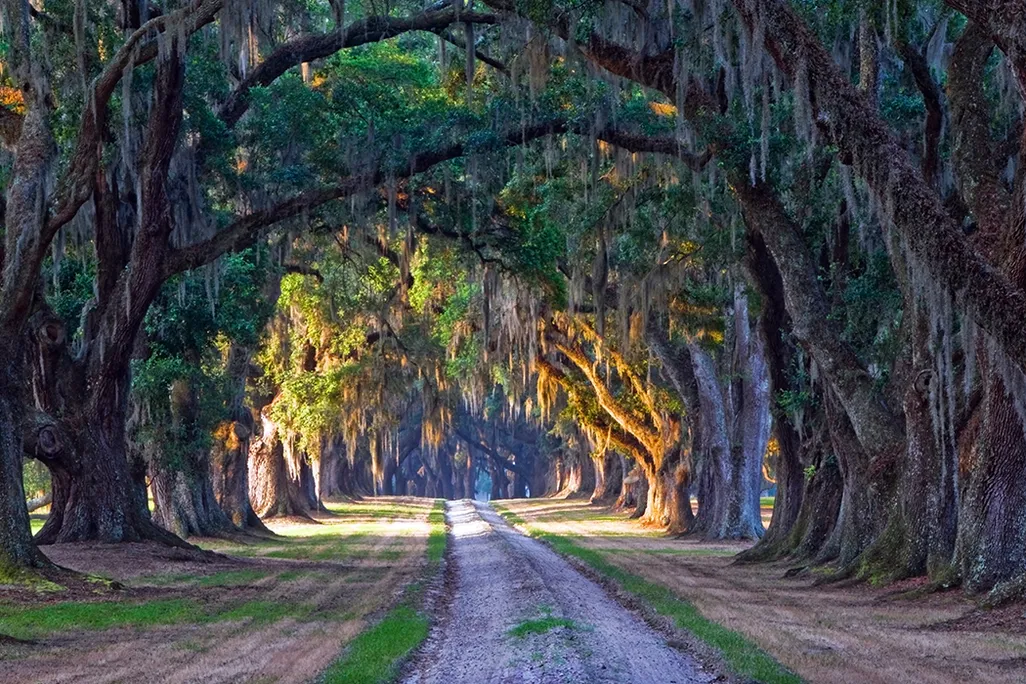
3547 Combahee Road Became Forrest’s Driveway
One of the most recognizable surviving pieces is the road associated with the Gump property.
The location is identified as 3547 Combahee Road, Yemassee, South Carolina, and the driveway was used for scenes involving Forrest’s childhood and the property surrounding his home. Smithsonian has also identified the road as the location used when Forrest is pursued by bullies in a pickup truck.
Watching the movie today and comparing it with modern photographs produces the strange feeling that makes filming-location images so compelling.
Buildings can disappear.
Props can be removed.
Actors age.
But trees, roads and landscapes sometimes survive long enough to make a movie scene suddenly feel real again.
The brick columns and tree-lined approach still make the location recognizable to fans.
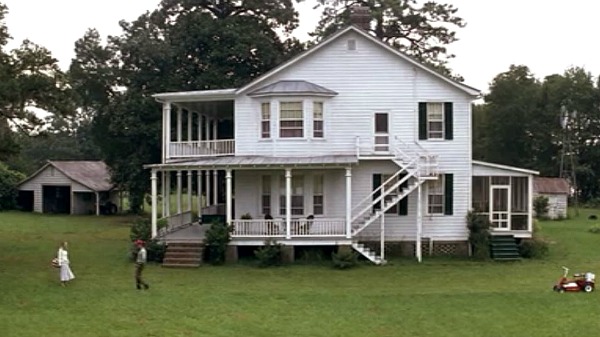
But the house that once waited at the end of Forrest’s world is gone.
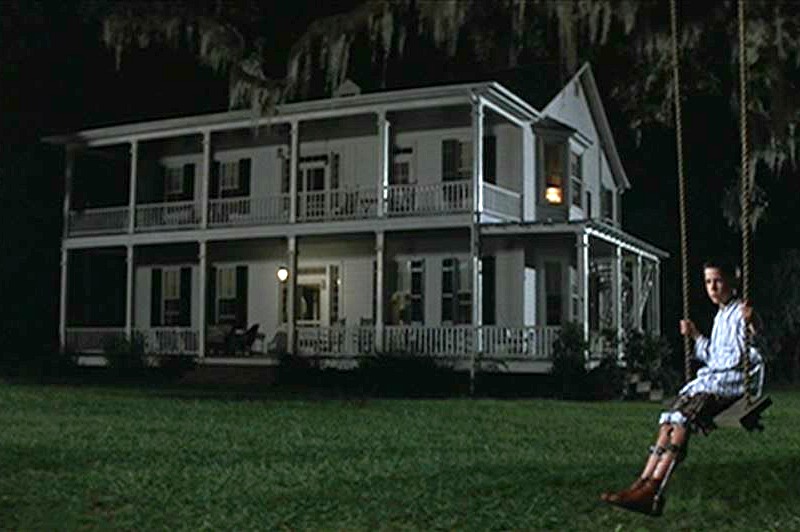
Forrest’s House Was Built Only for the Movie
The Gump family home looked convincing enough to suggest it had been standing in the South Carolina countryside for generations.
It hadn’t.
The filmmakers built it specifically for Forrest Gump.
According to South Carolina Lowcountry tourism information, consportions required for filming needed to function as a movie set, rather than as a conventional permanent residence.
After production ended, the house was dismantled.
That is why modern visitors cannot recreate every image from the movie simply by returning to the property.
The landscape survived.
The illusion didn’t.
And that distinction reveals just how much work went into making Greenbow appear like a place that had always existed.
The Production Built Much More Than One House
The Gump house was only part of what filmmakers created around Bluff Plantation.
Information ina Film Commission filming notes lists an impressive collection of sets and locations created or used there, including:
- the Gump boarding house
- Jenny’s farm
- an oak tree
- Grandma’s trailer
- Oak Alley
- the mailbox and school-bus stop
- a pecan grove
- kitchen settings
- and even terrain used to help represent the Mekong Delta.
That means one South Carolina property helped represent several completely different places within Forrest’s life.
For a viewer, they seem separated by years and even continents.
For the production crew, some were much closer together.
It is a classic example of the geographical illusion that movies create so effectively.
Even “Vietnam” Was Closer to Forrest’s Home Than It Looked
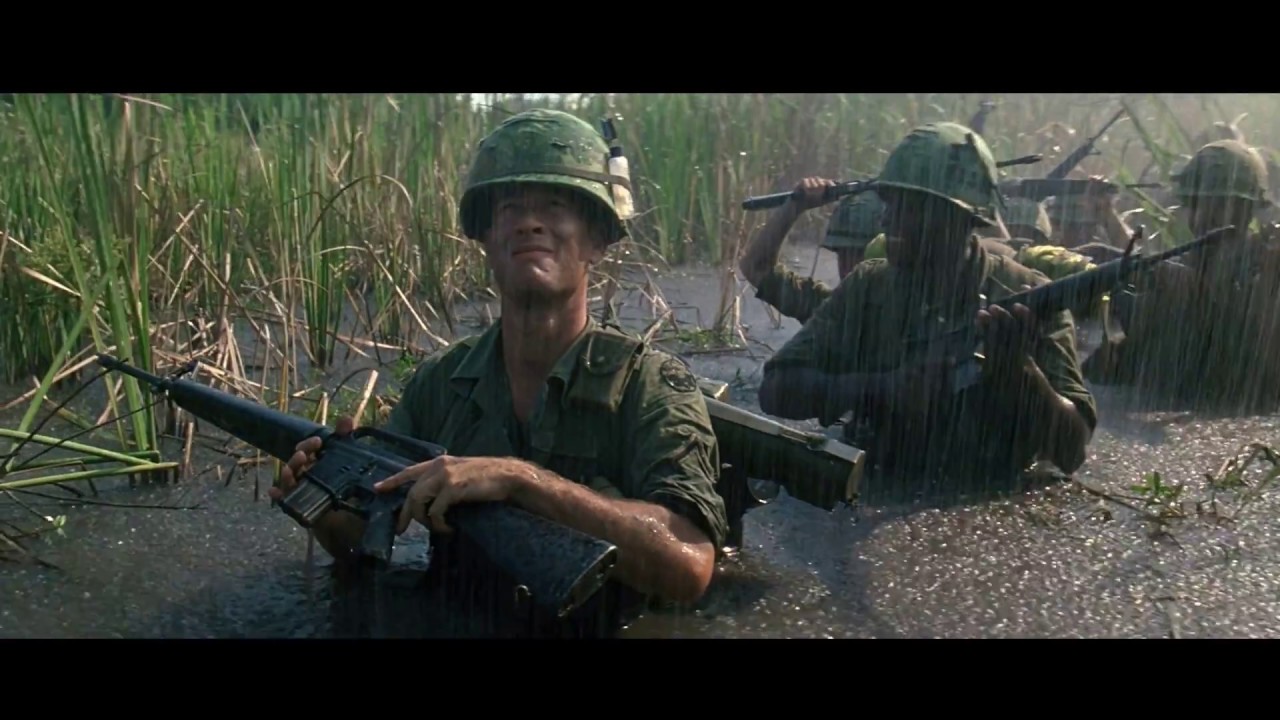
The South Carolina Lowcountry played another surprising role in the movie.
When Forrest goes to Vietnam with the Army, viewers seem to have traveled to the other side of the world.
In reality, siose sequences were also created in South Carolina.
Scenes were filmed around Hunting Island and Fripp Island, where the coastal vegetation and wetlands could convincingly stand in for Southeast Asia.
It meant the production could transform the same general region into both Forrest’s American childhood landscape and a wartime environment thousands of miles away.
On screen, audiences never need to question the geography.
That is exactly the point.
Greenbow Was Pieced Together From Different Real Places
Bluff Plantation supplied Forrest’s rural world, but filmmakers needed other places to complete Greenbow.
Varnville, South Carolina, became an important stand-in for the fictional town.
Scenes involving its streets and businesses were shot there, helping create the small-town setting audiences early life.
So when viewers remember “Greenbow, Alabama,” they are actually remembering a carefully assembled collection of South Carolina locations.
The fictional town feels geographically coherent because editing connects them.
In reality, the movie’s geography is a puzzle.
That becomes much easier to see once fans begin visiting the locations themselves.
The Road Remains — But It Is Not a Movie Attraction
There is an important difference between recognizing a film location and treating it like a public movie set.
The road at 3547 Combahee Road leads onto private property. Smithsonian specifically cautioned fans against attempting to recreate the famous chase there.
That detail matters for anyone inspired by then-and-now photographs.
movie history without being a public tourist attraction.
The safest way to appreciate many such places is from publicly accessible areas and through photographs rather than entering private land.
Still, even from a distance, seeing the familiar entrance can immediately summon memories of the film.
Why This Particular Location Feels So Familiar
Forrest Gump contains far grander images.
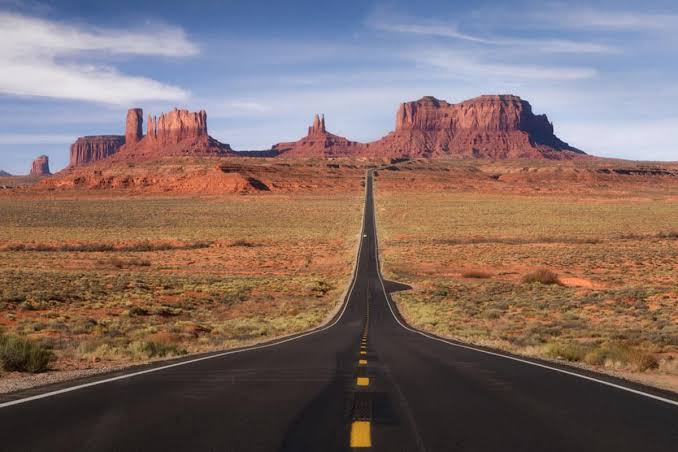
Forrest runs across Monument Valley.
He appears at the Lincoln Memorial.
He sits on the famous bench in Savannah.
He travels through battlefields, stadiums and national events.
Yet the driveway near his childhood home carries a different emotiona the place from which everything begins.
It is where Forrest is a child rather than a historical witness.
It connects him with his mother, played by Sally Field, and with Jenny, played as an adult by Robin Wright.
And it is associated with perhaps the simplest command in the movie:
Run.
That is why seeing the location decades later can be unexpectedly moving.
Nothing dramatic has to happen in the modern photograph.
The familiarity does the work.
The House Vanished, but the Landscape Still Holds the Memory
Movie sets are designed to convince us that temporary things are permanent.
For a few minutes on screen, Forrest’s house seemed as real as any childhood hom porch.
Trees.
A history audiences could imagine extending long before Forrest was born.
Then production ended, and the structure was removed.
More than three decades later, the surviving road and landscape expose both sides of filmmaking at once.
Part of what audiences saw was real South Carolina.
Part was carefully constructed fiction.
Together, they became Greenbow, Alabama.
Today, anyone looking at the familiar driveway at 3547 Combahee Road, Yemassee, South Carolina — 32.68758° N, 80.73731° W can still recognize the bones of the image.
The movie house may be gone.
Greenbow never actually existed.
But one piece of Forrest Gump’s childhood world is still sitting quietly beneath those South Carolina trees.