Choosing Independence: One Woman’s Journey Through Limb-Lengthening Surgery
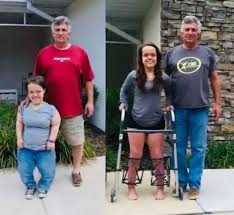
For Chandler Crews, the decision to change her body was never about appearance—it was about independence.
Born with achondroplasia, the most common form of dwarfism, Chandler reached her adult height of 3 feet 10 inches by the age of sixteen. As she approached adulthood, she began to confront a reality that many people never have to consider: everyday tasks would require constant adaptation, assistance, or specialized equipment. Simple activities such as driving, using public restrooms, or navigating daily routines posed ongoing challenges.
After years of reflection, Chandler made a deeply personal decision. Beginning in 2010, she chose to undergo a series of limb-lengthening surgeries, a complex and demanding medical process known as distraction osteogenesis. Over the course of four years, she completed two leg-lengthening procedures and one arm-lengthening surgery.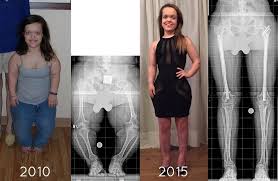
The process was neither quick nor easy. During each procedure, bones were carefully cut and gradually separated using specialized devices, allowing new bone tissue to form in the expanding space. The treatment required immense physical endurance, strict medical supervision, and long periods of recovery. By the end of the process, Chandler had increased her height by more than a foot, reaching a final height of 4 feet 11 inches.
Yet, Chandler is clear that the most meaningful change was not the number on a measuring tape.
What the surgeries gave her was autonomy. She gained the ability to drive a standard car without modifications, use public spaces with greater ease, and manage personal daily tasks independently. These changes, she explains, fundamentally altered her relationship with the world and with herself.
Today, Chandler uses her experience not as a prescription for others, but as a source of education and empowerment. As a public speaker and the founder of a nonprofit organization supporting individuals with skeletal conditions, she advocates for informed choice, bodily autonomy, and respect for diverse experiences within the disability community.
Her message is nuanced and deliberate: there is no single “right” way to live with a disability. For some, adaptation and accommodation are the answer. For others, medical intervention may feel necessary. What matters most, Chandler says, is that individuals are given accurate information, access to care, and the freedom to decide what independence means for them.
Chandler Crews’ story is ultimately not about changing her height—it is about claiming ownership over her life, on her own terms.V