At 90, Buddy Guy Is Still Touring — Because He Fears the Blues Could Be Forgotten

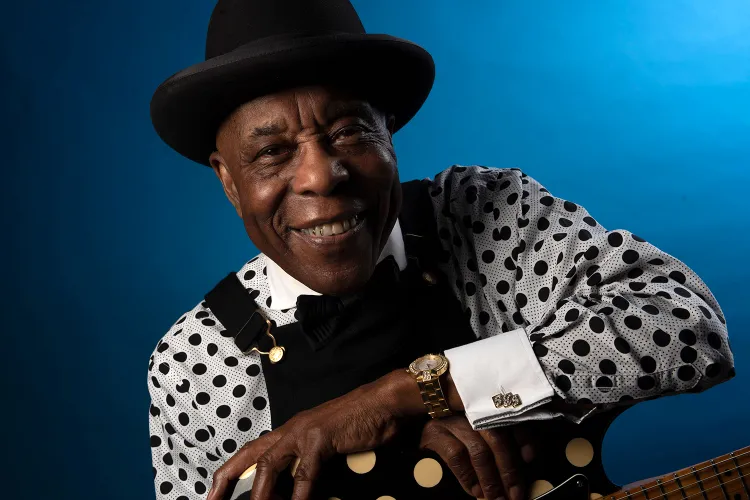
Buddy Guy has spent more than seven decades playing the blues, inspired some of rock’s greatest guitarists and lived long enough to watch many of the musicians he once admired become legends of the past.
At 90, he could easily decide that he has done enough.
Instead, Guy is still stepping onto stages.
His reason goes far beyond another tour or another round of applause. The Chicago blues icon worries that the music that shaped his entire life is becoming harder for younger listeners to discover — and he feels a responsibility to keep it alive while he still can.
Guy turned 90 on July 30, 2026. His Buddy Guy 90 tour began in Toronto in July and continues with performances across the continental United States through September.
For a musician with roughly three-quarters of a century of experience behind him, continuing to tour at that age is remarkable enough.
But Guy’s concern is what happens after musicians of his generation are no longer there to play the songs themselves.
He believes major radio stations have largely moved away from the blues. Even legendary figures such as Muddy Waters and Little Walter, he says, are rarely heard on mainstream radio anymore.
It is a concern Guy once discussed with his late friend and fellow blues giant B.B. King.
Now, with so many of the genre’s towering figures gone, Guy understands that he is among the remaining musicians who can connect today’s audiences directly to that history.
His message is simple: the greats may be gone, but what they created is not.
From a Louisiana Farm to Chicago
Guy’s extraordinary journey began far from the stages that would eventually make him famous.
He grew up as the son of sharecroppers on a plantation in Louisiana. There was no high school where he lived, and his formal education ended early.
Music became another kind of education.
Guy learned guitar not from classrooms or written lessons, but by listening.
Lightnin’ Hopkins, B.B. King and Arthur Crudup were among the musicians whose records helped teach him how the instrument could sound. Guy played by ear, absorbing what he heard until he began developing a voice of his own.
His parents had also given him a lesson that stayed with him: rather than worrying about being better than everyone around him, he should concentrate on becoming good enough that the best musicians would eventually come looking for him.
Music soon appeared to offer him something else — a possible path beyond the farm.
Guy saw blues musicians performing and believed they were managing to build lives through their art. He played well enough to eventually make the journey north.
In 1957, he arrived in Chicago.
But the reality he encountered was not quite what he had imagined.

A Famous Musician and a Broken Couch
One of Guy’s early experiences in Chicago gave him an unexpectedly harsh lesson about the music business.
He visited blues star Jimmy Reed’s home and sat down on his couch — only to sink through it toward the floor.
Guy was stunned.
Here was a musician he considered successful, yet Reed did not even have a decent couch for a visitor.
Guy began realizing that talented musicians were not necessarily receiving the financial rewards their success seemed to promise. Money could disappear through record companies, producers and others surrounding the artists.
It made him wonder whether pursuing music professionally was really the life he wanted.
For a while, he mostly observed.
He watched the established musicians around him, studied how they worked and listened closely.
The talent could be intimidating.
Guy remembers hearing other guitarists and wondering whether he should simply stop playing because he could not do what they could do.
Other people heard something different.
They kept telling him that he had something of his own.
Eventually, Guy began to understand that trying to become another musician was not the answer. His instincts, touch and personality on the guitar were precisely what could distinguish him.
That realization would ultimately become part of the advice he now offers younger performers: keep playing long enough and, rather than becoming another Muddy Waters, a musician may eventually discover something uniquely his or her own.
The Guitarist Who Inspired Future Legends
By the 1960s, Guy was no longer simply the young man watching blues greats in Chicago.
He was becoming one himself.
In 1965, he traveled to Europe as part of the American Folk Blues Festival. There, Guy encountered young British guitar players fascinated by the blues coming from America.
Among them were Jeff Beck and Eric Clapton.
Guy would eventually become an influence not only on those musicians but on generations of guitarists, including Jimmy Page and Keith Richards. His work also influenced Jimi Hendrix.
It created an unusual full-circle story.
Guy had once learned almost entirely by listening to other musicians. Eventually, some of the most celebrated guitar players in rock history were listening to him.
Still, he has never seemed especially interested in presenting himself as someone above ordinary people.
He describes himself as a regular person who taught himself guitar and happened to build a remarkable career with it.
Away from the stage, his idea of happiness remains surprisingly simple.
Guy says he enjoys being the person he remembers from his childhood on the farm, treating others with respect.
He also loves to cook.
Why Younger Fans Matter to Him
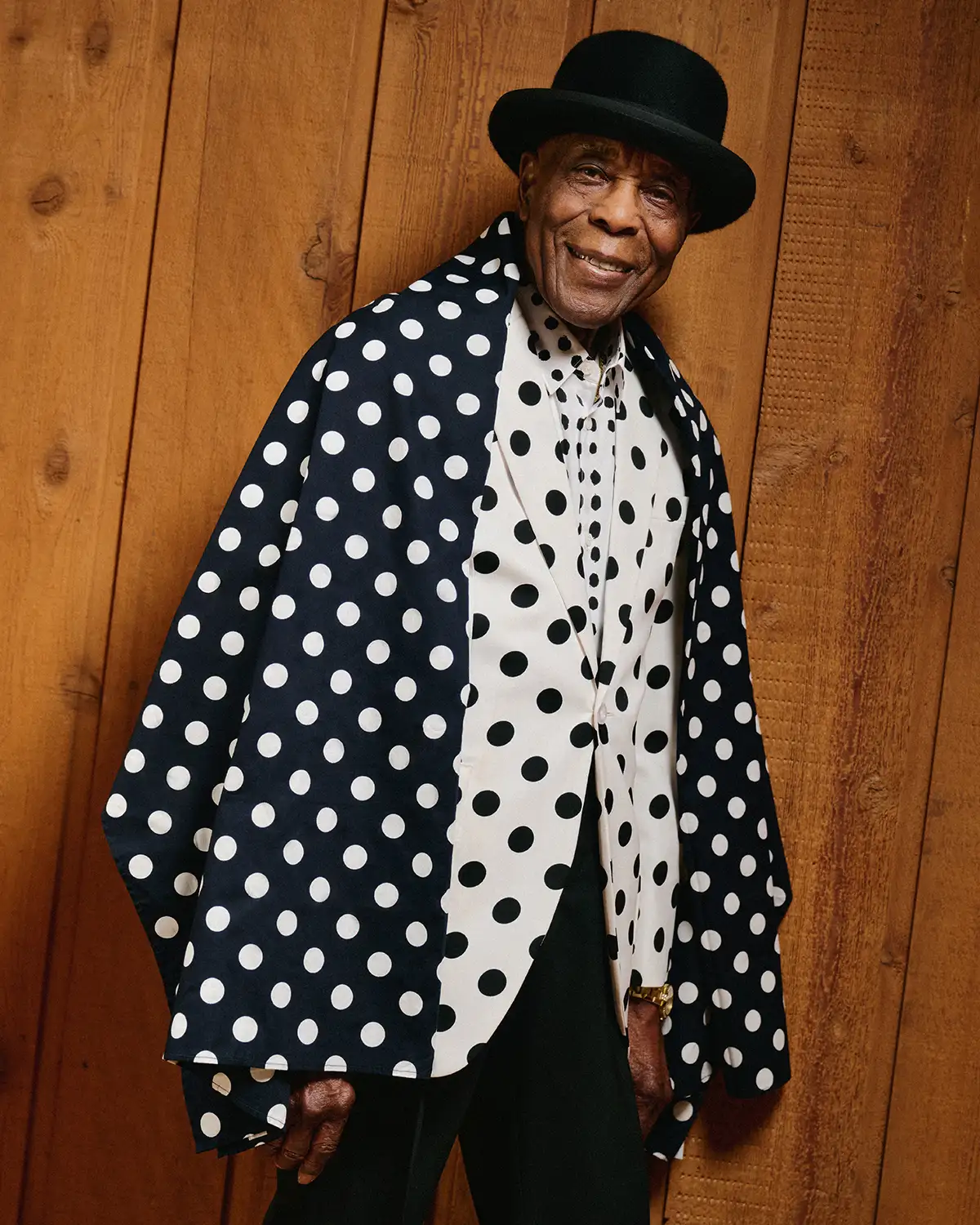
Guy’s fear for the blues does not come from believing younger generations are incapable of loving the music.
Quite the opposite.
He believes many simply are not given enough opportunities to hear it.
Years ago, he remembers, radio DJs had far more freedom to choose what they wanted to play. A recording could reach a station, and a DJ could decide that listeners needed to hear it.
Guy believes that freedom has diminished as radio programming has become more tightly controlled.
His philosophy is that the blues needs to be experienced before people can decide whether it speaks to them.
He compares it to tasting a food for the first time: hearing other people describe something is not the same as experiencing it yourself.
That belief has even shaped how he raised his own children. Guy says he never forced them to become musicians or embrace the blues. He wanted them to discover whatever music moved them naturally.
An unexpected example of that process arrived through the movies.
Guy appeared in the 2025 film Sinners, which went on to win four Academy Awards.
The movie introduced his face — and the blues tradition surrounding him — to an audience far younger than the crowds that originally discovered him through records and concerts.
Guy says children as young as 12 and 13 began recognizing him because of the film.
Some had never encountered his music before.
For Guy, that was proof of the problem he had been describing.
Young people could appreciate the blues once they were exposed to it. The challenge was making sure they had a chance to encounter it in the first place.
He Still Watches the Faces in the Crowd
After decades of performing, Guy still pays attention to something remarkably immediate when he walks onstage: the expression on a listener’s face.
Sometimes he asks for the spotlight to be turned toward the audience.
He wants to see people.
If he notices someone frowning, he takes it almost like a personal challenge. Maybe he needs to change the song, the note he is playing or something he is saying.
Then he watches.
When that person finally smiles, the connection has been made.
That exchange may explain why Guy remains on the road at 90 despite having nothing left to prove professionally.
He has already played alongside giants including Muddy Waters, Howlin’ Wolf and Little Walter. He worked with B.B. King. He influenced some of the most recognizable guitarists who followed him.
He recently celebrated another piece of that history with New York City Blues – Live 1978, a live album featuring his late longtime collaborator Junior Wells.
Age, Guy admits, changes things.
At 90, he jokes that his memory is not what it once was and that sometimes he has to write things down so he will not forget them.
But forgetting is also precisely what he does not want to happen to the blues.
Guy has lived long enough to begin his career as a student of legends and eventually become one of the musicians younger generations study themselves.
Asked how it feels to have survived long enough to occupy both roles, he does not offer a grand explanation.
He considers himself blessed.
And while he still has an audience in front of him, Buddy Guy intends to keep playing — not simply to remind people who he is, but to remind them where so much of the music they love began.