🇺🇸 Netanyahu Races to Washington for Urgent Trump Meeting Amid High-Stakes U.S.–Iran Talks
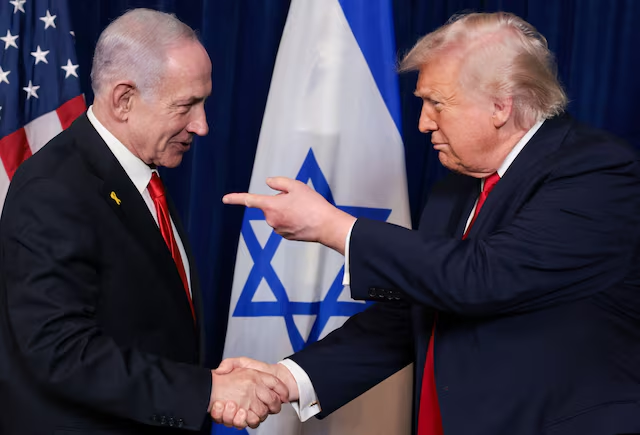
Israeli Prime Minister Benjamin Netanyahu has accelerated a planned visit to Washington, D.C., to hold an urgent meeting with U.S. President Donald Trump as tensions intensify over ongoing U.S.–Iran negotiations and broader Middle East security issues.
Officials said Netanyahu asked to move his visit forward by roughly a week, underscoring the sense of urgency in Jerusalem that discussions between the United States and Iran could soon yield a narrower nuclear deal that Israel views as strategically insufficient. Israeli leaders fear such an agreement might focus solely on Iran’s nuclear program and fail to address concerns over its ballistic missile development, support for militant proxies such as Hamas and Hezbollah, and other regional threats.
Netanyahu’s visit comes just after a round of indirect U.S.–Iran talks in Oman, which aimed primarily at nuclear issues but did not produce a breakthrough agreement. Jerusalem has argued that any negotiations should encompass a much broader set of Iranian activities, and Netanyahu plans to press this case directly with Trump.
Core Issues on the Agenda
According to senior officials, the prime minister will emphasize that Israel sees the current diplomatic window as an opportunity not merely to limit uranium enrichment but to constrain Iran’s missile programs and regional influence. Israel also continues to voice concerns about Tehran’s backing for militant groups and broader military capabilities.
Trump, for his part, has described the talks with Iran as “very good” and signaled that the United States remains open to a deal, although he insists any agreement must ensure Tehran remains unable to produce nuclear weapons or significant ballistic missiles. Washington has also bolstered its military presence in the Middle East amid the diplomatic push, deploying aircraft carriers and other assets to the region.
Regional Reactions and Iranian Warnings
Iran, meanwhile, has publicly urged the United States not to allow Netanyahu’s visit to derail the nuclear discussions, characterizing the Israeli prime minister’s concerns as potentially disruptive to negotiations. Tehran has stressed its negotiating positions on nuclear and enrichment issues even as protests and internal political pressures persist within the country.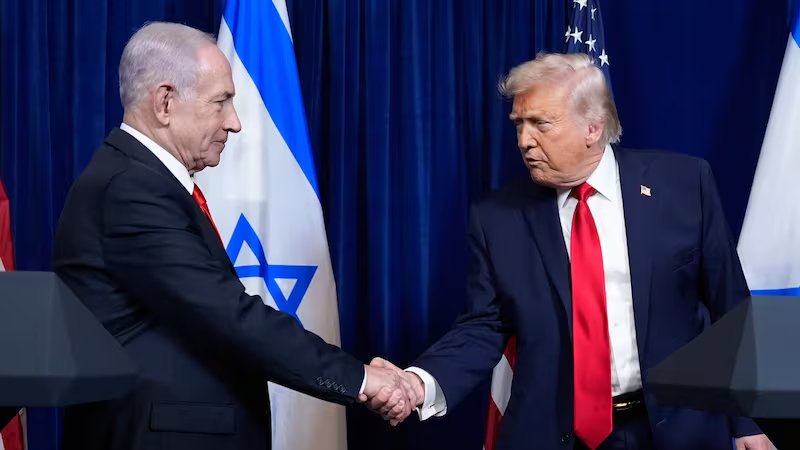
The meeting also comes amid broader debates over how best to secure long-term stability in the Middle East — including questions over Gaza ceasefire implementation, regional security architecture, and the future of Iran’s regional posture.
Diplomatic Stakes
Netanyahu’s trip highlights the delicate balancing act for U.S.–Israel relations: while the two countries share strategic interests, particularly regarding Iran’s nuclear ambitions, Israel’s insistence on tougher terms and wider constraints could complicate ongoing diplomacy. Analysts say Netanyahu’s push reflects deep Israeli unease with any deal perceived as leaving Tehran’s influence or military capabilities largely unchecked.