The Morning That Changed Australia: The Story of Hannah Clarke
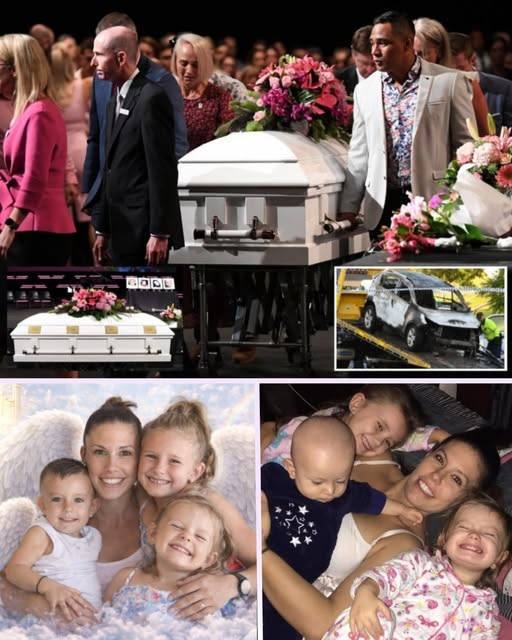
On February 19, 2020, the sun rose gently over Brisbane, casting the kind of golden light that makes ordinary mornings feel safe. Hannah Clarke was doing what countless parents do every day — driving her children to school. Aaliyah. Laianah. Little Trey. Lunches packed. Shoes tied. Backpacks resting against small shoulders. It was routine. It was normal. It was life.
Then, in the quiet suburb of Camp Hill, that normality was shattered. Hannah’s estranged husband, Rowan Baxter, approached the car. Within moments, petrol was poured inside. Flames erupted. A vehicle that had carried laughter and school-day chatter became an inferno on a suburban street.
Three young lives were lost in that fire. The horror of it is almost impossible to articulate. Aaliyah, Laianah, and Trey — children with futures stretching wide before them — were taken in an act of devastating violence. The brutality stunned not just a neighborhood, but an entire nation.
Hannah, gravely burned, somehow escaped the vehicle. Her body was in unimaginable pain. Her world had collapsed in seconds. And yet, in the midst of agony, she did something extraordinary. She gave police a clear, coherent statement. She made sure the truth would survive her.
It was not a crime born from nowhere. For years, Hannah had documented threats. She had sought help. Filed reports. Tried to leave. She had taken the steps experts tell victims to take. She had done what society asks. And still, it wasn’t enough.
Her story forced Australians to confront a deeply uncomfortable truth: domestic violence is not always sudden, explosive, or unpredictable. Often, it is patterned. Controlled. Calculated. It begins quietly — with manipulation, isolation, intimidation. It is called coercive control, and it can escalate to lethal violence.
In the aftermath, grief could have swallowed everything. But Hannah’s parents chose a different path. They founded Small Steps 4 Hannah, transforming unimaginable sorrow into determined action. Through advocacy and education, they began shining a national spotlight on coercive control — the invisible warning signs that too often go ignored.
What makes this tragedy even more profound is that, in her final hours, Hannah spoke words that reshaped public conversation in Australia. Through unbearable pain, she ensured accountability. Her voice cut through speculation, through doubt, through victim-blaming narratives that too often follow cases like this.
In the years since, Australia has wrestled more openly with the realities of domestic violence. Legislative discussions around coercive control gained urgency. Public awareness deepened. Conversations that once felt uncomfortable became necessary. Hannah’s voice did not fade — it echoed.
This was not just a crime story. It became a turning point. A reckoning. A mirror held up to a society that had to ask whether its systems truly protect those who ask for help.
February 19, 2020, began like any other sunny morning. It ended as one of the darkest days in modern Australian memory. Yet within that darkness stands the enduring legacy of Hannah Clarke — a mother whose final act was courage, whose truth reshaped a nation, and whose voice still calls for change. 🤍