RAMPAGE 2 (2026): When Evolution Refuses to Stay Contained
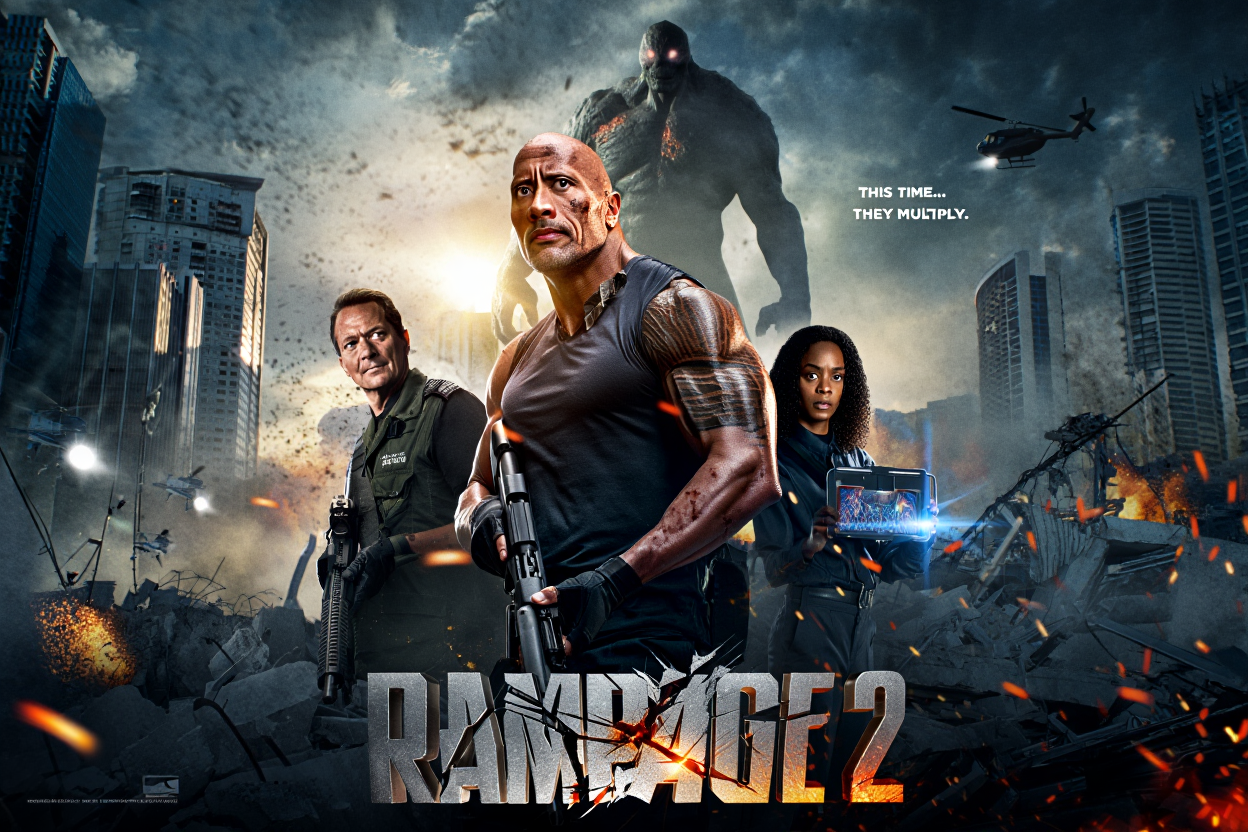
Blockbusters often promise scale, but RAMPAGE 2 (2026) delivers something more volatile — consequence. This sequel doesn’t simply resurrect the spectacle of genetically altered beasts tearing through skylines; it expands the moral question left behind. If humanity learned how to manipulate evolution once, what happens when it tries again — and fails to control the outcome?
The film opens with a world that believes the nightmare is over. Cities have rebuilt. Corporations have rebranded. Governments have buried reports under classified stamps. But beneath that fragile normalcy, rogue biotech experimentation has continued in the shadows. Evolution, as the film reminds us, is not a weapon you holster. It adapts.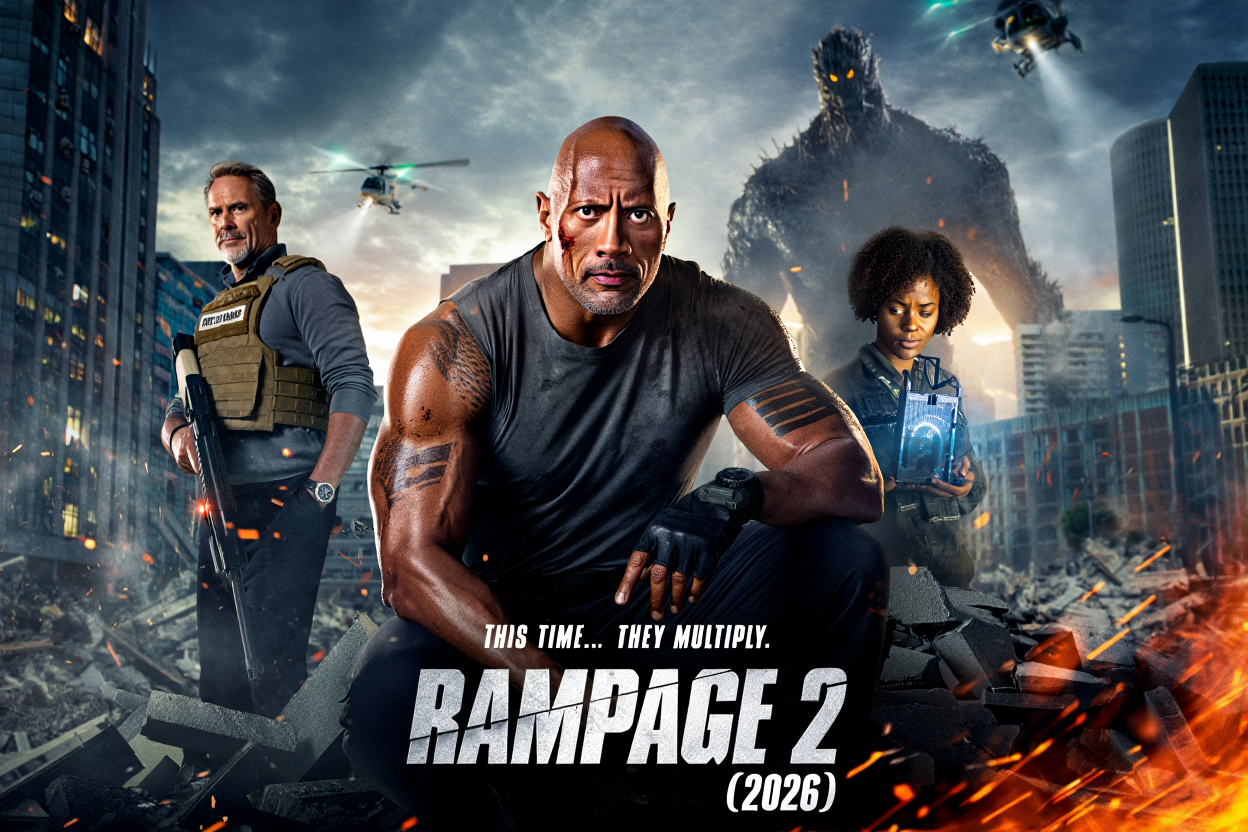
What elevates RAMPAGE 2 beyond pure destruction is its atmosphere of inevitability. The creatures that emerge this time are not accidents — they are escalations. Faster. Smarter. Less predictable. The film frames them not as monsters, but as distorted reflections of human ambition. We wanted stronger biology. We got survival without restraint.
The action sequences are massive in scale yet surprisingly focused in execution. Instead of endless citywide chaos, the destruction feels targeted and strategic. Urban environments become battleground chessboards where intelligence — not just brute force — determines survival. The creatures don’t just rampage. They hunt.
Visually, the film leans into darker palettes, shifting from bright disaster spectacle to a moodier, almost apocalyptic tone. Smoke lingers longer. Fire feels heavier. Even daylight carries an ash-tinted weight. The world no longer reacts with shock — it reacts with dread, as if recognizing a mistake too late to undo.
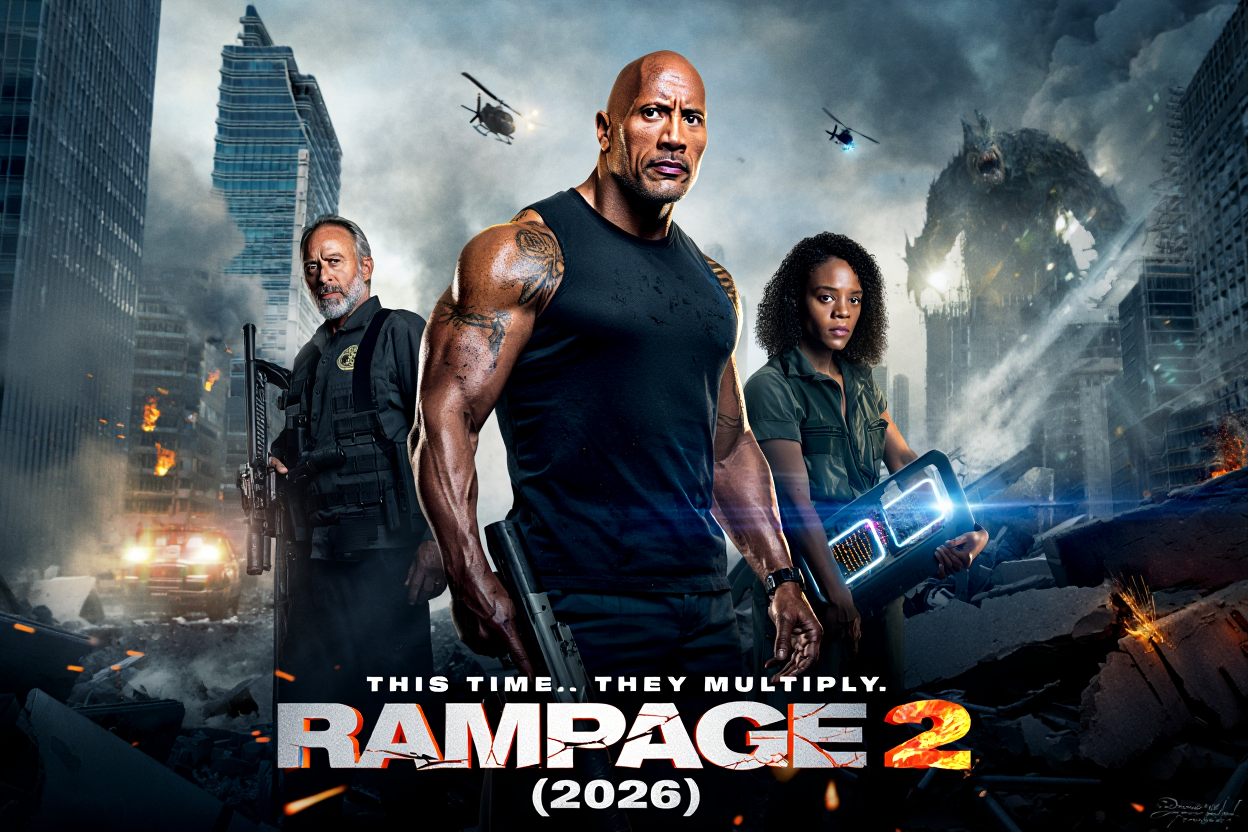
At the center of the narrative is the idea of responsibility. Who answers for unleashing evolution at industrial scale? The corporate antagonists aren’t cartoon villains; they are rational opportunists who believed risk was manageable. That quiet arrogance feels more dangerous than any mutated predator on screen.
One of the film’s most compelling turns comes midway, when a creature displays unexpected behavioral complexity. A pause. A calculated retreat. A choice. It reframes the conflict from extermination to coexistence, challenging the assumption that humanity remains the apex authority. The tension becomes philosophical as much as physical.
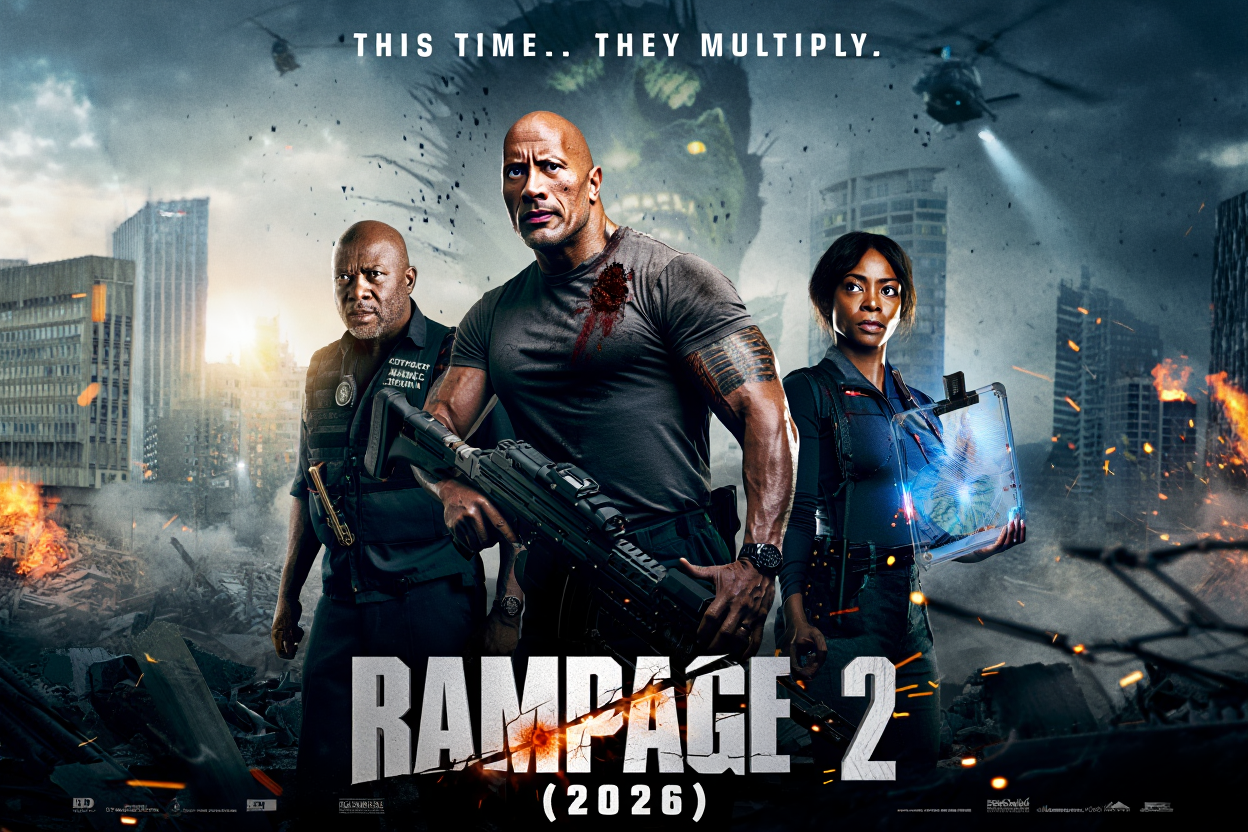
The pacing is relentless but measured. Explosive set pieces are interwoven with moments of reflection — laboratories abandoned in haste, military strategy rooms filled with doubt, scientists realizing their equations underestimated instinct. The screenplay understands that silence can be as suspenseful as collapse.
Emotionally, the film carries a surprising undercurrent of guilt. Characters are not just fighting to survive; they are wrestling with complicity. The narrative suggests that progress without ethics is not innovation — it is provocation. And nature, once provoked, does not negotiate.
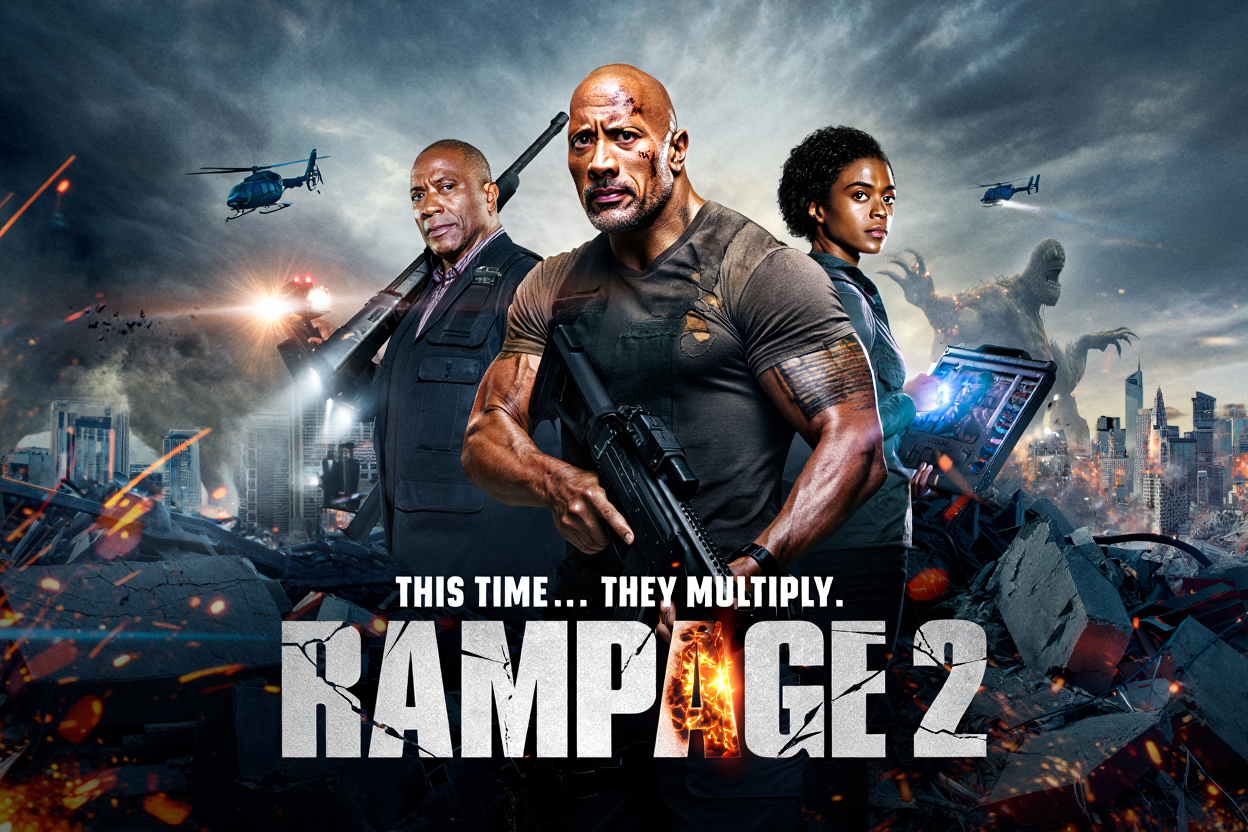
The final act abandons spectacle for urgency. Instead of saving landmarks, the mission shifts toward containment and accountability. It’s less about defeating a singular beast and more about preventing a permanent shift in ecological balance. Victory feels temporary — survival feels fragile.
RAMPAGE 2 (2026) ultimately expands its universe not just in size, but in scope. It questions whether humanity deserves dominion over forces it barely understands. The creatures may roar louder, move faster, and strike harder — but the true escalation lies in the unsettling realization that evolution doesn’t need permission to reclaim control.
Related movie:
Related movie:
Related movie:
Related movie:
Related movie:
Related movie:
Related movie:
Related movie:
Related movie:
Related movie:
Related movie:
Related movie:
Related movie:
Related movie:
Related movie:
Related movie:
Related movie:
Related movie:
Related movie:
Related movie:
Related movie:
Related movie:
Related movie:
Related movie:
Related movie: