Digital Intimacy: The Invention That Tried to Send Kisses Across the Web
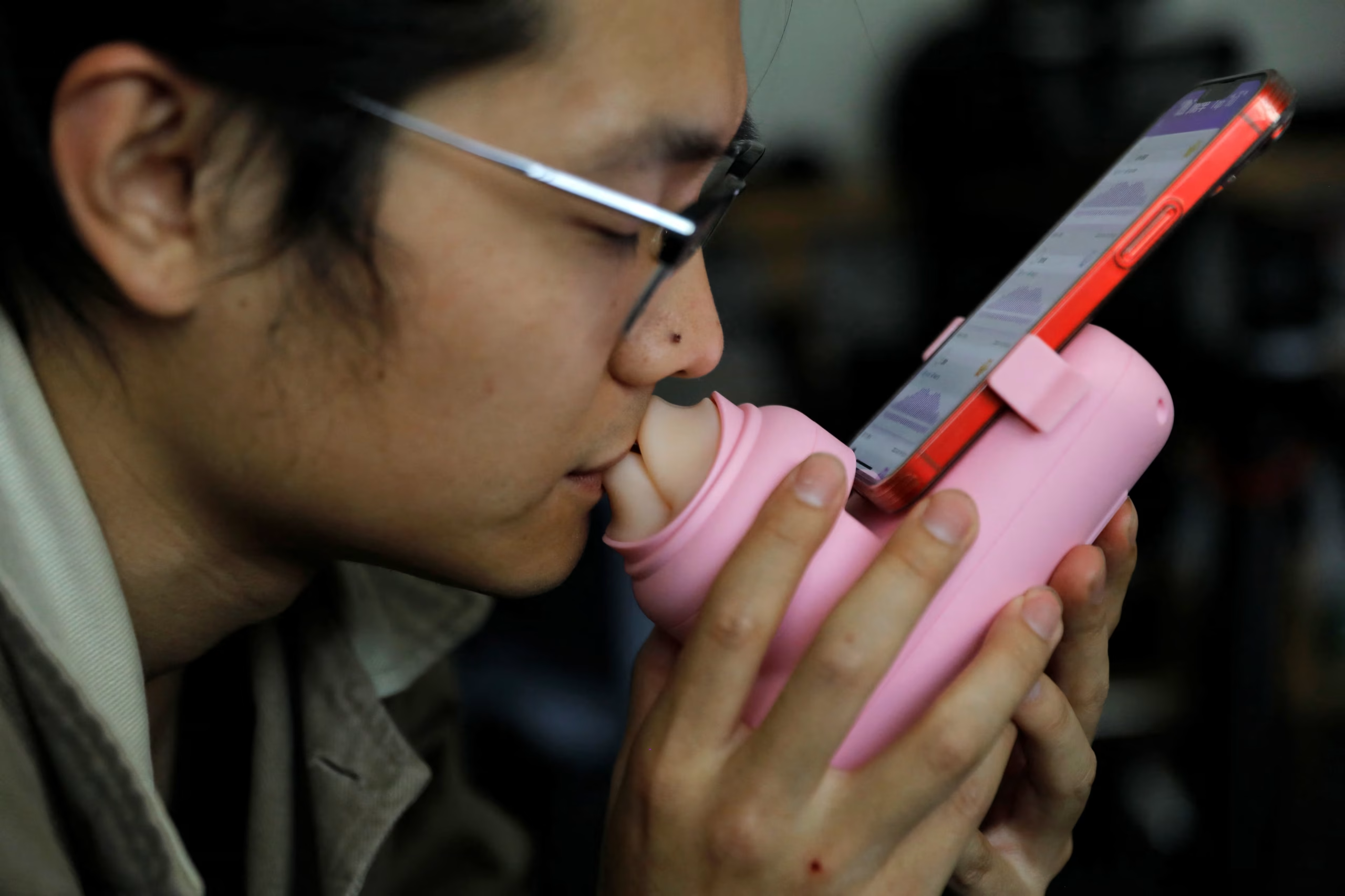
In an era of video calls and instant messaging, the Kissenger aimed to break the final barrier of long-distance relationships: the physical touch.
Beyond the Screen
For decades, technology has allowed us to see and hear our loved ones from across the globe. Yet, for those in long-distance relationships, the “tactile gap” remains a source of emotional longing. Enter the Kissenger—short for “Kiss Messenger”—a bizarre yet fascinating device designed to transmit the physical sensation of a kiss over the internet.
Developed by robotics researchers led by Professor Adrian Cheok, the device was born from the study of Haptics, the science of transmitting information through touch. The team believed that for human bonding to be complete, digital communication needed to evolve beyond sight and sound.
How It Works: The Mechanics of a Kiss
The Kissenger is a colorful, plastic peripheral that docks with a smartphone. Its most striking feature is a large, oval-shaped silicon pad embedded with high-precision pressure sensors and miniature actuators.
When a user presses their lips against the pad, the device records the specific pressure patterns of the kiss. This data is then transmitted via an app to a partner’s device, where the actuators mimic the exact movements and intensity on their own silicon pad. The result is a real-time, physical synchronization intended to bridge thousands of miles.
The Science of “Tele-Dildonics” and Emotion
While the concept often drew giggles or raised eyebrows, the research behind it was serious. The inventors aimed to trigger the release of oxytocin—the “cuddle hormone”—which is vital for maintaining emotional bonds. By replicating a physical interaction, the researchers hoped to reduce stress and feelings of isolation in couples separated by borders.
A Virtual Legacy
Despite the buzz, the Kissenger never quite reached the bedside tables of the general public. Concerns over the “uncanny valley” effect—where a non-human object looks or feels slightly too human, causing a sense of unease—and the bulky design of the early prototypes kept it in the realm of experimental technology.
However, the Kissenger’s legacy lives on in the rapidly growing field of virtual intimacy. It forced a global conversation about the ethics and future of human-robot interaction. It reminded us that even in a world of high-speed data, the human heart—and lips—still crave a connection that a text message simply cannot deliver.