Light-Speed Healing: FDA Approves Stitch-Free Nerve Repair Technology
A decade of MIT research has culminated in a revolutionary polymer that uses light to heal severed nerves, potentially ending the era of painstaking microsurgical suturing.
The End of the Surgical Stitch
For decades, repairing a severed nerve has been one of the most demanding tasks in medicine. Surgeons must spend hours under high-powered microscopes, using needles and threads thinner than a human hair to sew delicate nerve endings back together. Any mistake can lead to permanent loss of sensation or movement.
That paradigm is now shifting. The US Food and Drug Administration (FDA) has officially approved a groundbreaking system from the med-tech firm Tissium that replaces traditional sutures with a light-activated polymer.
How “Liquid Stitches” Work
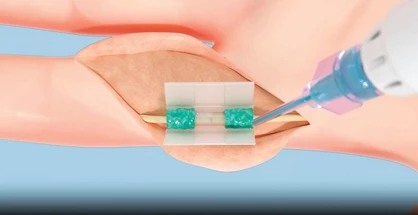
The system utilizes a 3D-printed, flexible cuff and a proprietary liquid prepolymer. When a nerve is severed, the surgeon applies the liquid around the injury site. Upon exposure to a specific wavelength of light, the polymer cures instantly, creating a hermetic and flexible seal.
This “light-activated bond” acts as a protective scaffold, allowing the delicate internal nerve fibers (axons) to regrow and knit back together naturally. Because there are no needles involved, the risk of “suture-induced trauma”—which often causes inflammation and scarring—is virtually eliminated.
Vanishing Act: Bioresorbable Innovation
One of the most impressive features of the Tissium polymer is its bioresorbability. The material is designed to stay strong while the nerve heals, but once the biological connection is restored, the polymer safely dissolves and is absorbed by the body. This leaves no foreign material behind, reducing the long-term risk of chronic pain or rejection.
From Nerves to Hearts
While the FDA approval currently focuses on nerve repair, the implications are vast. Tissium is already scaling its manufacturing to adapt this “surgical glue” for other complex procedures:
Cardiovascular Sealing: Stopping leaks in blood vessels during heart surgery.
Gastrointestinal Repair: Closing hernias or bowel tears without the tension of stitches.
A New Standard of Care
The transition from manual suturing to light-activated sealing represents a major leap in surgical efficiency. What used to take hours of intense concentration can now be achieved with higher precision in a fraction of the time. For patients, this means faster recovery, better functional outcomes, and a future where “nerve damage” no longer has to be a permanent sentence.