THE GERMAN SUN: Proxima Fusion Targets 2031 for Historic Fusion Breakthrough
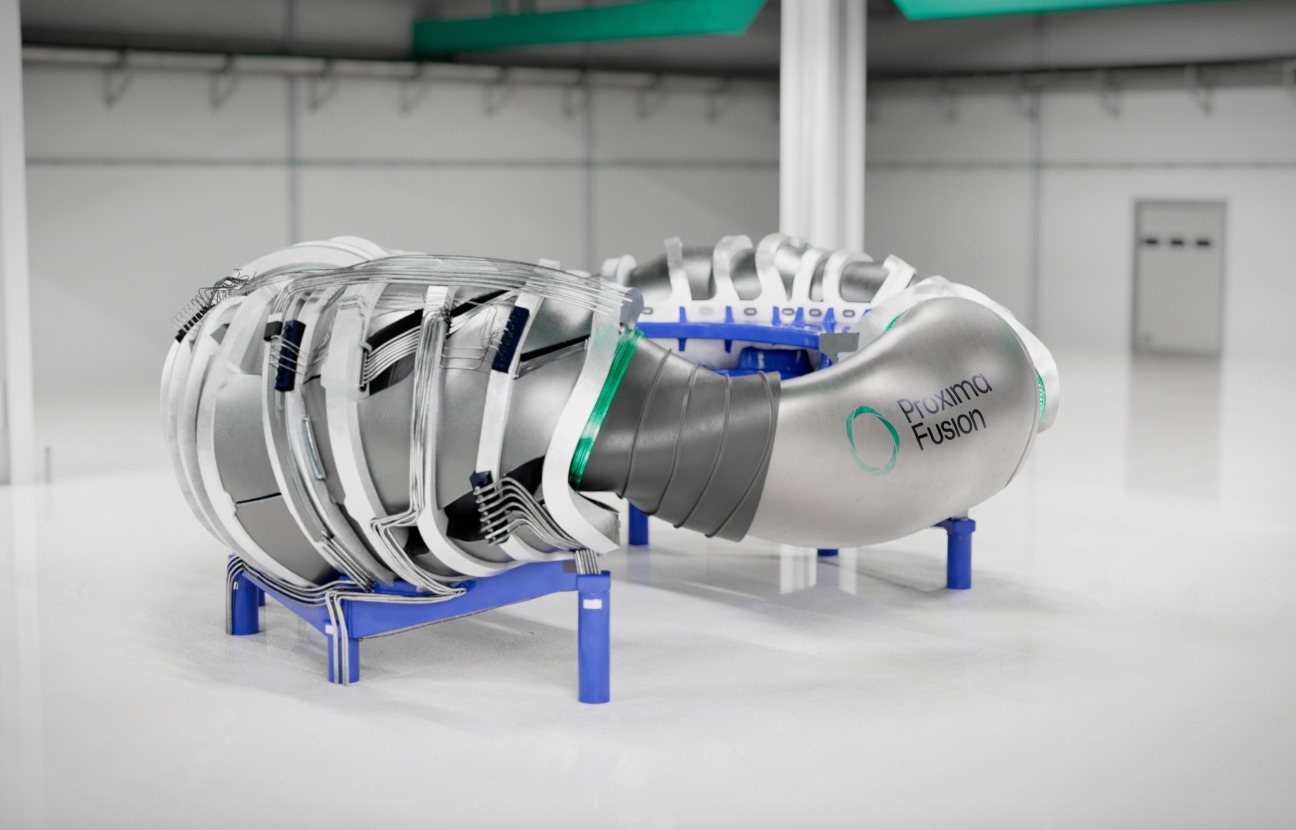
MUNICH — While the world looks to the stars for energy, a German startup is bringing the power of the Sun down to Earth. Proxima Fusion has officially announced its ambitious roadmap to build a stellarator fusion demonstration plant by 2031, positioning Europe at the heart of the clean energy revolution.
The Stellarator Edge
Unlike the more common “Tokamak” reactors, Proxima’s plant will utilize the Stellarator design—a complex, twisted vacuum chamber that uses high-performance superconducting magnets to stabilize plasma. This approach builds directly on the success of the Wendelstein 7-X, the world’s most advanced stellarator at the Max Planck Institute.
The goal is to recreate the fundamental reaction of the universe: combining hydrogen isotopes to release massive amounts of energy. The physics follows Einstein’s famous mass-energy equivalence formula:
$$E = mc^2$$
Containing the Inferno
To achieve fusion, the fuel must be heated to a plasma state exceeding 100 million degrees Celsius—ten times hotter than the core of the Sun. Since no solid material can withstand such heat, magnetic confinement is the only way to keep the plasma “floating” inside the chamber without touching the walls.
A Billion-Euro Bet
Proxima Fusion has already secured significant private capital, but the road to 2031 is steep. Building a full-scale demonstration plant is estimated to require investments in the billion-euro range. If successful, it would mark the transition from experimental physics to a viable, limitless, and carbon-free power source for the grid.