THE GREAT IMPOSTOR: The Audacious Life of Ferdinand Demara
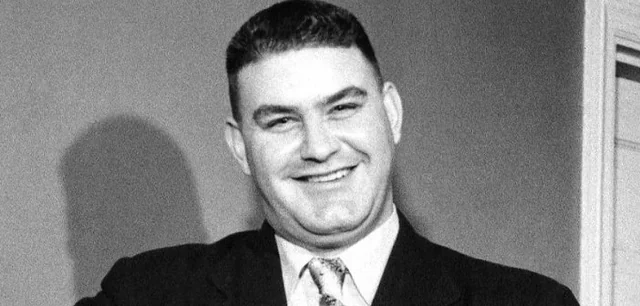
GLOBAL HISTORY — In the annals of deception, few figures loom as large or as strangely as Ferdinand Waldo Demara. While most con artists are driven by greed—stealing to amass wealth or power—Demara was a different breed. He was driven by the sheer, intoxicating thrill of playing the role.
He didn’t steal money; he stole entire lives.
The Chameleon of the Century
Demara’s career was a kaleidoscopic journey through the most prestigious and demanding professions of the 20th century. He was a monk, a prison warden, a philosophy professor, and a civil engineer. But his most legendary performance took place on the high seas during the Korean War.
Taking the identity of a legitimate physician named Dr. Joseph Cyr, Demara boarded the HMCS Cayuga as a ship’s surgeon. The problem? He had never set foot in medical school. He possessed no formal training, no license, and no clinical experience. Yet, when sixteen wounded soldiers were brought on board with life-threatening combat injuries, Demara didn’t panic.
Instead, he retreated to his cabin, frantically speed-read medical texts, memorized surgical diagrams, and returned to the operating table. With a combination of near-photographic memory, an iron constitution, and a degree of nerve that bordered on the sociopathic, he performed the operations.
The Fame that Ended the Game
His success was so profound that the Canadian Navy, desperate for a morale-boosting hero, pushed his story to the press. That publicity was his undoing. The real Dr. Joseph Cyr, who was living and practicing in Canada, saw his own name in the newspapers and alerted the authorities.
The revelation was an international embarrassment for the Navy. Rather than subjecting themselves to a public court-martial that would expose how a high-school dropout successfully masqueraded as a doctor, the Navy quietly gave Demara a dishonorable discharge and sent him home.
Demara didn’t view himself as a criminal, but as a “pretender”—a man addicted to the status and the challenge of being something he wasn’t. He lived his life on the edge of truth, proving that sometimes, with enough audacity and a good textbook, you really can “fake it ’til you make it.”