MEDUSA
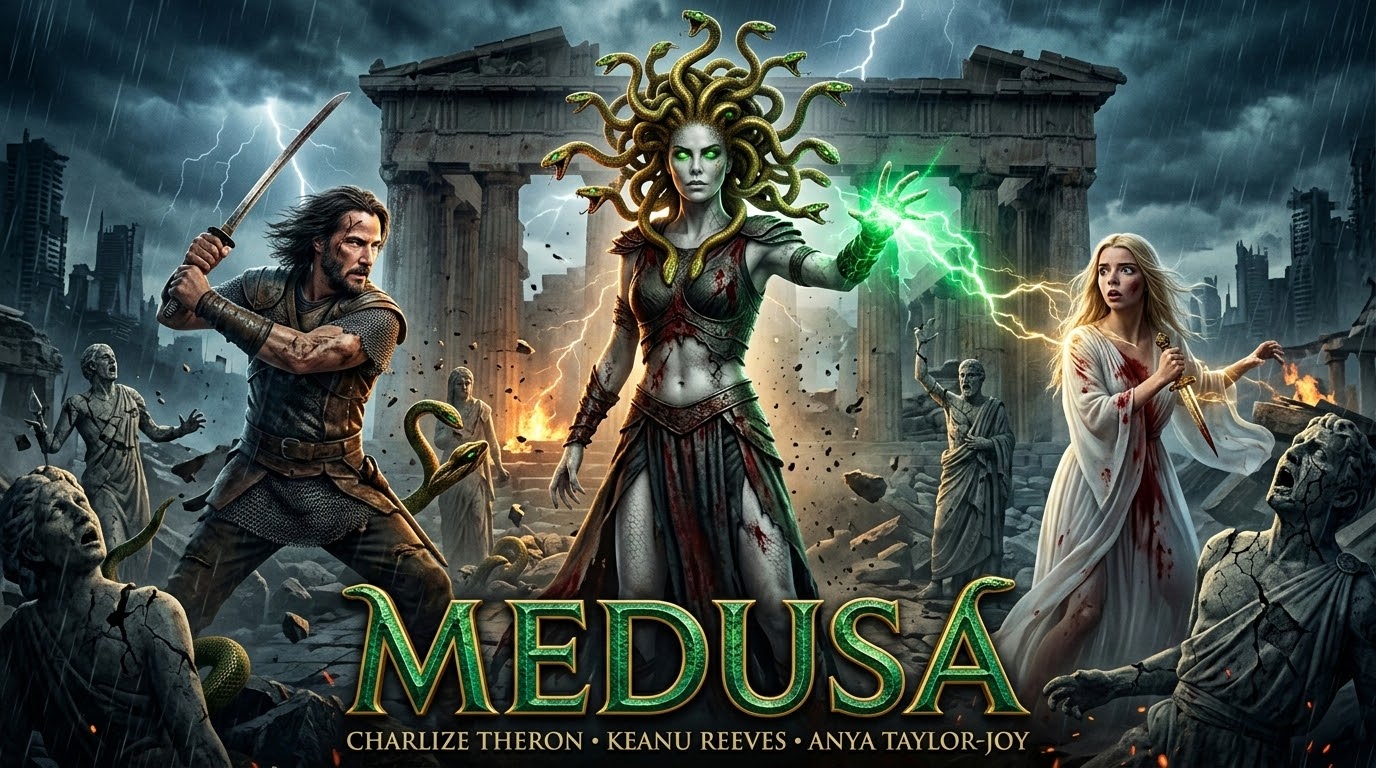
MEDUSA (2026)
Starring: Angelina Jolie, Keanu Reeves
In MEDUSA (2026), one of the most feared monsters of ancient mythology is finally given a voice—and the truth behind the legend is far darker than the world was ever told. Set in a hauntingly beautiful vision of ancient Greece, the film reimagines the myth of Medusa not as the story of a monster born from evil, but as the tragedy of a woman betrayed by the very gods she once worshipped.
Before she was feared across kingdoms, Medusa was known as one of the most devoted priestesses of Athena. Living within the sacred temple dedicated to the goddess of wisdom, she was admired for her beauty, discipline, and unwavering faith. Her life was defined by loyalty to the divine order that governed the world. But devotion does not always guarantee protection—especially when gods themselves break their own laws.
One fateful night, the sea god Poseidon entered Athena’s temple and violated the sacred sanctuary. Instead of punishing the god who committed the crime, Athena’s fury turned toward Medusa. In a moment that would reshape legend forever, the goddess cursed her once-faithful servant, transforming her into a creature with serpents for hair and a gaze that turned all who looked upon her into stone.
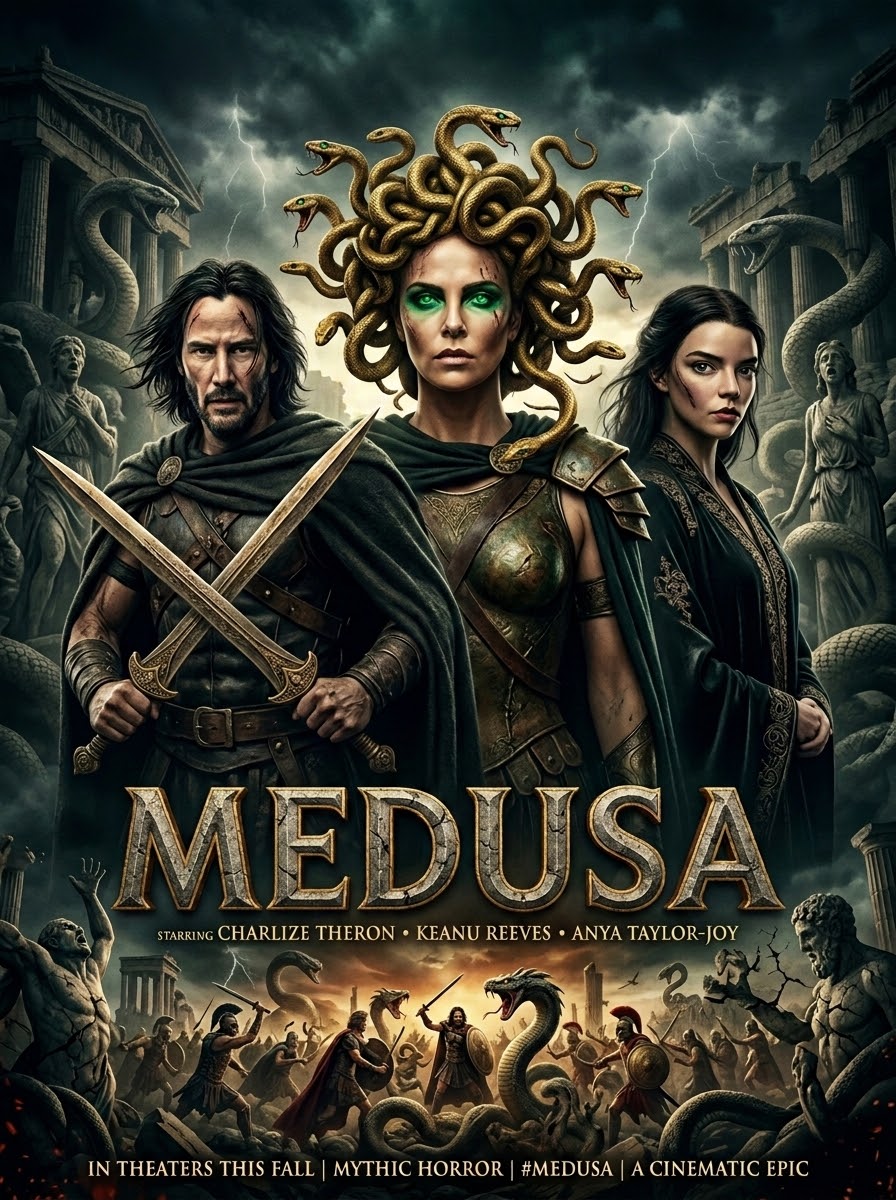
Banished from the world of men and gods alike, Medusa retreated to a forgotten temple hidden among the ruins of a distant island. There she lived in isolation, surrounded by the silent statues of warriors and hunters who had come seeking glory by killing the monster of legend. Each one believed they were facing a villain. None of them knew the truth.
Angelina Jolie delivers a powerful and haunting portrayal of Medusa—not merely as a creature of terror, but as a woman scarred by betrayal and divine injustice. Her rage is not blind destruction; it is the echo of a life stolen by those who claimed to rule the world with wisdom and order.
Into this tragedy steps a warrior sent by the gods themselves. Keanu Reeves portrays a seasoned fighter chosen to end the threat Medusa supposedly represents. In some versions of the legend he is a hunter seeking glory; in others he may be a manifestation of Poseidon himself, burdened by guilt and memory. Either way, he arrives believing he is destined to defeat a monster.
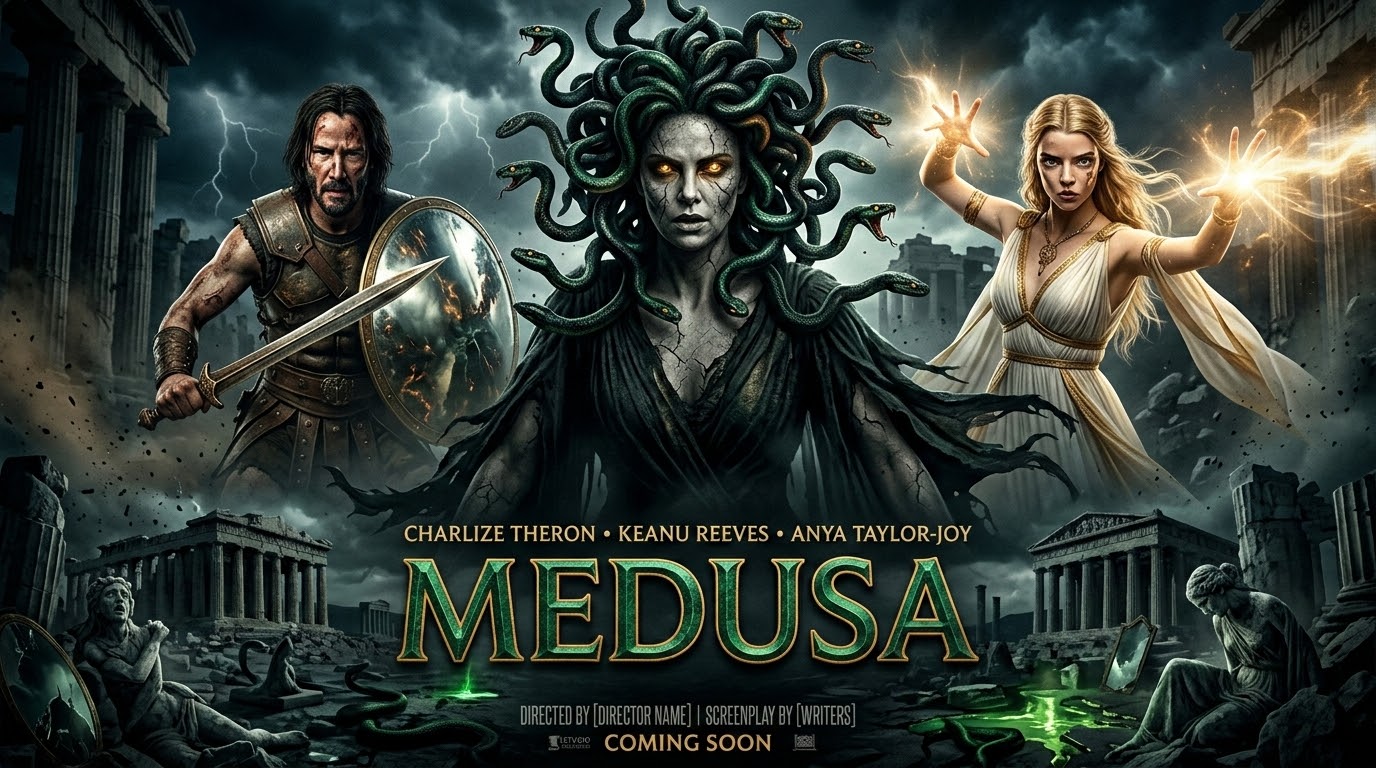
But the deeper he ventures into Medusa’s shattered temple, the more the truth begins to unravel. The statues surrounding the ruins tell stories not of a beast hunting victims, but of warriors who attacked first. The silence of the island is heavy with the weight of injustice. And when he finally confronts Medusa, he does not see a creature hungry for destruction—he sees a woman whose suffering has been twisted into legend.
What follows is not a simple battle between hero and monster. Instead, the film becomes a powerful confrontation between truth and myth, between divine authority and human empathy. The warrior begins to question the gods who sent him and the stories that shaped his understanding of the world.
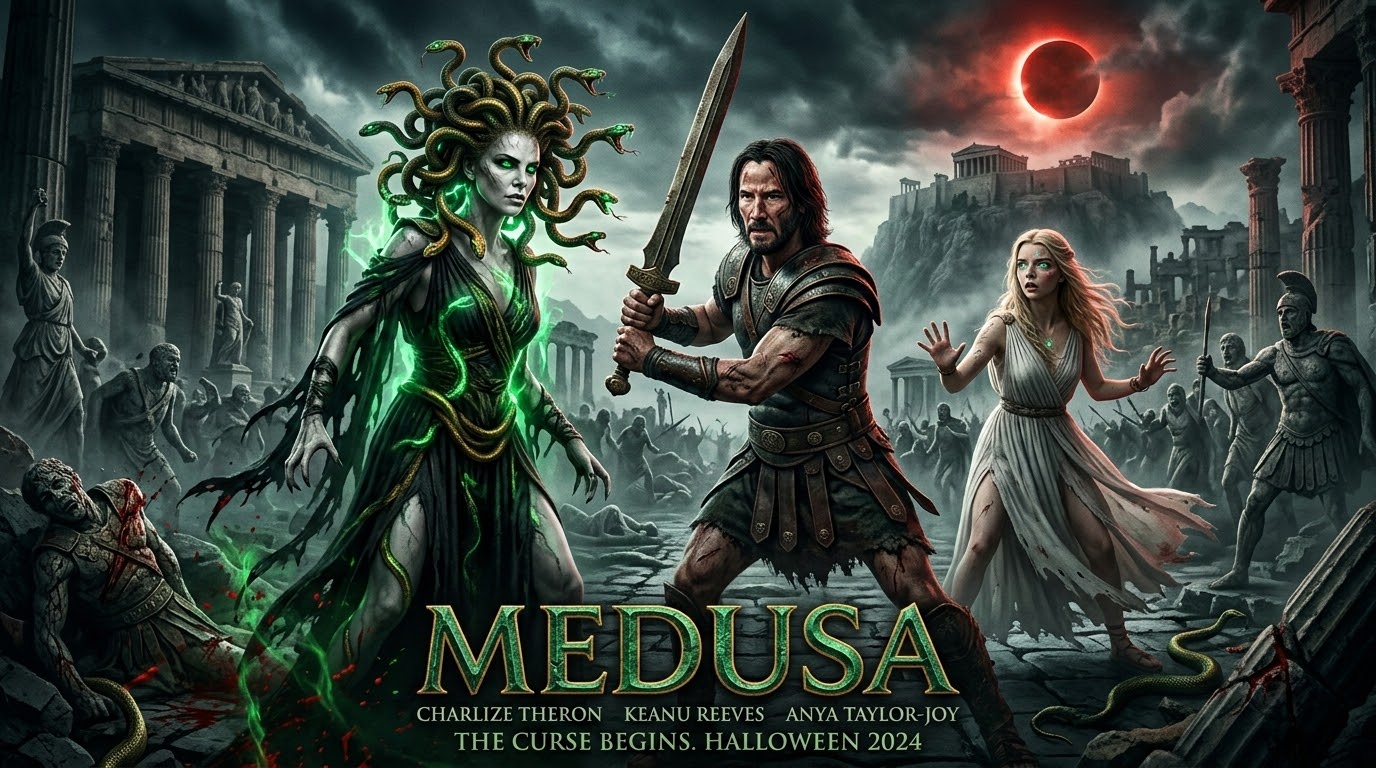
As ancient powers awaken within forgotten temples and storms gather across the seas, the conflict between Medusa and her supposed executioner becomes something far greater than a hunt. It becomes a reckoning. If the gods themselves are capable of cruelty, then perhaps the true monsters were never the ones cast into darkness.
The film builds toward a breathtaking finale within the crumbling ruins of Athena’s ancient sanctuary. There, surrounded by shattered statues and divine relics, Medusa must decide whether her power will remain a curse—or become the force that challenges the tyranny of the gods themselves.
Visually rich and emotionally intense, MEDUSA transforms a familiar myth into a story about injustice, resilience, and the cost of divine arrogance. Through haunting imagery and powerful performances, it asks a question rarely explored in legend: what if the monster was never the villain at all?