ONG-BAK 4

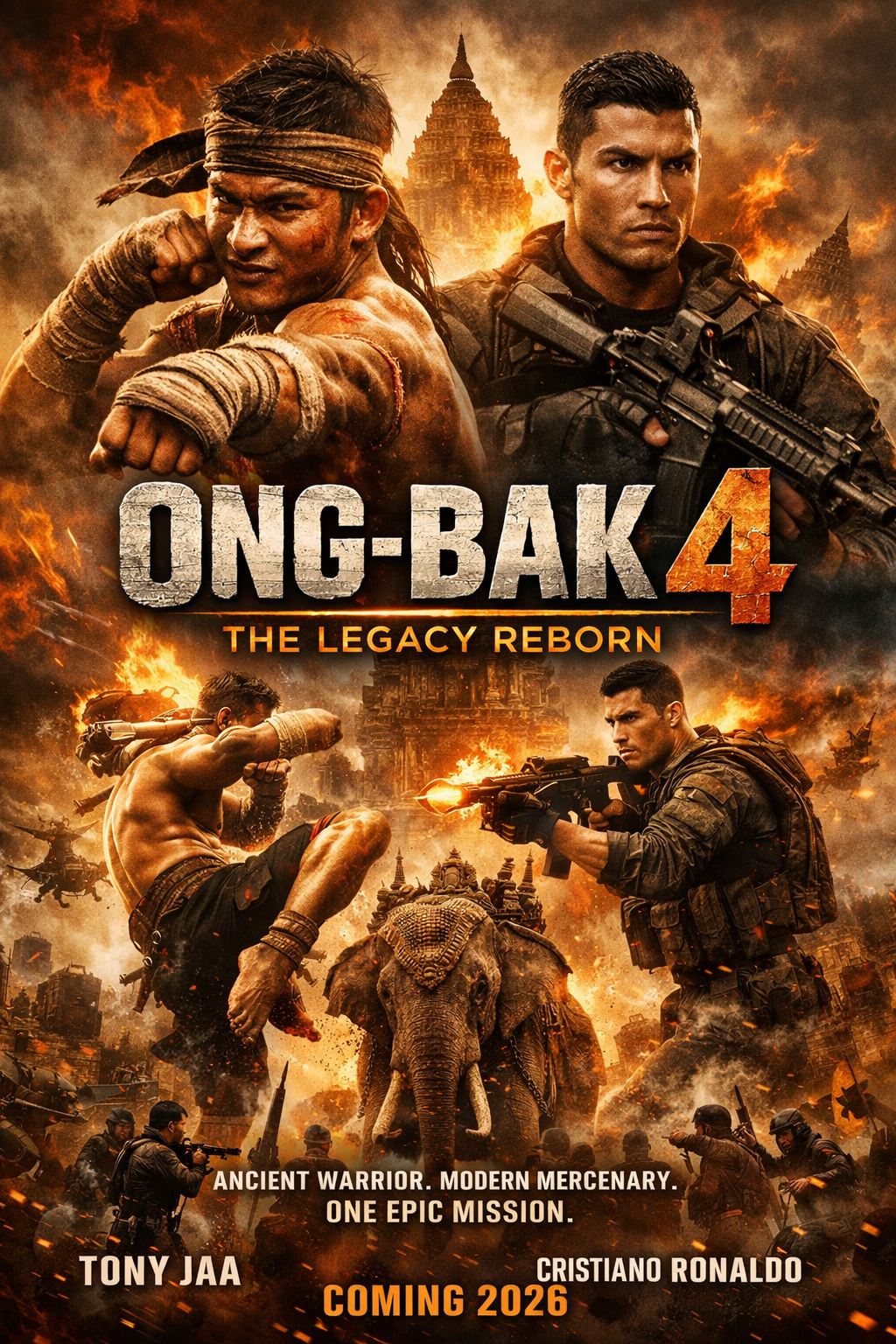
ONG-BAK 4: THE ULTIMATE ASHRAM (2026)
Starring: Tony Jaa
Years after the legendary battles that shaped his destiny, the warrior once known for defending his village and sacred traditions has disappeared from the world. In ONG-BAK 4: THE ULTIMATE ASHRAM (2026), Ting (Tony Jaa) has left behind the violence that once defined his life. Seeking peace and spiritual balance, he retreats to a hidden ashram deep within the mountains, a sacred sanctuary where ancient martial arts are practiced not as weapons, but as paths toward enlightenment.
Here, far from the chaos of the modern world, monks and warriors train in silence. Every movement is guided by discipline, patience, and respect for the centuries-old traditions that gave birth to Muay Thai. For Ting, the ashram represents redemption—a chance to transform the raw power that once fueled his rage into wisdom that can guide the next generation.
But peace in the mountains does not last forever.
Rumors begin to spread of a powerful global crime syndicate searching for the secrets hidden within the ashram. This organization has spent years studying ancient martial arts traditions, believing that the techniques practiced by the monks hold the key to creating the ultimate fighters. To them, these teachings are not sacred—they are weapons waiting to be exploited.
When mercenaries armed with modern technology and brutal combat training invade the sanctuary, the quiet spiritual haven becomes a battlefield. Sacred statues are shattered, ancient scrolls are stolen, and the students of the ashram are forced to defend themselves against enemies who believe strength alone defines victory.
Ting realizes that the past he tried to escape has returned, and the teachings of the ashram now depend on him for survival. Yet the man who rises to defend it is no longer the same warrior who once fought purely with instinct and fury. Years of meditation and discipline have transformed his fighting style into something far more powerful—an art that blends physical mastery with spiritual awareness.

As the conflict escalates, Ting discovers the true purpose behind the attack. The syndicate is searching for an ancient martial philosophy said to unlock the ultimate potential of the human body and mind. Hidden within the ashram’s teachings is a forgotten form of combat that transcends brute force—an understanding of movement, balance, and energy capable of defeating even the strongest opponent.
Determined to protect this knowledge from falling into the wrong hands, Ting begins training the younger students of the ashram, teaching them not only how to fight, but why they fight. The story becomes a powerful exploration of legacy, responsibility, and the idea that true strength is measured not by how many enemies one defeats, but by what one chooses to protect.

The film builds toward an explosive final confrontation when the syndicate’s leader arrives with an army of elite fighters, turning the sacred grounds into a brutal arena of survival. In a breathtaking sequence of hand-to-hand combat, Tony Jaa unleashes a masterclass of Muay Thai choreography—combining devastating elbows, lightning-fast kicks, and fluid acrobatic movements that push the limits of martial arts cinema.
Yet the ultimate battle is not simply physical. Ting must prove that the philosophy of the ashram—the belief that discipline, humility, and respect are the true foundations of martial arts—can overcome the destructive obsession with power that drives his enemies.
As the dust settles and the sun rises over the mountains once more, the ashram stands not only as a place of training, but as a symbol of balance between strength and wisdom. The next generation of warriors now carries the responsibility of protecting the ancient traditions that have survived for centuries.