The Woman Who Inspired Dolly Parton’s Famous Look Was Someone Her Entire Town Saw Very Differently
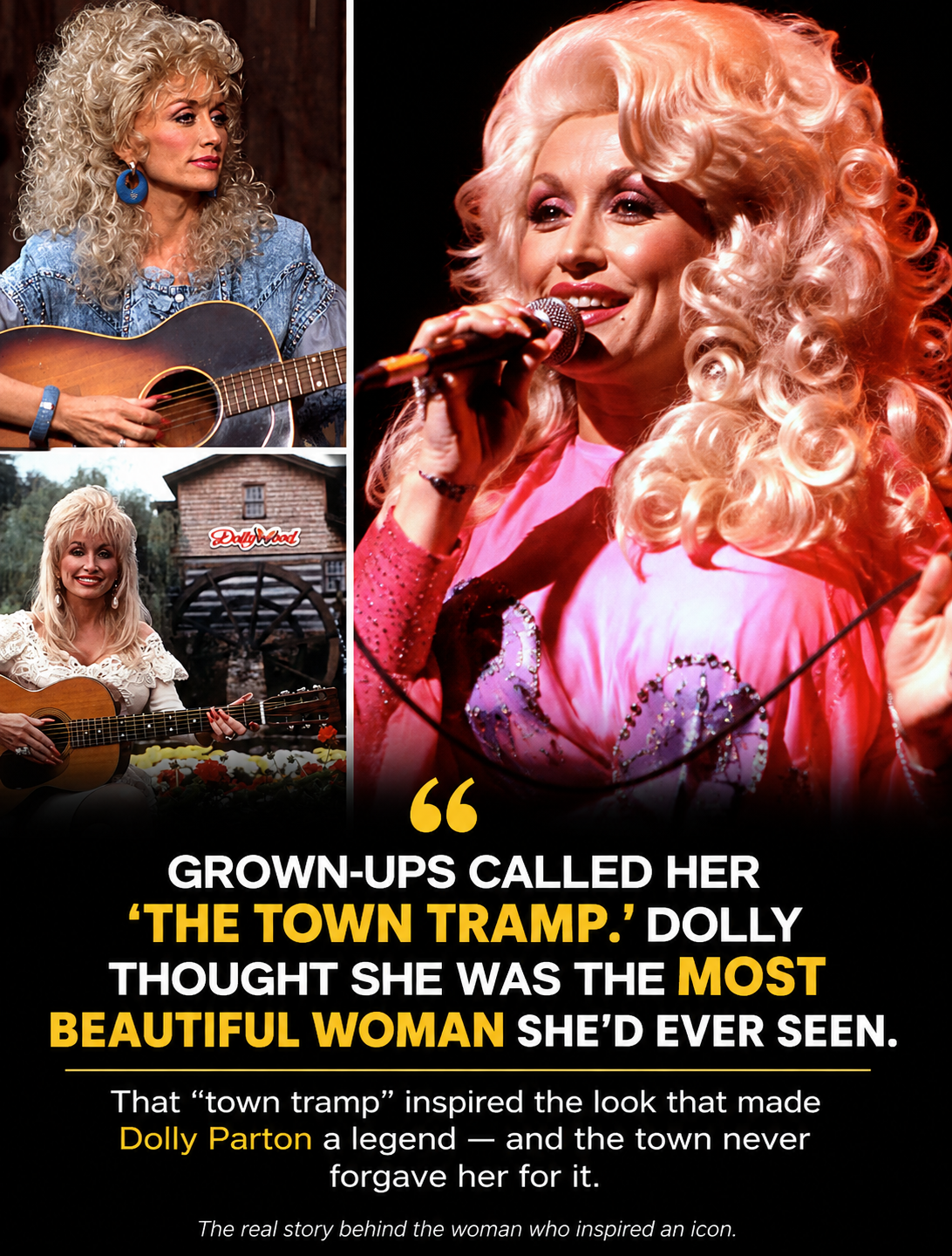
Long before the rhinestones, towering blond hair and red lipstick became unmistakably Dolly Parton, there was another woman.
She was not a movie star.
She was not a singer.
She was not famous outside the small Tennessee community where Dolly grew up.
In fact, many adults in town looked down on her.
But young Dolly Parton saw something completely different.
The woman wore peroxide-blond hair, bright red lipstick, red fingernails, high heels and short skirts. To conservative adults around her, that appearance carried a very specific reputation.
They called her “the town tramp.”
Dolly, however, thought she was the most beautiful woman she had ever seen.
And instead of learning to avoid that image, Dolly remembered thinking that this was exactly how she wanted to look when she grew up.
Years later, that childhood fascination would help shape one of the most recognizable visual identities in entertainment history.
Dolly Grew Up Surrounded by a Very Different Kind of Beauty
Dolly Parton was raised in rural East Tennessee in a large family with very little money.
Her childhood world was far removed from Hollywood glamour.
Clothing was practical.
Money was limited.
Beauty routines were not something that required expensive salons, designer clothes or elaborate wardrobes.
Yet Dolly was fascinated by glamour from an early age.
She loved color.
She loved femininity.
She loved anything that seemed dramatic or larger than life.
Then she saw a woman in town who seemed to embody all of it.
The woman stood out immediately.
Her hair was extremely blond.
Her lipstick was red.
Her nails were red.
Her shoes had high heels.
Her skirts were short.
To Dolly, she looked spectacular.
To many adults, she looked scandalous.
The Adults Had a Warning
Dolly would later tell the story with the same humor she used when discussing so many parts of her life.
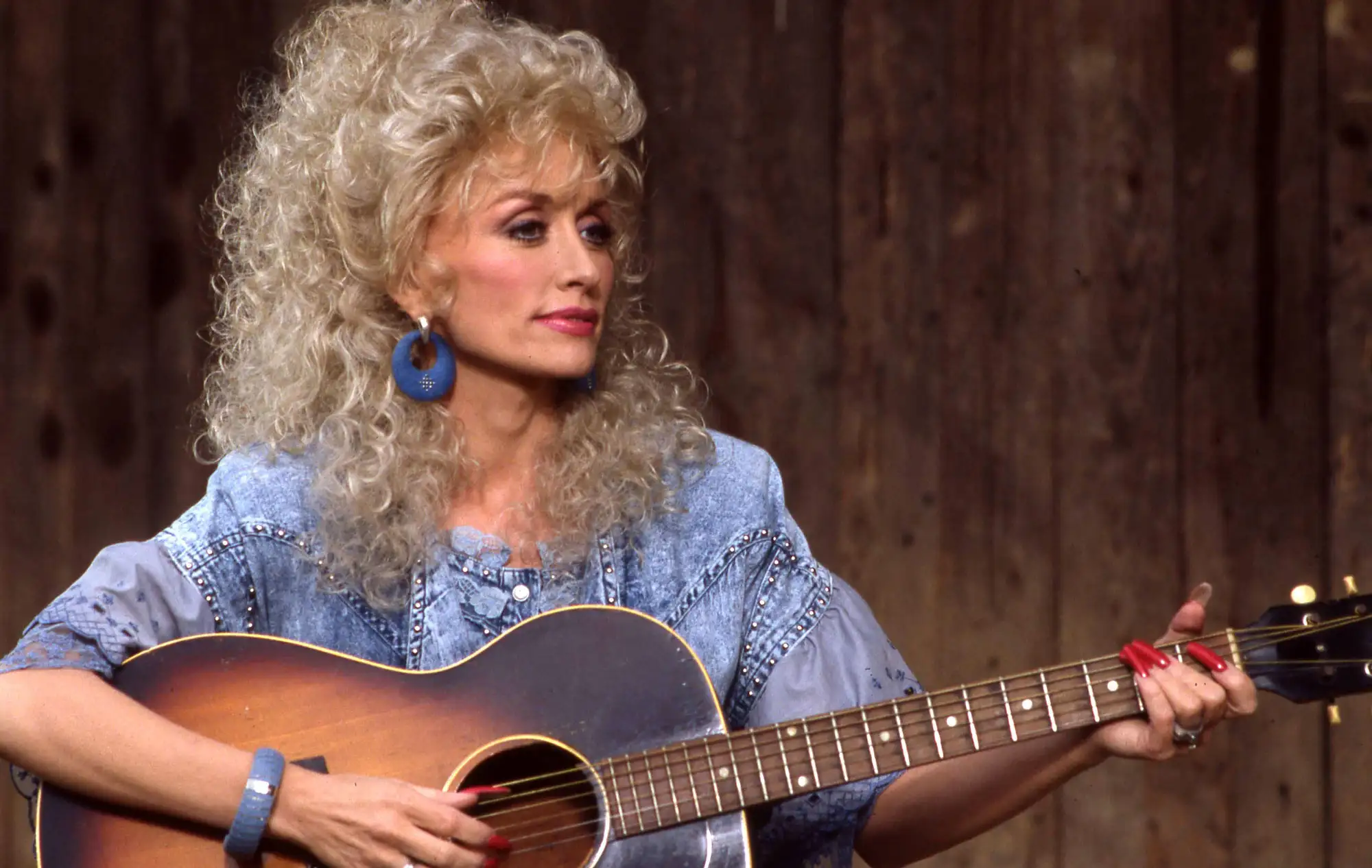
She remembered hearing adults refer to the woman dismissively as “the town tramp.”
The label was supposed to be a warning.
Young Dolly was apparently expected to understand that this was not a respectable woman to imitate.
Instead, she had almost the opposite reaction.
The criticism only confirmed how noticeable the woman was.
Dolly saw confidence.
She saw glamour.
She saw a person who looked unlike everyone else around her.
And she wanted that.
The adults were essentially telling Dolly, “You don’t want to look like her.”
Dolly’s response, at least in her own memory of the moment, was more like: actually, yes.
That is exactly how I want to look.
“I Thought She Was Beautiful”
That detail became one of Dolly’s favorite explanations for where her famous appearance came from.
She never pretended her image was an accident.
The hair.
The makeup.
The nails.
The tight clothes.
The heels.
Everything was exaggerated deliberately.
Dolly understood perfectly well that some people considered it excessive.
That had been true from the beginning.
What changed was that she learned how to take a look associated with judgment and turn it into power.
The woman from her childhood had shown Dolly that a person could walk into a room and immediately command attention.
That mattered to a girl dreaming of becoming an entertainer.
Dolly was not trying to disappear into the crowd.
She wanted to be remembered.
She Built the Joke Before Anyone Could Use It Against Her
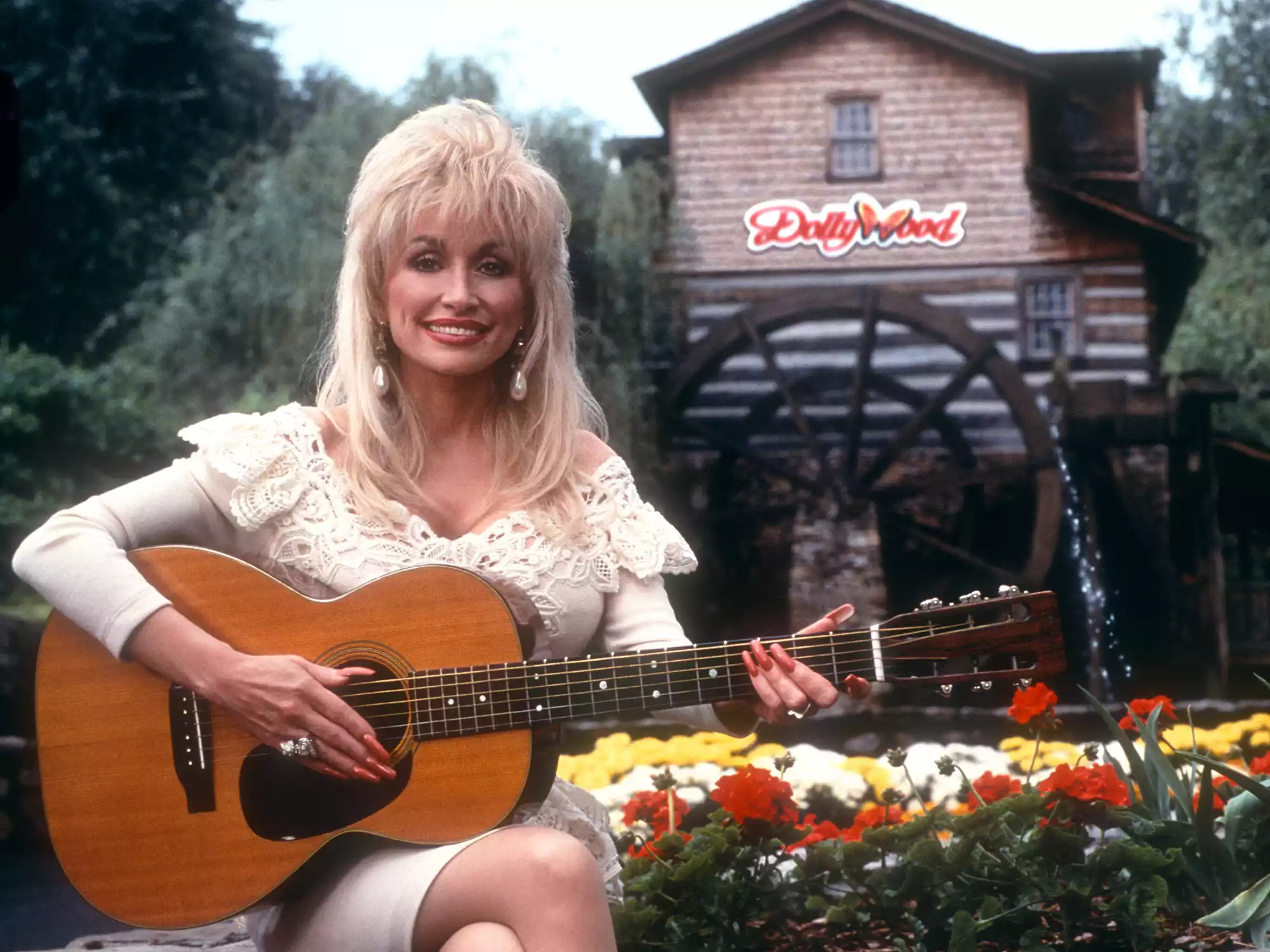
One of Dolly Parton’s most effective qualities as a public figure was her self-awareness.
She knew exactly what people saw.
She knew the hair was huge.
She knew the clothes were revealing.
She knew the makeup was dramatic.
She knew the entire image could be described as over-the-top.
So she talked about it first.
That made it difficult for critics to embarrass her.
If someone suggested that Dolly looked artificial, she could laugh and agree.
If someone questioned why she wore so much makeup, she could explain that she liked it.
If someone called the clothes outrageous, she did not need to defend them.
Outrageous was part of the point.
The look only worked because Dolly was never pretending it was effortless.
It was performance.
But it was also genuinely her.
The “Town Tramp” Became an Unexpected Blueprint
What makes the origin story so interesting is the reversal at its center.
The woman Dolly admired was not someone the community held up as a model of success.
She was someone people criticized.
The adults saw a cautionary example.
Dolly saw inspiration.
That difference says a great deal about the way Dolly looked at people throughout her life.
She was unusually resistant to other people’s definitions.
She did not automatically accept that a person was less worthy because the town had decided so.
She judged what she saw for herself.
And what she saw in that woman was beauty.
Years later, Dolly would take many of the same visual ingredients and amplify them.
The peroxide-blond hair became massive wigs.
The red lipstick stayed.
The nails became part of her signature appearance.
The heels remained.
The fitted, glamorous clothing became increasingly elaborate as her career grew.
What had once been a small-town scandal became international branding.
It Was More Strategic Than People Realized
Dolly’s appearance was often treated as something separate from her talent.
But the image was actually one of the smartest tools of her career.
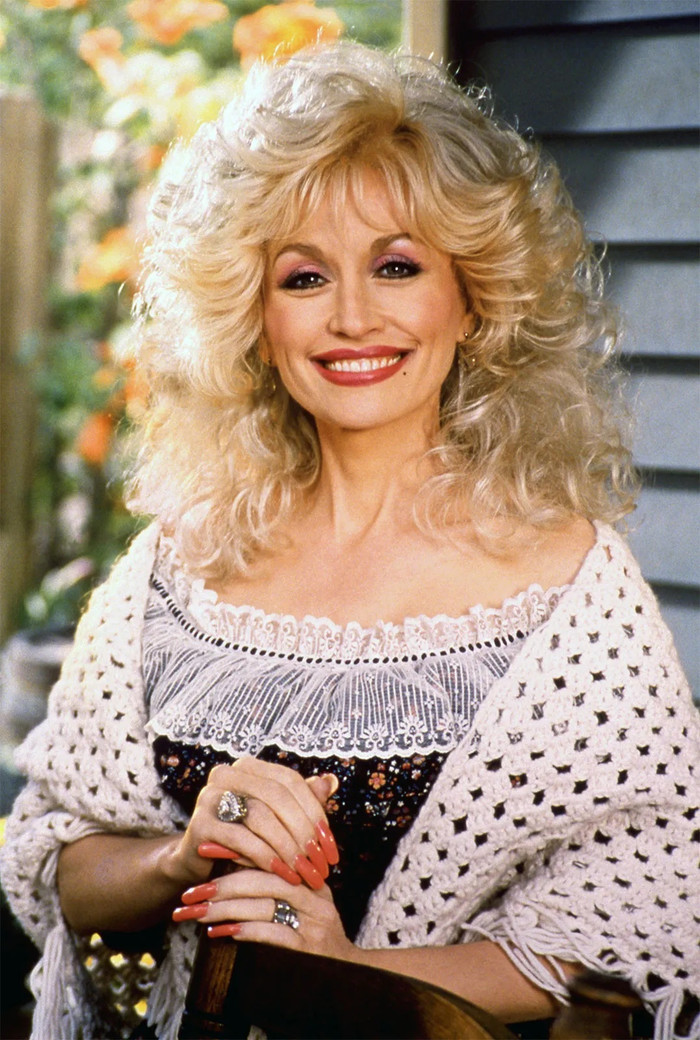
Before someone heard a note of a Dolly Parton song, they could recognize her across a room.
Her silhouette was distinctive.
Her face was distinctive.
Her hair was unmistakable.
That level of visual recognition is extraordinarily valuable in entertainment.
And Dolly understood it early.
She was entering an industry full of talented singers.
She needed something audiences would remember.
The look helped do that.
Once people paid attention, they discovered the songwriting, the voice and the personality underneath it.
The visual exaggeration opened the door.
The talent kept people there.
Dolly Never Tried to Become “Respectable” by Changing Herself
As Dolly became more successful, she had every opportunity to adopt a more restrained image.
She could have softened the hair.
Reduced the makeup.
Chosen more conservative clothing.
She could have tried to signal that she had outgrown the small-town aesthetic people once criticized.
She did not.
Instead, she became even more Dolly.
That choice was important.
Many entertainers change their appearance as they become wealthier, often moving toward whatever their industry considers more sophisticated.
Dolly largely went in the opposite direction.
More rhinestones.
More hair.
More color.
More glamour.
She transformed what some people considered bad taste into something iconic.
And because she was so open about where it came from, the image never felt like a secret she needed to hide.
The Look Carried a Deeper Message
The story is funny, but it also explains something deeper about Dolly’s appeal.
She did not build her identity around gaining approval from the people who once might have judged her.
She built it around choosing for herself what she considered beautiful.
That independence extended beyond clothing.
It appeared in her songwriting.
Her business decisions.
Her refusal to surrender publishing rights.
Her willingness to cross genres.
Her ability to laugh at criticism without letting it define her.
The childhood story about the woman in town is almost a miniature version of Dolly’s entire career.
Other people said: that is not respectable.
Dolly said: I like it.
Other people said: you should not want to look like that.
Dolly said: I do.
And eventually, millions of people recognized that look instantly.
The Woman Dolly Never Forgot
The identity of the woman was never really the most important part of the story.
What mattered was what she represented to Dolly.
Freedom.
Glamour.
Visibility.
A refusal to blend in.
The adults around young Dolly had intended “the town tramp” as an insult.
Dolly transformed the same image into an aspiration.
Decades later, the blond hair, red lips, long nails and high heels were no longer associated with some anonymous woman being criticized in a Tennessee town.
They were associated with Dolly Parton.
And in one of the stranger turns in entertainment history, a woman others told Dolly not to imitate helped inspire a look that became one of the most recognizable in the world.