Mississippi Mayor Refused to Lower Flags for Dolly Parton — Even After the President and Governor Ordered the Tribute
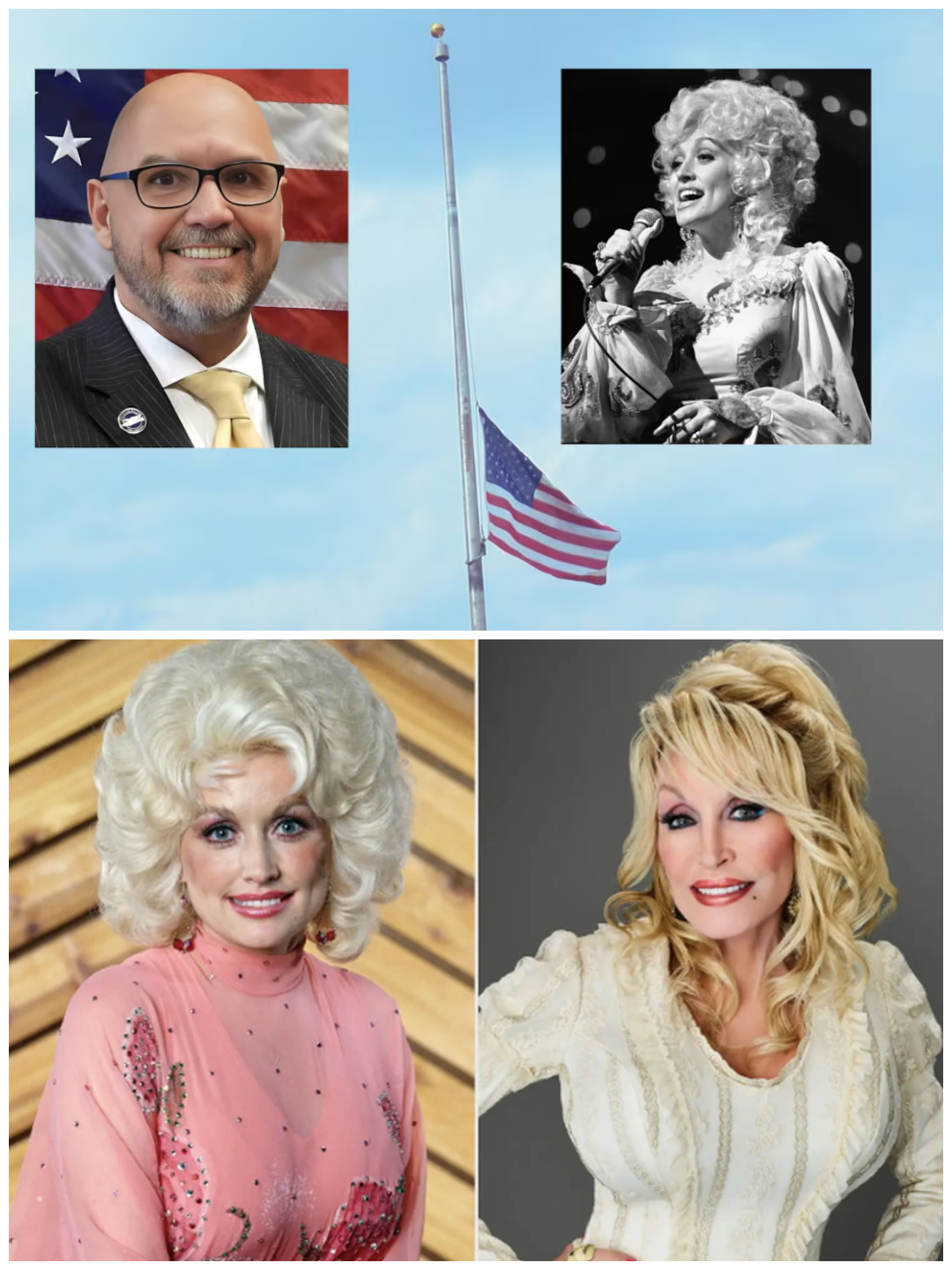
Across the United States, flags were lowered after Dolly Parton’s death as the country honored one of its most beloved entertainers and philanthropists.
But in one Mississippi city, the flags stayed at full staff.
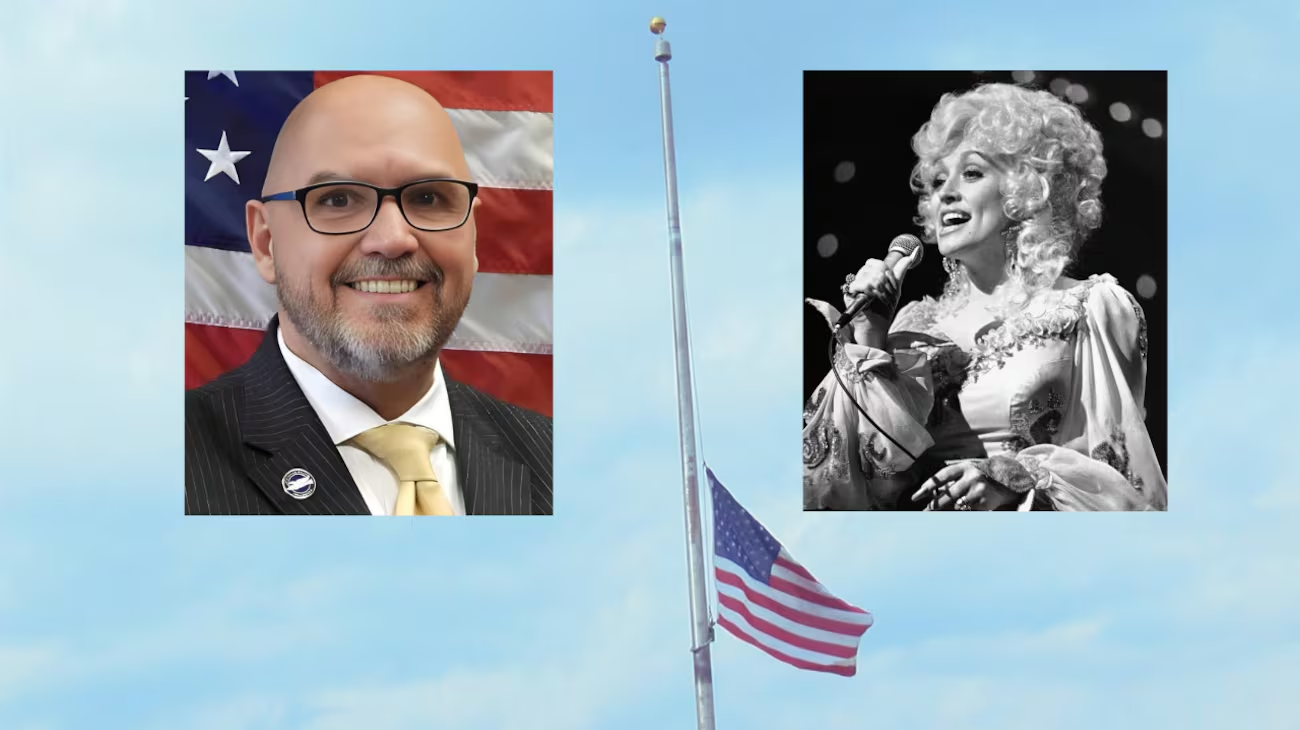
Olive Branch Mayor Ken Adams publicly refused to lower the American flags at municipal buildings for Parton, even after President Donald Trump issued a proclamation ordering federal flags to half-staff and Mississippi Gov. Tate Reeves directed flags across the state to be lowered in her memory.
Adams did not claim that Dolly was undeserving of respect.
In fact, he said almost the opposite.
He called her a great person who had brought happiness to millions and done tremendous things for others.
His objection was about the flag itself.
Adams argued that lowering the American flag should remain an unusually high honor, reserved primarily for military heroes, fallen first responders, presidents, major national leaders and extraordinary events affecting the country.
If governments begin lowering it whenever a famous or beloved person dies, he argued, the gesture could eventually lose some of its meaning.
That explanation did not calm the controversy.
His Facebook statement went viral, drawing thousands of comments — including criticism from people who identified themselves as veterans and first responders, the very groups Adams said he wanted to protect the honor for.
Trump Had Ordered a National Tribute
Dolly Parton died on Aug. 25, 2026, at age 80.
That same day, President Trump issued a presidential proclamation honoring her memory.
The order directed the American flag to be flown at half-staff at the White House, federal public buildings and grounds, military installations, naval vessels and U.S. diplomatic facilities overseas until sunset on Sept. 1.
Mississippi quickly followed.
Gov. Tate Reeves ordered both U.S. and Mississippi state flags to half-staff on state buildings and grounds beginning at 6 p.m. on Aug. 25 for one week in remembrance of Parton.
In Olive Branch, however, municipal flags remained at full staff.
Adams posted his explanation to the city’s official Facebook page on Aug. 28.
“I Have Nothing but Respect for Her”
Adams began by making one point unmistakably clear.
His decision, he said, was not intended as an insult to Dolly.
“There is no question that Dolly Parton was a great person,” Adams wrote, adding that she had brought joy to millions and had done enormous good during her life.
Then he drew his line.
In his view, half-staff status should be reserved for circumstances carrying the highest national significance.
Military heroes.
First responders killed in service.
Presidents.
Other major national leaders.
Or events with a tremendous impact on the country.
Adams worried that expanding the practice too broadly would make an extraordinary symbol feel ordinary.
“If we lower the flag every time a well-known or beloved person passes away,” he argued, the country risks lessening the meaning of the gesture.
That became the heart of the debate.
Was Dolly Parton simply a beloved celebrity?
Or had her impact become large enough to qualify as exactly the kind of extraordinary national contribution Adams said should be honored?
Adams Also Challenged Who Gets to Make the Decision
The mayor went beyond debating Dolly’s qualifications.
He also raised a question of local authority.
Adams acknowledged that the president could issue a decision for the federal government and the governor could issue one for Mississippi.
But he argued that mayors should retain the ability to make decisions for their own cities.
Mississippi municipalities operate with significant home-rule authority, and Adams framed his stance as a matter of local judgment.
He said residents had not elected him merely to “salute and execute” decisions from higher levels of government, but to lead according to his convictions.
Local reporting confirmed that Olive Branch’s city-building flags remained at full staff while the federal and state memorial periods were underway.
The dispute over exactly how state and federal directives apply to municipal property became secondary to the larger public argument.
Adams had made his position clear.
He believed Dolly should be respected.
He simply did not believe the American flag needed to be lowered for her.
Then Veterans Began Disagreeing With Him
Some of the strongest responses came from people Adams might have expected to support his reasoning.
One commenter who identified himself as both a veteran and first responder said he was “100% ok” with lowering the flags for Dolly.
The commenter pointed to Parton’s support for the military and charitable organizations and concluded simply that she had “earned this.”
Another combat veteran told local media he supported the tribute despite having lost friends overseas.
That complicated Adams’ central argument.
He had said the honor should be preserved particularly for groups such as military personnel and fallen first responders.
Yet some people from those communities were saying they did not feel Dolly’s tribute diminished their sacrifice.
They felt she deserved to share the honor.
Critics Pointed to Dolly’s Work Beyond Music
Opponents of the mayor’s decision also argued that describing Parton primarily as a celebrity missed much of her public legacy.
Dolly was unquestionably famous for songs such as “Jolene,” “9 to 5” and “I Will Always Love You.”
But her philanthropy became almost as central to her reputation as her music.
Her Imagination Library distributed hundreds of millions of books to children.
She donated to disaster-relief efforts.
She supported health initiatives and other charitable causes.
And she had a documented history of supporting members of the military.
That record became central to critics asking why Dolly did not satisfy Adams’ own category of people who had made a “tremendous impact” on the country.
One commenter argued that Dolly had done more for children than many politicians ever would.
Another wrote that she had been one of America’s most unifying public figures.
Not Everyone Disagreed With the Mayor
The backlash was loud, but it was not unanimous.
Some Olive Branch residents and online commenters supported Adams.
Their reasoning largely matched his.
They worried that if the flag were lowered for every famous singer, actor or admired cultural figure, governments would eventually have difficulty deciding where to draw the line.
To them, the question was not whether Dolly Parton was a good person.
It was whether celebrity and philanthropy should qualify someone for a national mourning ritual traditionally associated with political leaders, military sacrifice and major tragedy.
That disagreement transformed a local flag decision into a much broader question about American symbolism.
Who receives the country’s highest public honors?
And who gets to decide?
Thousands of People Joined the Argument
Adams’ statement quickly spread far beyond Olive Branch.
Local reporting described the post as viral and said it attracted thousands of comments reflecting a deeply divided response.
Some praised Adams for defending tradition.
Others accused him of creating an unnecessary controversy during a period of national mourning.
And many returned repeatedly to the same argument:
Dolly Parton may have been an entertainer, but she had spent decades using the wealth and influence that entertainment gave her to help other people.
For them, that made the distinction between “celebrity” and “national figure” much harder to maintain.
Why Did Ken Adams Refuse?
In the end, the answer is simpler than the controversy surrounding it.
Ken Adams did not refuse because he claimed to dislike Dolly Parton.
He did not deny her generosity.
He did not deny her popularity.
He refused because he believed the American flag at half-staff should be used far more selectively than President Trump and Gov. Reeves chose to use it after Dolly’s death.
To Adams, preserving the honor meant sometimes saying no — even to someone as beloved as Dolly Parton.
But judging by the thousands of reactions that followed, many Americans reached exactly the opposite conclusion.
To them, Dolly’s decades of music were only part of the story.
Her books for children, her support for communities and her generosity made her precisely the kind of American worth lowering a flag for.
That is why one Mississippi mayor’s decision to leave a few flags at full staff became a national argument about something much bigger than a flagpole.
It became an argument about what Dolly Parton meant to America.