Mystery spheres on beach are likely space debris that fell back to Earth
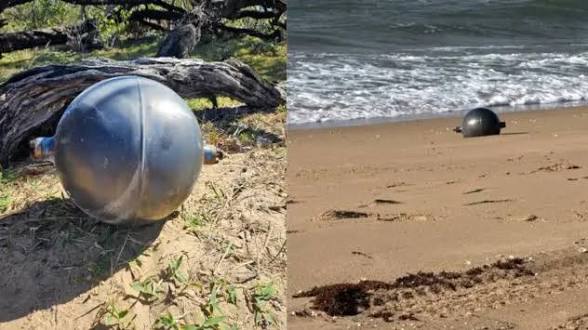
Six mysterious metal spheres that washed ashore last weekend at Forrest Beach in northern Queensland, Australia, are “suspected space debris,” the Australian Space Agency announced Monday on social media.
Informally dubbed “space balls,” the large objects are likely pressure vessels — heavy-duty containers of pressurized gases and liquids — from a rocket that reentered Earth’s atmosphere, according to the agency. The spheres were roughly twice the size of a basketball, local residents reported.
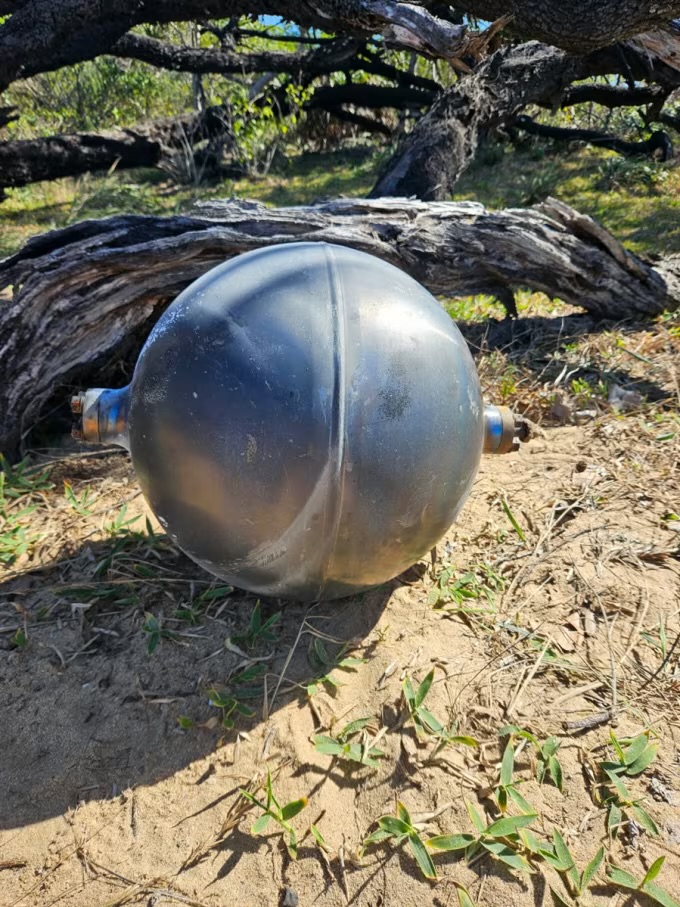
Although the space agency initially discouraged the public from going near the spheres, Queensland emergency responders have since removed the objects and determined them to be safe, the ASA confirmed. Agency officials say that further debris may be found.
“Never touch, move or recover suspected space debris and assume it to be hazardous until advised otherwise. Move away and contact emergency services,” wrote an ASA spokesperson in an email to CNN.
The agency is currently working with international authorities to determine which vehicle the space balls fell from, and which nation conducted a launch.
Space junk can take a variety of forms, such as dead satellites, empty fuel tanks or microscopic paint flecks. As space innovation and exploration has expanded in recent decades, researchers have been studying the motion of spacecraft to mitigate satellite collisions and possible hazards on Earth.
Still, the debris has become an increasing issue. The amount of space debris the military was tracking from 2013 to 2024 increased by more than 104%, from 23,000 pieces of debris to 47,000, according to reports from the United States Space Force. As most objects are believed to be too small to track, ranging in size from 1 millimeter to 10 centimeters, NASA estimates that millions of debris are in low Earth orbit.
It isn’t common for space junk to fall to Earth, but it does happen from time to time.
In March, a NASA spacecraft reentered Earth’s atmosphere, though it was expected that most or all of the probe burned up in the process.
Recent years have also seen a number of space debris incidents, including in 2023, when a mysterious 10-foot (3-meter) cylinder washed ashore at Green Head, a coastal town north of Perth, Australia.
And in 2024, debris from the International Space Station that had been expected to burn up as it fell to Earth struck a Florida home.
While no documented deaths have occurred due to space debris, there have been reports of injuries, noted John Crassidis, professor of mechanical and aerospace engineering at New York’s University at Buffalo.
https://www.cnn.com/2026/07/10/science/mystery-space-balls-debris-australian-beach