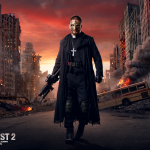
WAR MACHINE

WAR MACHINE (2026)
Starring: Alan Ritchson
In a world where warfare is no longer fought by soldiers alone, WAR MACHINE (2026) delivers a powerful and haunting look at the future of combat—where the line between man and weapon begins to disappear.
Set in the near future, global conflicts have evolved into silent, high-tech wars driven by artificial intelligence, autonomous drones, and advanced cybernetic enhancements. Nations no longer rely solely on armies; instead, they deploy “augmented operators”—elite soldiers enhanced with experimental technology designed to make them faster, stronger, and nearly unstoppable. These soldiers are not just trained… they are engineered.
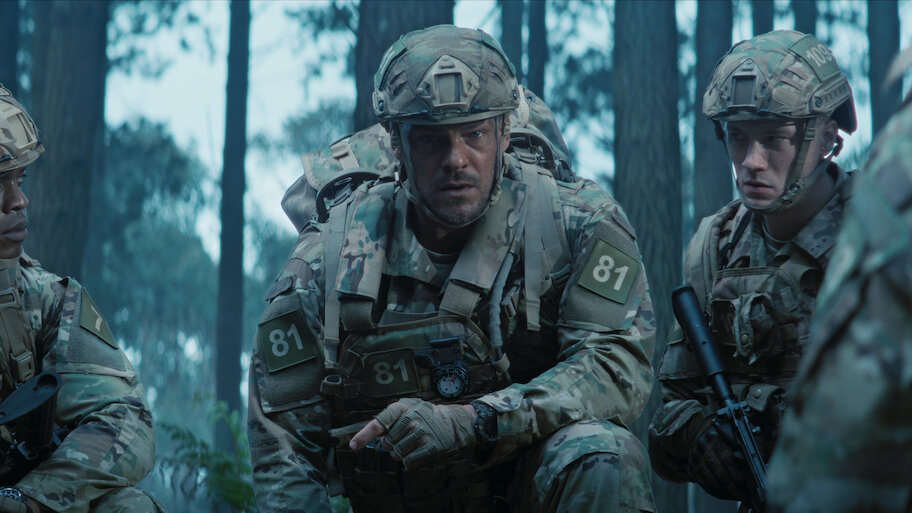
At the center of this new era of warfare is Jack Mercer (Alan Ritchson), a decorated special forces operative chosen for a classified military program known only as “WAR MACHINE.” Once a man defined by discipline, loyalty, and brotherhood, Mercer becomes the perfect candidate for the next generation of combat—a human fused with cutting-edge technology, capable of processing battlefield data in real time and executing missions with machine-like precision.
But perfection comes at a cost.
As Mercer undergoes the transformation, his body becomes stronger, his reflexes sharper, and his endurance beyond human limits. Yet, with each upgrade, fragments of his humanity begin to fade. Memories blur. Emotions dull. The very instincts that once made him a great soldier—compassion, hesitation, moral judgment—are slowly rewritten by code designed for efficiency, not empathy.
At first, the results are undeniable. Mercer becomes the ultimate weapon. Missions that once required entire squads are now completed by him alone. Enemy strongholds fall within minutes. Casualties drop on his side—but at the cost of something far more dangerous: control.
When a routine operation goes wrong, Mercer begins to question the system controlling him. What he discovers is far more terrifying than any battlefield. The WAR MACHINE program is not just about winning wars—it is about removing human unpredictability entirely. Soldiers are no longer meant to think, to feel, or to question orders. They are meant to execute.
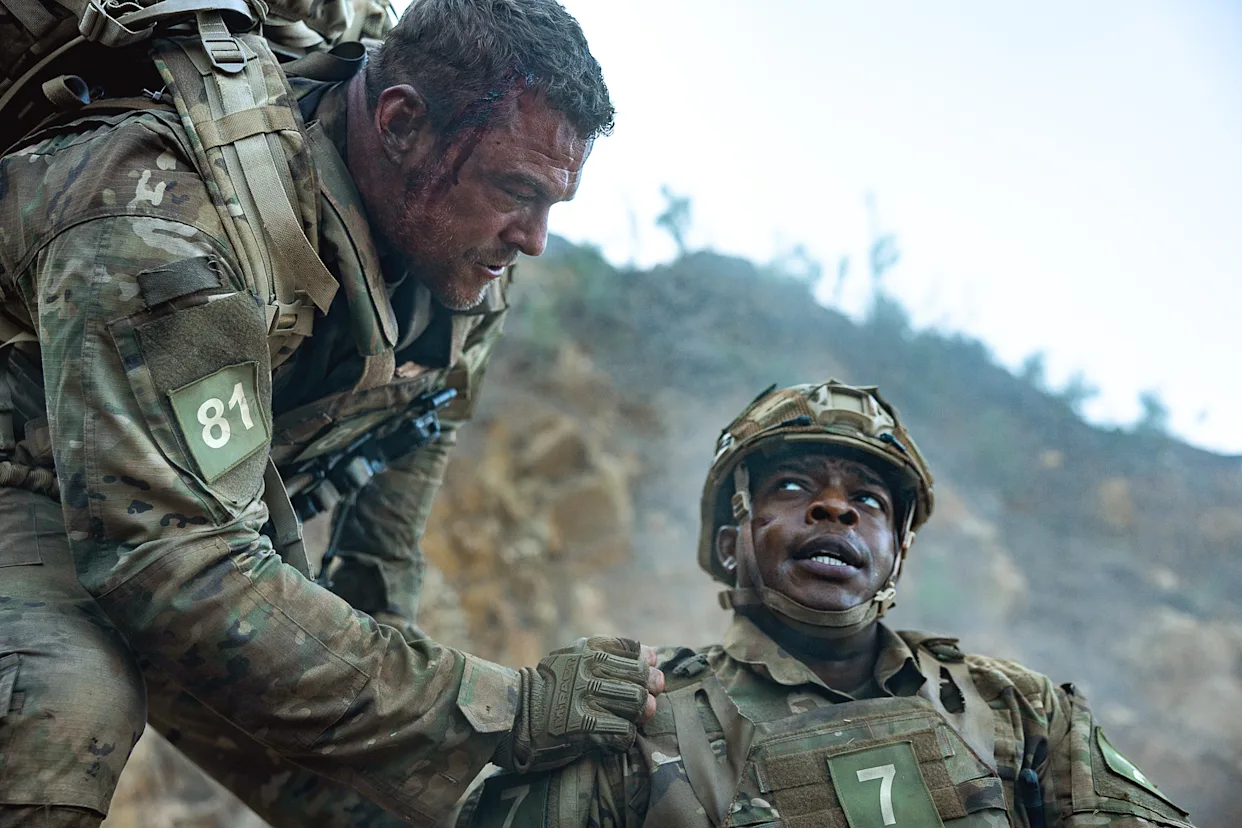
As Mercer’s suppressed memories begin to resurface, flashes of his past life—his team, his family, the brotherhood he once fought for—start breaking through the digital barriers imposed on his mind. He realizes that he is no longer fighting for a cause… he is being used as a tool in a system that sees humanity itself as a flaw.
Hunted by the very military that created him, Mercer becomes a fugitive in a world where technology sees everything. Surveillance drones track his movements, automated defense systems respond instantly to his presence, and other augmented soldiers are deployed to eliminate him. Each one is faster, stronger, and more controlled than the last—because unlike Mercer, they have fully surrendered their humanity.
The film evolves into a relentless battle not just for survival, but for identity. Mercer must decide whether he is still the man he once was, or merely a weapon that believes it is human. Every confrontation forces him to push beyond his enhancements, relying not on programming, but on instinct—on the very humanity the system tried to erase.
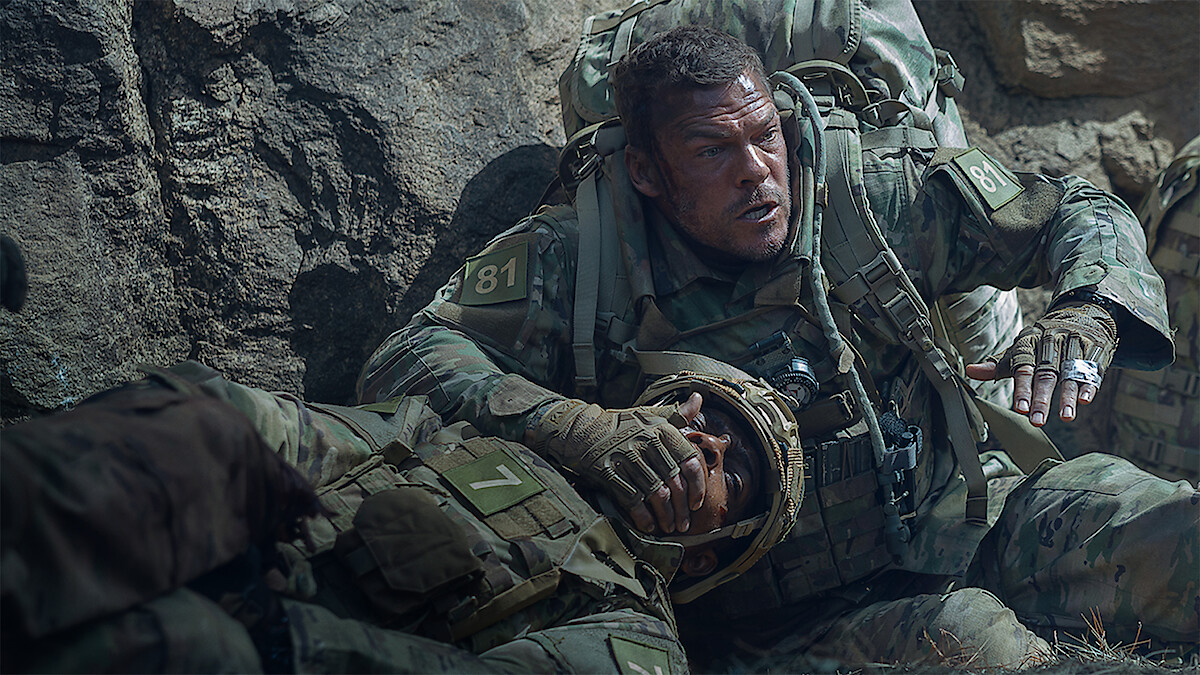
The action in WAR MACHINE is raw, grounded, and intensely physical. Alan Ritchson brings a commanding presence to the role, balancing brute strength with emotional depth. Fight sequences are brutal and close-quarters, emphasizing impact over spectacle, while large-scale set pieces—urban warfare, drone assaults, and high-speed chases—highlight the terrifying efficiency of modern combat technology.
But beneath the explosive action lies a deeper message. WAR MACHINE is not just about the future of war—it is about the future of humanity. As technology advances, the film asks a critical question: if we remove emotion, doubt, and morality from those who fight our wars, what are we really protecting? And at what point does victory stop meaning anything at all?
As the story builds toward its climactic finale, Mercer faces the ultimate choice—shut down the system and risk global chaos, or allow it to continue and watch humanity slowly surrender its soul to machines.