Inside Australia’s crime epicentre where residents are afraid to leave home
Residents of one Aussie city say they sleep with one eye open as weapon-wielding gangs and opportunistic thieves freely roam the streets.
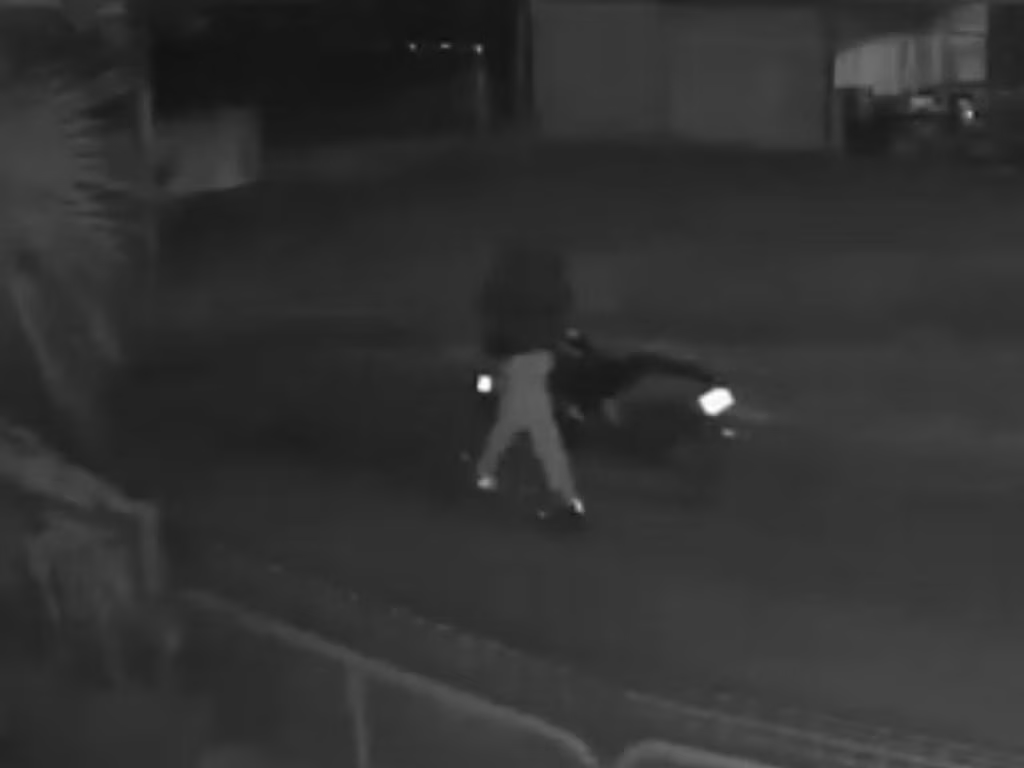
Adam* was sitting in his parked car when he was ambushed by masked men wielding weapons.
The 18-year-old had been absently ordering food on his phone on a Sunday night last August in Rockhampton when he was suddenly forced from his car by a man dressed in all black with a sparkling gold watch on his wrist.
“All of a sudden, a car pulled up to me and they were at my door before I even had a chance to lock it,” he said.
“Get the f**k out,” the man demanded, as he held an axe to the teen’s head.
The man jumped in the driver’s seat as more balaclava-clad thieves spilled out from a car and into Adam’s back seat.
“I was just left standing there and I watched it drive down the street,” he said.
When police found the car four days later, it was a write off.
The alleged offender was on bail at the time and was facing a raft of charges in relation to fraud, robbery and assault. He was located by police more than 250 kilometres away, in the town of Emerald.
Incredibly, Adam had been targeted in another attack just months earlier, when he was forced to speed away from a gang of masked youths on a quiet suburban street.
Inside Aussie crime epicentre
Stories like these aren’t uncommon in the central Queensland city of Rockhampton, where residents say they no longer feel safe as crime rates soar well above the national average.
Home to more than 85,000 people, Rockhampton is now considered to be among the most dangerous cities in Australia.
In 2022 to 2024, the rate of break ins in Rockhampton was 149 per cent higher than the national average.
It’s a similar story for violent crime, which is 122 per cent higher than the national average.
In the last week of July, news.com.au visited Rockhampton to speak with residents about their dire crime crisis, which has left many afraid to leave their homes.
‘This used to be a safe country’
“I tell people, when they were building Rockhampton, they should have just kept driving,” local miner Jordan Elliot told news.com.au.
Mr Elliot, 20, wore a cowboy hat and sipped a stolen energy drink as he detailed his childhood in the city, one marred by youth crime and patchy finances.
“Unless you grow up rich, you have nothing to do but steal people’s stuff. It’s second nature if you don’t have money,” he said.
“If you go to jail, it’s not much different to what you’re already doing anyway.”
Mr Elliot can’t even count the amount of times people have tried to break into his home and car, but concluded it happens on average around twice a week.
Every night before bed, in a ritual-like fashion, Mr Elliot puts himself in the mind of a criminal.
“I go to my front yard and think, ‘If I was a bored teenager trying to steal my car, could I get in?’”
He tests his locks and windows three times before finally settling into bed.
Mr Elliot believes drugs and the inflating cost of living are large contributors to the rising crime wave, made worse by a lack of activities and infrastructure for youth.
“I’m on mining money and I can barely afford a place,” he said.
“Money doesn’t go far here. People in the city can join clubs, but unless you play rugby or grow up rich here, there’s nothing to do.”
According to Mr Elliot, the city is crawling with people “who are just trying to float through life because they weren’t born in a major city”.
“Don’t try and wait Rockhampton out, it will wait you out,” he warned.
Across the other side of town, nestled in a leafy laneway, residents of an apartment block are putting their foot down.
Marc and Thilli Athukorala moved into the area a year ago, after travelling the world working as chefs.
The couple are originally from Sri Lanka, and work long hours in accordance with migration processes and examinations.
After saving up some money and applying for a bank loan, the pair decided to buy a motorcycle – but the excitement was cut short just weeks later.
“We came outside to go to work and noticed our bike was not here,” said Mrs Athukorala.
“My heart is broken, I just feel speechless.”
Mr Athukorala said they love Rockhampton, but have been “really taken aback” by the surging crime.
“I’ve never faced bad situations like this,” said Mrs Athukorala.
“This was a safe country, especially for ladies. But after moving to Rockhampton, I feel differently, and that’s why I’m heartbroken.”
Mrs Athukorala recalled a terrifying experience when she was followed by a man as she walked home from the train station one night.
“I ran into the petrol station and was luckily safe,” she said.
But others have not been so lucky.
Earlier this year, a 27-year-old woman was out for a midmorning run in a popular Rockhampton park when she was allegedly attacked by a man not known to her.
Police alleged the offender, a man aged in his 20s, sexually assaulted the woman before dragging her to a lagoon and attempting to drown her.
The experiences shared with news.com.au are full of grim examples of how the community has been forced to accept reports of violent crime as part of daily life.
Meanwhile, the Athukoralas’ next-door neighbour, Lenny Miners, is a single dad who holds growing concerns for the safety of his eight-year-old son.
Mr Miners has lived in Rockhampton for three years and has had strangers walk into his home, break into his car and pour unknown chemicals in the unit’s communal washing machine.
“At this moment, we’re very scared,” he said.
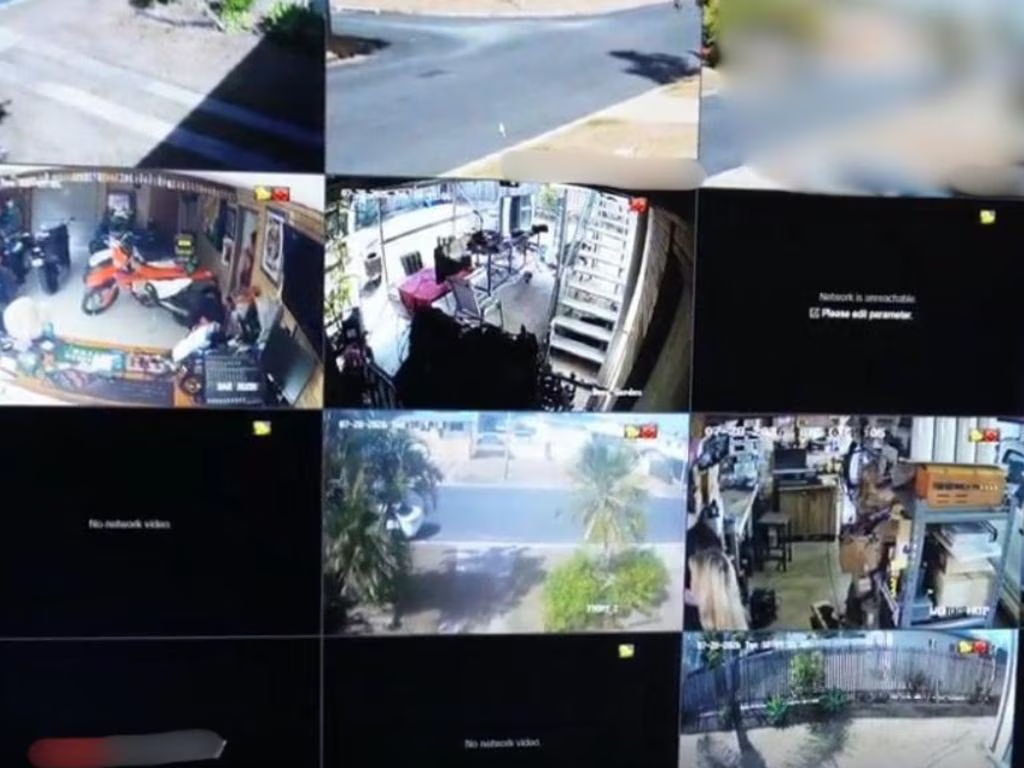
Mr Miners has set up a system with the Athukoralas, messaging the couple if the “coast is clear” before they leave for work in the early hours of the morning.
Mr Miners said he “sleeps with one eye open” most nights.
“I’ve probably made at least 15 police reports,” he said.
While he believes police try their best, they are little match for the endless calls from residents across the city.
Residents detail house of horrors
One resident, who spoke with news.com.au on the condition of anonymity, revealed they have endured years of “hell” living next door to a notorious organised crime base.
“The drug problem has gotten worse here,” they said.
“The ringleaders of the drug house next door were finally arrested and were in prison for barely six months before they were back out.”
The concerned neighbour said the quiet street had “descended into chaos” as operations inside the home continued to amp up.
“There were lots of cars pulling up at all hours of the night … and when we joined the stolen cars and crime watch pages, we discovered a lot of the vehicles were stolen.”
According to the resident, the cars had been used for drug courier work.
“They’d steal the vehicle, use it for the night to do drug runs and then abandon it or torch it when they were finished,” they said.
“Towards the end it became very organised. While a number of police raids happened, they rarely found much. They certainly didn’t catch them with the commercial quantities or get enough evidence to put them away, even though it was very obvious what was happening.”
The local said they had noticed a spike in drug and alcohol abuse as substances became more “readily available”.
They believe the lack of activities and events in town are driving people toward risk-taking behaviours.
“I very quickly learned when I moved here that you have to make your own fun,” they said.
Bottle stores targeted
Across the city, news.com.au was able to count 26 bottle shops.
There appears to be one on every corner, with chains like Bob’s Bulk Booze and Dan Murphy’s opening multiple locations within just a kilometre of each other.
19-year-old Faith has been living Rockhampton for three years and working at a local bottle store for one.
Faith can’t even count the amount of times people have robbed the store, but said it happens more often than not.
“They mainly say that if I don’t let them leave then they will stab me,” she said.
Workers are not allowed to use force to stop a robbery from taking place, a system which thieves have starting abusing.
“We can say, ‘hey can you give that back, or can you pay for that?’ But other than that, you have to let them walk away with it,” she said.
Another worker, Angelique, has lived in Rockhampton her whole life and has been at the store for six months.
“There were four thefts in the store last week,” she said.
Angelique said people usually “dack” alcohol, meaning they put it down their pants.
“Once they know that you can’t really do anything, they just will come back in and do it again,” she said.
“People are just bored here. All they do is drink and do drugs.”
The 24-year-old believes residents need more free activities to help promote community unification.
“You have to pay for everything and even as a 24-year-old that works 24/7, I can’t even afford to go do half these things. It’s just ridiculous,” she said.
Asked whether local parks were an option, Angelique said they had become a cesspool of drug and alcohol use.
“If you go to a park, you’ll get stopped by the homeless. They’ll ask you for money, and they’ll ask you for alcohol,” she said.
“They’re sleeping in the toilets, so you can’t even take your kids into the toilets. They’re bathing in the water play areas around kids.”
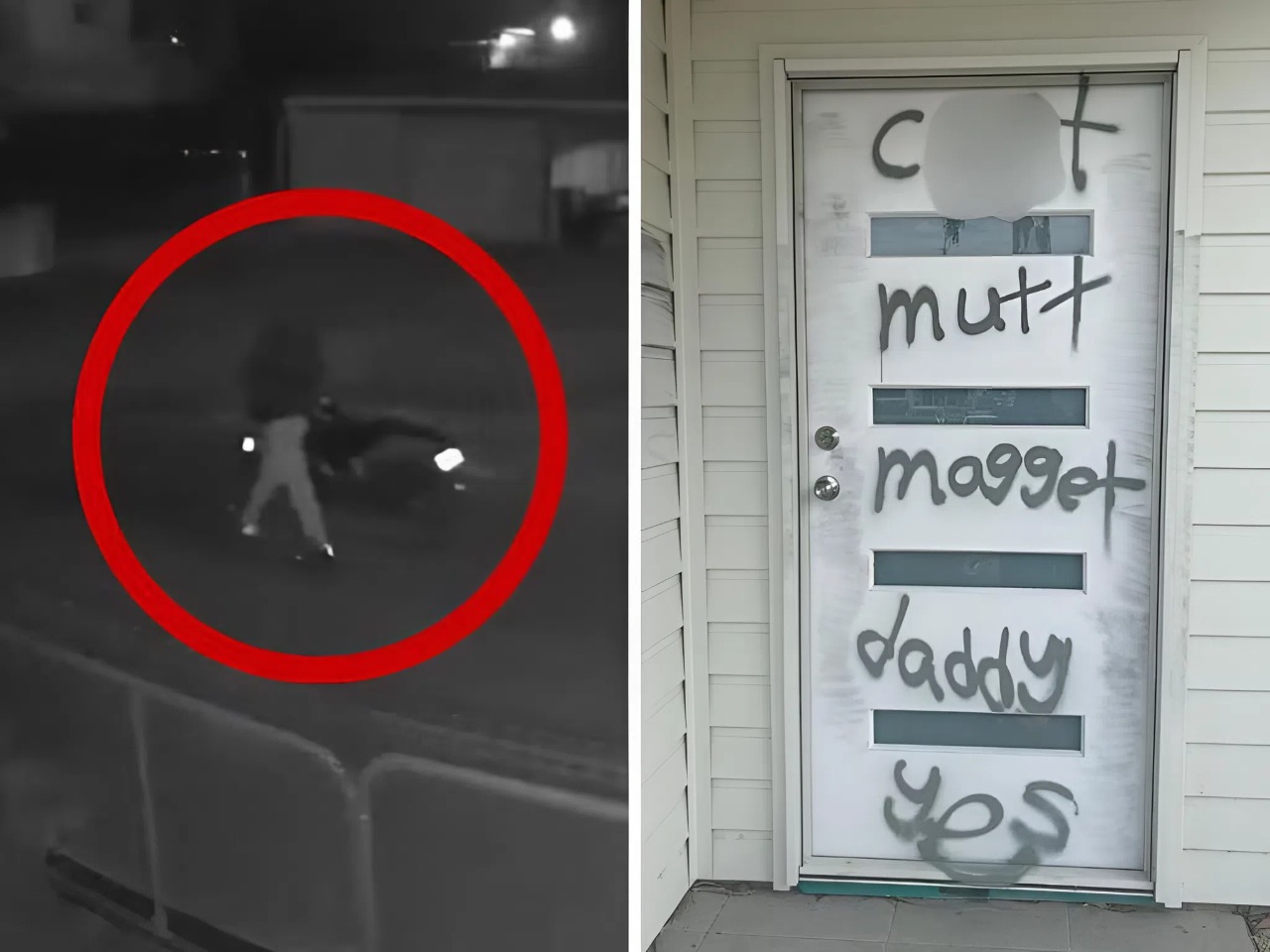
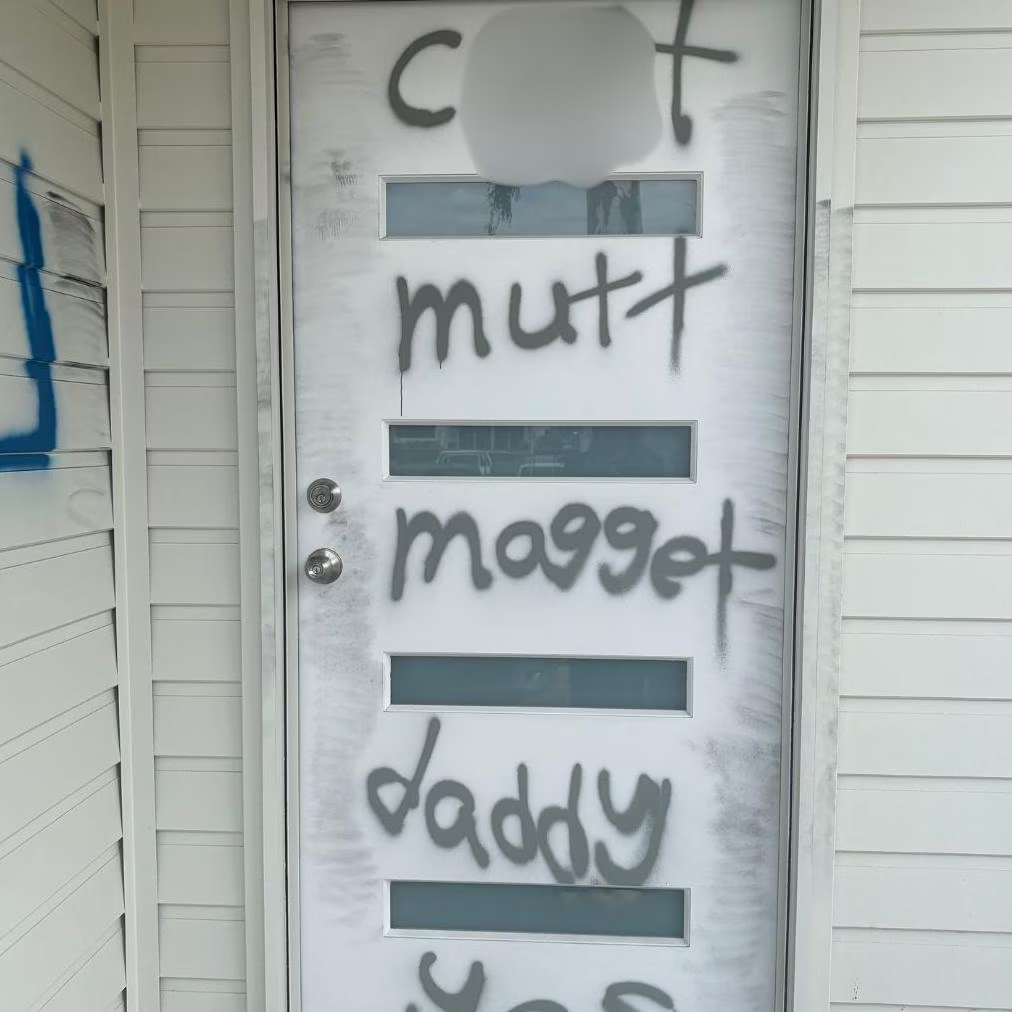
While driving through the city, news.com.au came across a home scrawled in graffiti, ranging from swastikas to hateful slurs.
The home’s resident, who asked not to be named, said he had been at work when the vandalism occurred over a week prior.
He moved to Australia from Nepal in 2019, and has been left “shocked and disturbed” by the destruction of his home.
“Someone tried to break in before this happened,” he said.
Residents take matters into their own hands
Meanwhile, another Rockhampton resident, Aidan Thuaux, decided something had to change after having one car stolen and another vandalised by strangers.
“I‘ve seen first-hand how bad it is here,” he said.
“I recently saw my neighbour crying because her car was stolen. It was a brand-new car.
“If the police and the government can’t do too much about it, people have to take it into their own hands.”
Mr Thuaux has launched his own business, Fortify Home & Auto, in an effort to make sure no one goes through what he did.
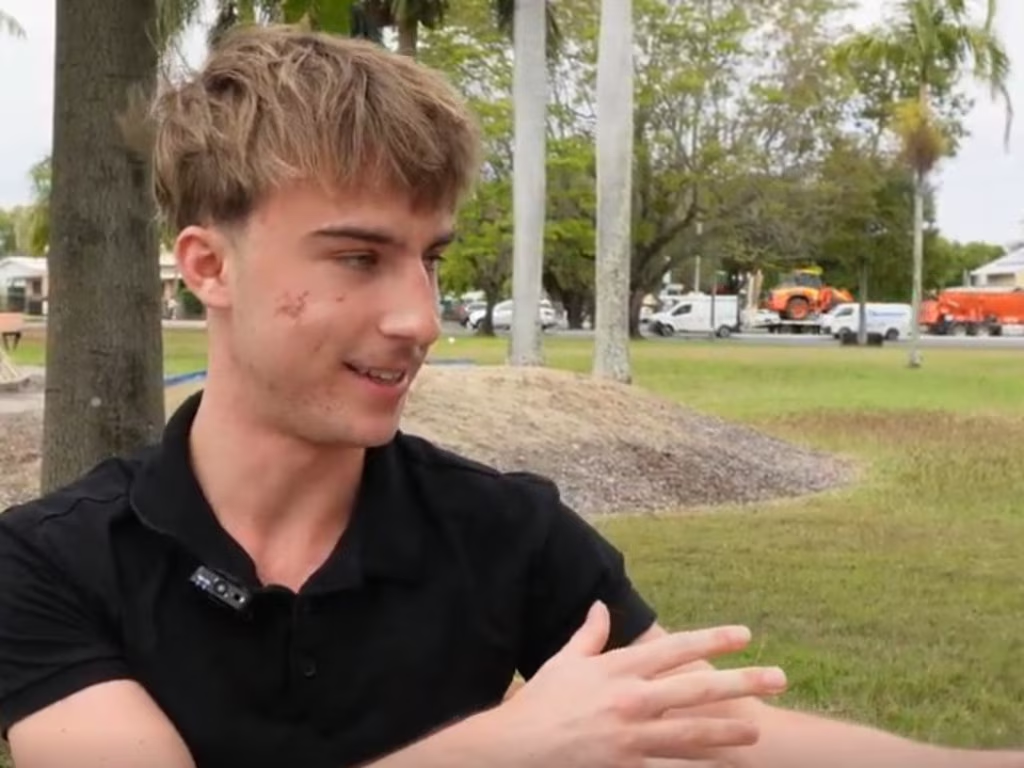
The 18-year-old has developed product bundles to teach Aussies the things they can do to deter criminals.
“Make your home and car look like harder work than the one next door,” he said.
“Physical boundaries buy time. Every extra minute at the door or the wheel raises the odds a thief gives up and walks away.”
Adult crime, adult time?
In December 2024, the Queensland government introduced its controversial “adult crime, adult time” laws.
The legislation includes 33 offences where children as young as 10 could be charged as adults.
But residents believe tougher penalties have done little to curb crime, with many even calling for the introduction of Castle law.
Castle law – also known as Castle Doctrine – allows a person to protect their home from an intruder using reasonable or deadly force.
Under the law, a person would be granted legal immunity in the name of self-defence. It is currently legal in most states across the United States.
One resident, who wished not to be named, suggested Queensland adopt additional penalties for offenders.
“I know it sounds extreme but Singaporean drug laws would probably do the trick,” they said.
Singapore enforces some of the strictest drug laws in the world, with penalties ranging from significant prison sentences to the death penalty.
Meanwhile, Mr Miners and Mr and Mrs Athukorala said they had heard rumours of young offenders being fed McDonald’s meals during overnight stays in the cells.
In response to this claim, a spokesperson for Queensland Police told news.com.au that “meals are provided to people in custody three times per day”.
“Prisoners are asked about dietary requirements, including allergies, medical conditions, religious requirements and personal dietary preferences,” they said
“All foods are prepared off site by a private contractor and transported to the Rockhampton watch-house, catering for the legitimate needs of individual prisoners.
“Outside of the contractor obligations the Rockhampton Watch-house has food items to provide as needed.”
Additionally, Mr Elliot said he had also yet to see anything come from the “adult crime, adult time” laws.
“They play the mental health role. If they get locked up, they can say they were ‘mentally unwell’ and then they get special treatment,” he said.
“I’ve seen it hundreds of times.”
Tougher penalties may not be the answer
Residents are pushing for stronger penalties, but experts aren’t so sure that’s the right approach.
“People want quick fixes and there aren’t many,” associate professor in Criminology at University of Sydney, Dr Garner Clancey, told news.com.au.
“I understand communities that feel under threat want a response but it’s unrealistic that a response would deliver results in the time frame they want them – which is now.”
Dr Clancey said the lack of consequential thinking in teens meant that youths rarely have the foresight to see the consequences of their actions, even when it means hefty prison sentences.
“You can jack up the consequences but I’m not sure you’re going to get immediate responses because it’s the wrong audience,” he said.
Dr Clancey believes while there may be some value in harsher penalties, ultimately, communities need to be embracing their youth.
“The wrap around services, early intervention services, parenting programs, home visiting programs and infant support programs are designed to provide the support that ideally puts people on the right track,” he said.
“But governments really struggle because people don’t want to hear about early intervention services, they want results now.”
Dr Clancey said it’s common for communities to reject youths engaged in risk-taking behaviours, but that there are many layers to the causes of crime to consider.
“Sometimes the causes are close to offence, such as: being under the influence, being around the wrong group of kids or social media,” he said.
“Other times the root causes are deeper, like: some kids are less able to resist the temptation to commit crime because they haven’t had consistent role models, they don’t know how to deal with conflict, they haven’t had boundaries, or they are experiencing parental neglect.”
Dr Clancey said there was not a lot of evidence supporting harsher sentencing, as recidivism rates post-detention continue to soar.
Data from the Queensland Family & Child Commission revealed that 71.5 per cent of young people released from sentenced supervision in 2022 – 2023 returned within a year.
Queensland’s youth detention system currently operates at 99.6 per cent capacity, with an average of 300 children locked up each night.
Taxpayers are footing the bill of detention, which costs $2162 a day and almost $800,000 a year to detain a single child.
Dr Clancey believes police, religious groups and cultural groups have a significant role to play in bridging the gap between society and young offenders.
“Police can be a useful player to organise community events and activities that maintain a police presence,” he said.
“Many of the police in regional towns are on rotations. They go into areas they don’t want to be in so they can get priority posting to somewhere of their choice.
“They are counting days down.”
Dr Clancey said the best police were those who have a real connection to the towns they work in.
Source: https://www.news.com.au/national/queensland/crime/inside-australias-crime-epicentre-where-residents-are-afraid-to-leave-home/news-story/f5d92ab7b3f1e6b7cb966b104b318bf7?utm_source=News.com.au&utm_medium=facebook&utm_campaign=Emplifi&fbclid=IwY2xjawUUJ9BwZG9mAWV4dG4DYWVtAjEwAGJyaWQRMXRYYkFNTVhjQ2tkSzFaUUJzcnRjBmFwcF9pZBAyMjIwMzkxNzg4MjAwODkyAAEe4xWYSrErqs9rjTocYu7Q7CPXipUIWOyRTAJsdLDuIY9I8JDtqi28850tL6o_aem_hFOqqmyhywnrO7ArliqXpQ